

From the BBC report on the “red light boom” to the article shared by Ulysse on infrared light and metabolism.
Recently, GLG UK Board Member Ulysse shared two pieces of content that are highly worth close reading for the lighting industry.
One is a BBC report on the surge of interest in red light therapy.
You can view the original article here: https://www.bbc.com/news/articles/c2lw59jrdkxo
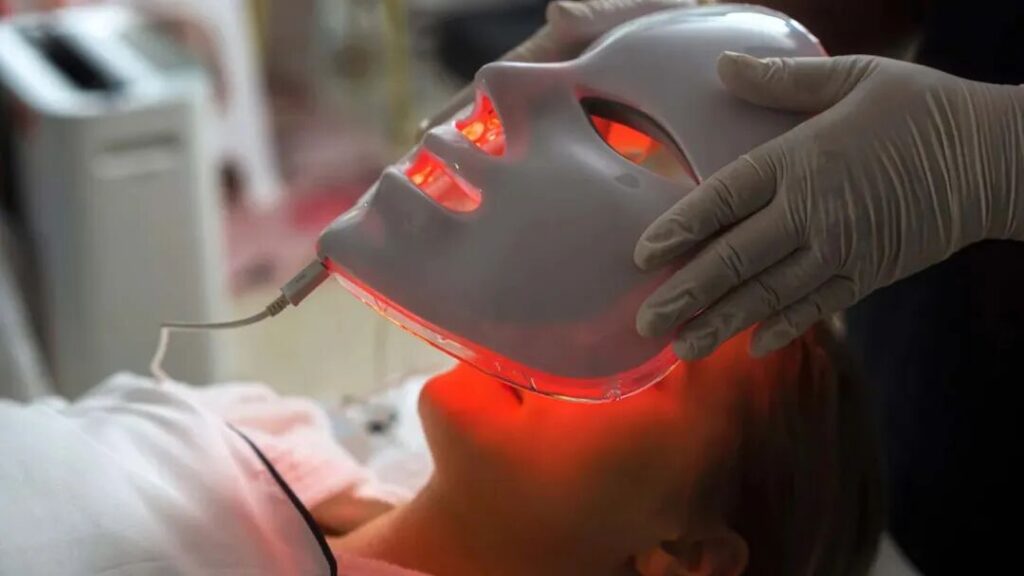
“The image is sourced from the original BBC article.”
From LED face masks and red light therapy beds to infrared saunas and red light recovery pods, the health and wellness consumer market in Europe and the United States is rapidly “turning red.”
Beauty, anti-aging, athletic recovery, inflammation relief, sleep improvement, and muscle repair — red and near-infrared light are being positioned as a new gateway into a health-oriented lifestyle.
The other article focuses on how infrared (IR) light influences metabolism.
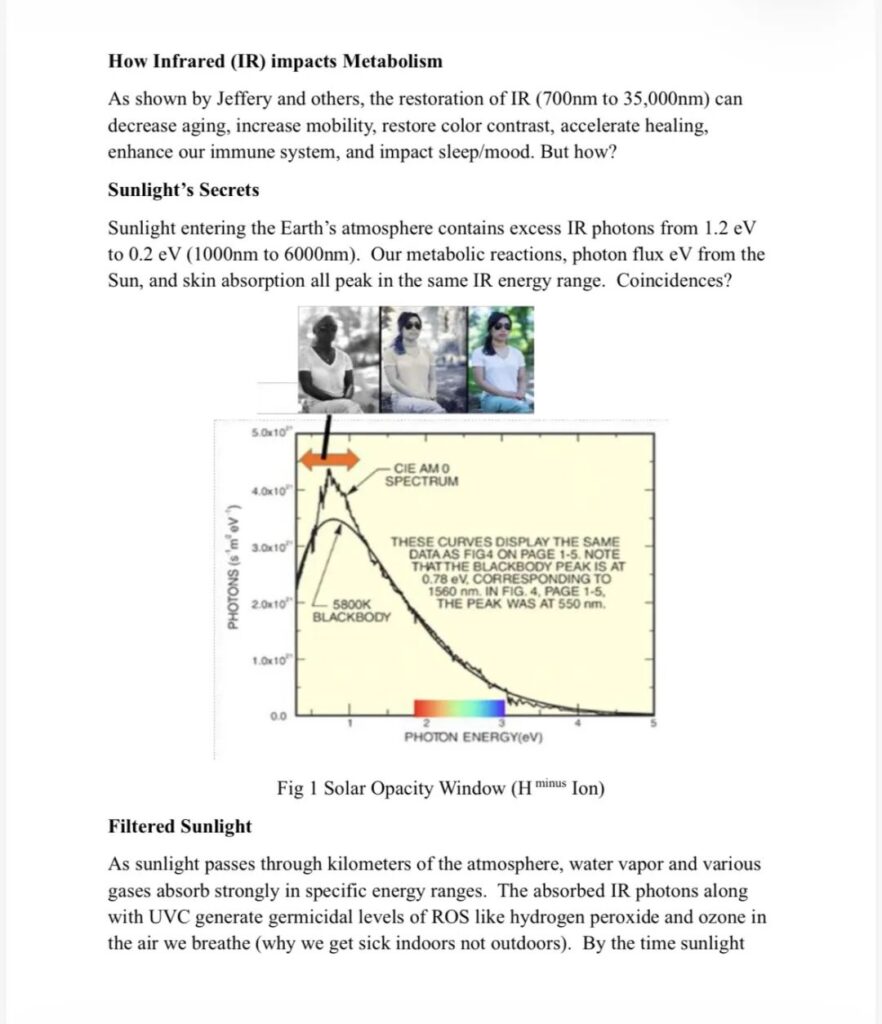
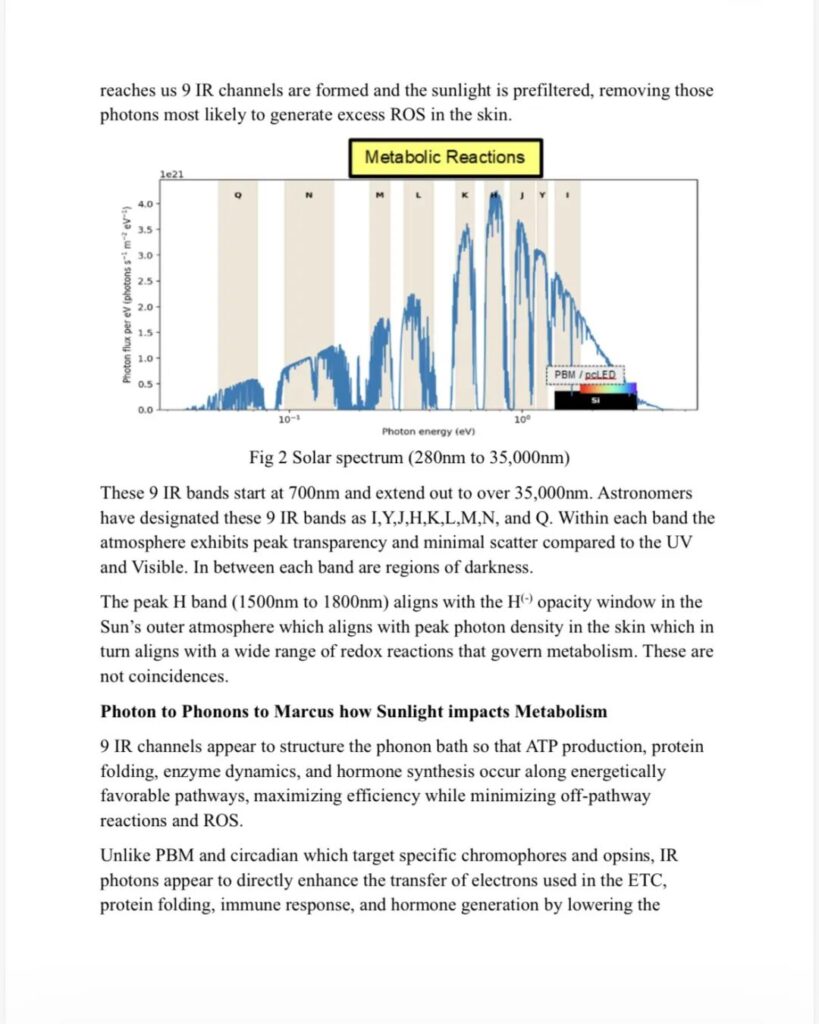
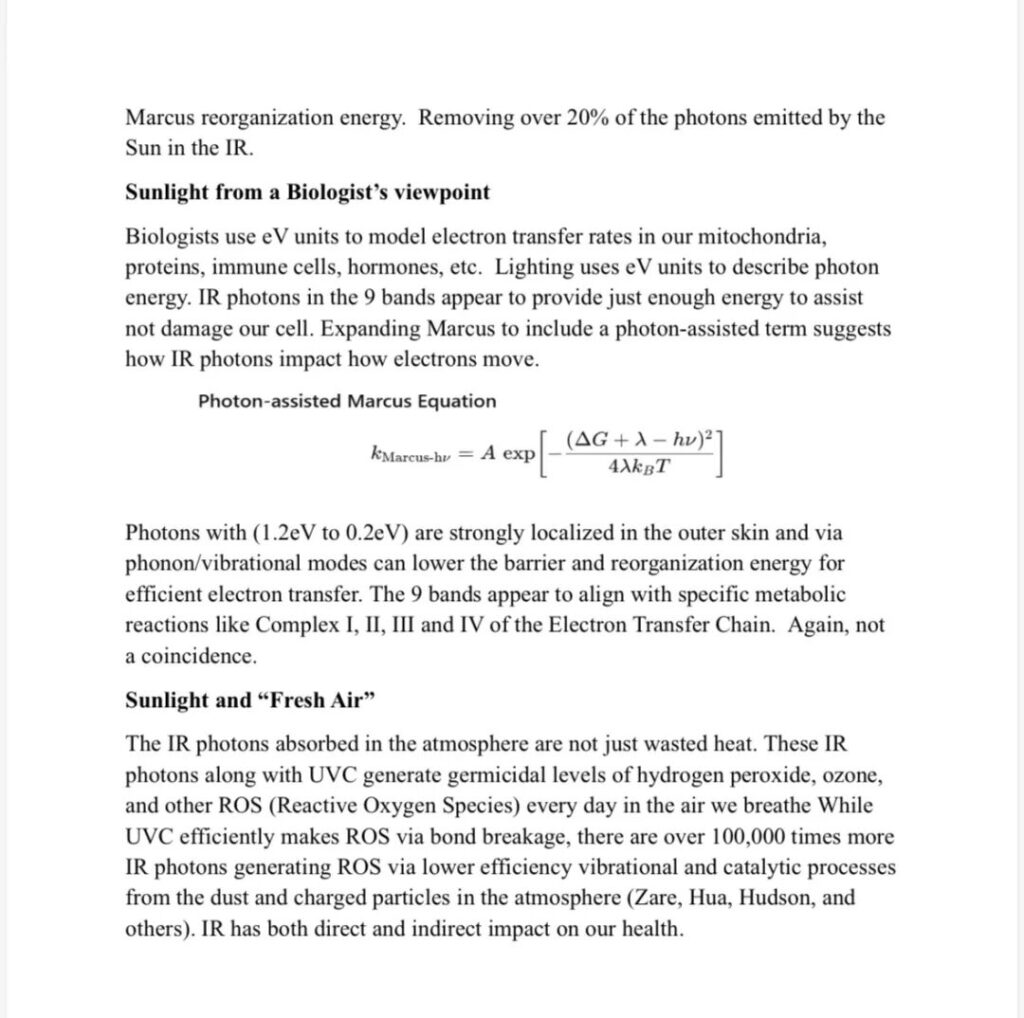
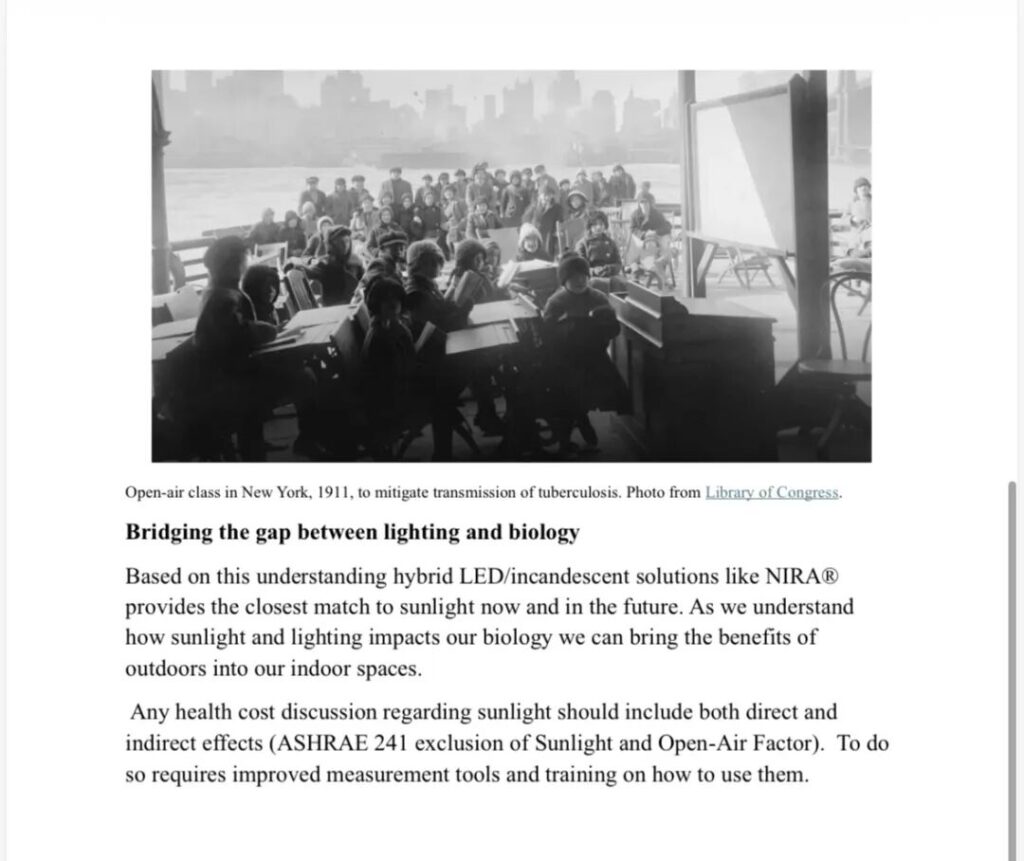
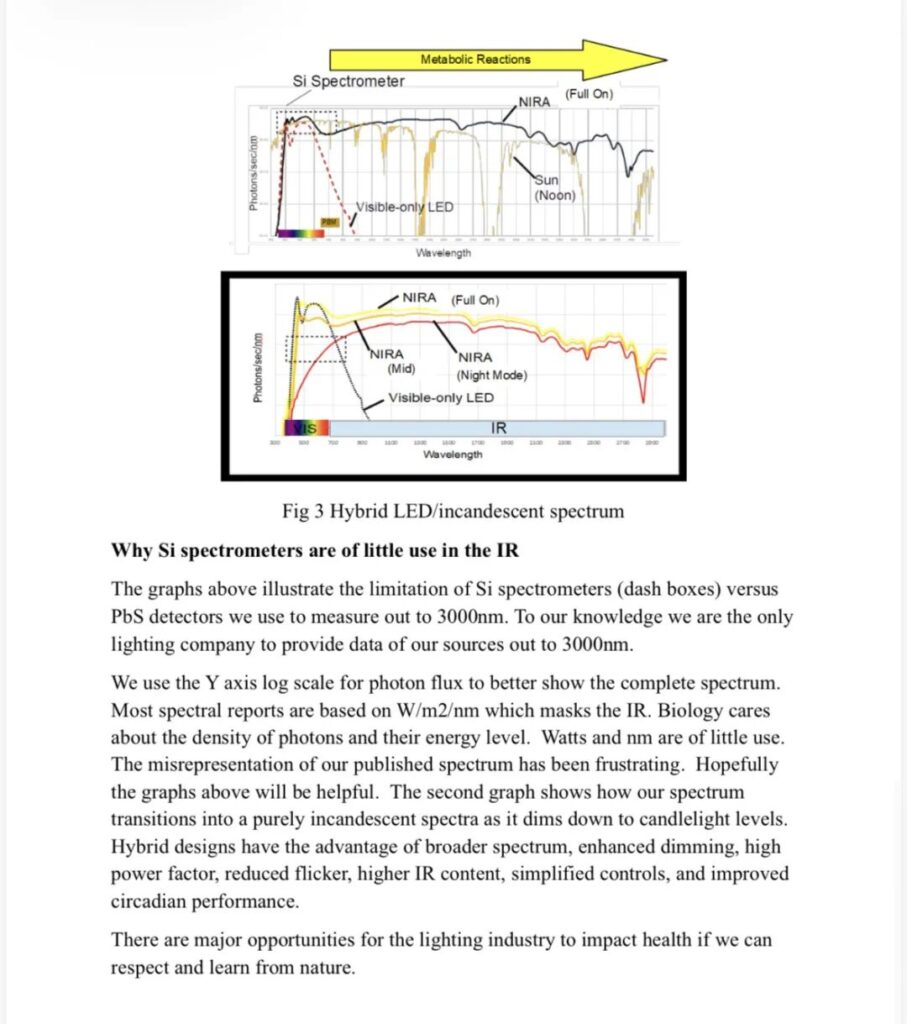
Compared with the BBC report, which focuses more on the consumer-facing boom in red light products, the second article pushes the discussion deeper:
If natural sunlight’s benefits to human health are not only derived from visible light, and not only from blue light and circadian rhythms, then has the lighting industry been overlooking an important dimension of infrared light?
The article argues that solar radiation in the 700nm range and beyond in the infrared spectrum may be associated with a wide range of biological processes, including metabolism, electron transport, ATP production, protein folding, immune responses, wound healing, sleep, and emotional regulation.
It further highlights that as sunlight passes through the Earth’s atmosphere, it forms certain infrared “windows” or “channels.” These specific energy bands may correspond to absorption in human skin, metabolic reactions, and biological electron transfer processes.
Seen together, these two articles are particularly interesting.
On one side, the consumer market is rapidly embracing “red light wellness.”
On the other side, the scientific and lighting communities are still asking a more fundamental question:
How exactly do red light, near-infrared, and infrared light interact with the human body?
This is precisely the new challenge that healthy lighting must confront today.
01
The BBC report reminds us that red light has already moved from the laboratory into the consumer market
The report takes a very practical angle. A journalist visits a health center in Manchester and experiences a red light therapy bed. A doctor on site explains that this is not a tanning bed, but “red light,” intended to support cellular repair rather than burn the skin.
The report highlights how red light therapy is rapidly gaining popularity across the wellness industry in Europe and North America.
A wide range of products has emerged in the market, including:
- LED beauty masks
- Red light therapy beds
- Red light recovery devices
- Infrared saunas
- Red light yoga and Pilates spaces
- At-home red light devices
These products are typically promoted as helping with:
- Skin radiance improvement
- Collagen production
- Reduction of fine lines
- Sports recovery
- Muscle soreness relief
- Inflammation control
- Even improvements in sleep and mood
This signals an important shift:
Red and near-infrared light are no longer purely medical or research topics — they are becoming a new narrative in the consumer wellness market.
However, the most valuable aspect of the BBC report is not simply the description of this trend. It is the inclusion of cautious perspectives from multiple experts.
For example, neuroscientist Professor Glen Jeffery points out that buying an expensive red light device online does not automatically guarantee the expected results.
Similarly, dermatologist Sophie Weatherhead notes that although existing research shows promising directions, many studies still suffer from small sample sizes, and lack consistency in wavelength, dosage, energy levels, and device conditions.
This gets to the core issue in the red light wellness market:
Red light may have real potential — but the market is moving faster than the scientific evidence.
02
Red light, near-infrared, and infrared saunas are not the same thing
The BBC report highlights an important distinction that is particularly relevant for the lighting industry.
Today, many products on the market use the terms “red light,” “near-infrared,” and “infrared,” but the underlying mechanisms are not identical.
In simple terms, they can be divided into three categories.
First category: LED red light masks
These products typically use visible red light, with common wavelengths around 630–660nm.
They primarily target the epidermis and dermis layers of the skin, and are commonly marketed for:
- Improving skin tone
- Stimulating collagen production
- Reducing fine lines
- Supporting skin repair
As noted in the BBC report, experts emphasize that the effectiveness of red light depends on several key factors, including skin thickness, treatment area, device power, energy dosage, and whether the light can actually reach the dermal layer.
This point is critical.
Simply wearing a red light mask does not guarantee results.
The real questions are:
- Is the wavelength appropriate?
- Is the power output sufficient?
- Is the exposure time reasonable?
- Is the target area suitable?
- Does the device deliver medical-grade or effective output?
Second category: red light therapy beds
These devices typically combine visible red light with additional near-infrared wavelengths.
Near-infrared light has a longer wavelength than visible red light and, in theory, can penetrate deeper into biological tissue. For this reason, it is often used in contexts such as sports recovery, muscle soreness relief, and inflammation management.
According to the BBC report, experts suggest that when wavelength and intensity are properly controlled, red light therapy beds may show potential benefits in skin rejuvenation, inflammation reduction, and muscle recovery support.
However, the variability is significant:
- Different devices use different wavelength combinations
- Energy output varies widely
- Exposure distance, duration, and treatment area differ
- Individual physiological responses also vary greatly
As a result, two devices both labeled as “red light beds” may produce completely different outcomes.
Third category: infrared saunas
Infrared saunas use longer-wavelength infrared energy.
Their key difference from red light masks and red light therapy beds is as follows:
Red light therapy is primarily discussed in terms of cellular-level photobiomodulation, particularly mitochondrial energy metabolism.
Infrared saunas, on the other hand, rely more on thermal effects — heating body tissues and triggering heat stress responses in the body.
The BBC report also notes that the main benefits of infrared saunas are likely driven more by heat exposure than by photobiomodulation in the strict sense of red light therapy.
This highlights an important point:
“Red light,” “near-infrared,” and “infrared heat” should not be treated as interchangeable concepts.
For the lighting industry, this distinction is especially critical.
If lighting companies move into healthy lighting, red light, or near-infrared applications in the future, they cannot rely on a generic “IR” label.
They must clearly define:
- Which wavelength range is being used
- Which biological tissue or system is being targeted
- Whether the mechanism is photobiological or thermal
- Whether the application is ambient lighting or therapeutic exposure
- Whether it is intended for daily use or professional intervention
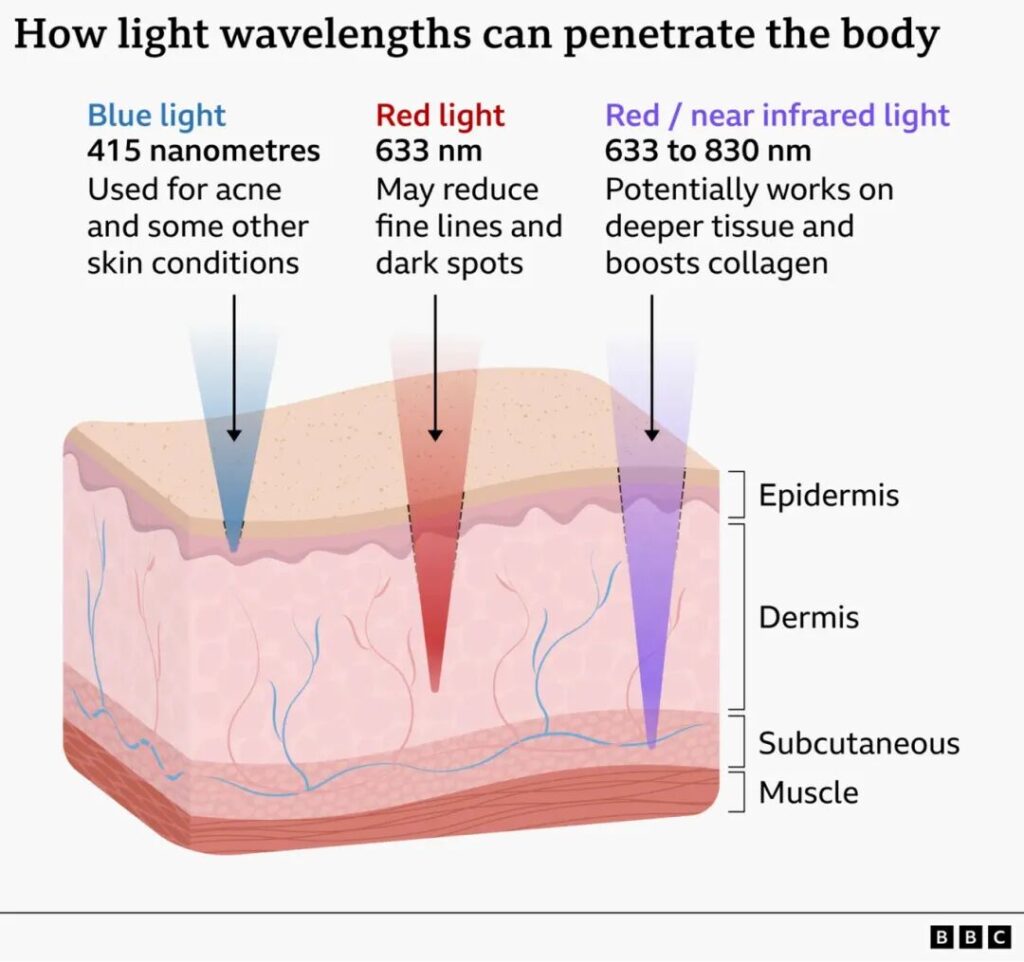
“The image is sourced from the original BBC article.”
03
The article shared by Ulysse pushes the discussion to a deeper level: sunlight is not only visible light
If the BBC report reminds us that red light has become a consumer wellness trend, then the infrared and metabolism article shared by Ulysse raises a more fundamental question:
The real issue is not how popular red light products have become, but whether we truly understand sunlight itself.
In the past, when the lighting industry talked about “simulating sunlight,” the focus was mostly limited to the visible spectrum between 380–780nm.
We discussed:
- How closely color temperature matches daylight
- Whether the spectrum is continuous
- Whether blue light peaks are too high
- Whether color rendering is natural
- Whether m-EDI levels are sufficient
- Whether DER values are appropriate
However, the article shared by Ulysse reminds us that natural sunlight extends far beyond visible light.
The infrared region starting from around 700nm may also play an important role in how sunlight interacts with the human body. In particular, near-infrared and mid-infrared wavelengths may not simply be “heat,” but could also be involved in deeper physiological processes.
This is an important reminder for the lighting industry:
What we currently call “full spectrum” is, in many cases, only visible full spectrum.
In other words, the “full spectrum” we often refer to is usually just the visible portion of sunlight, not the complete energy distribution that truly approximates natural sunlight.
04
The success of LED lighting may also have created a new spectral gap
The massive success of the LED revolution first comes from energy efficiency.
Traditional incandescent lamps emit a large amount of infrared radiation. From an energy-efficiency perspective, this infrared output has often been considered “wasted heat.”
LEDs, in contrast, significantly improve the conversion efficiency of visible light while reducing unnecessary thermal radiation.
From an energy-saving standpoint, this is clearly a major advancement.
However, from the perspective of biological lighting environments, the situation may be more complex.
Today’s indoor lighting increasingly resembles a highly optimized visible-light output system:
- Retaining only what is needed for human vision
- Eliminating what is considered energetically “wasteful”
- Maximizing luminous efficiency
- Minimizing heat output
But if certain infrared components in natural sunlight do play a role in human physiology, then a lighting model focused solely on lm/W efficiency may have unintentionally created another underexplored gap.
This is one of the most important reflections raised in the article shared by Ulysse:
Energy efficiency made LED lighting successful — but healthy lighting cannot remain limited to energy efficiency alone.
05
Infrared light may not be just heat, but part of the metabolic background
One of the most insightful aspects of the article shared by Ulysse is its attempt to connect infrared light with human metabolism.
The article suggests that infrared photons may, through mechanisms such as vibrational modes, phonon environments, and electron transfer processes, influence the mitochondrial electron transport chain, ATP production, protein dynamics, immune responses, and hormone regulation.
This language already moves beyond traditional lighting engineering and enters the domain of biophysics and photobiomodulation.
Put in simpler terms, we have traditionally divided light into two categories:
One is “visible light,” which serves vision.
The other is “circadian-relevant light,” which regulates the biological clock.
However, the article proposes a third possibility:
Certain invisible infrared wavelengths may act as a kind of background energy environment, influencing metabolic efficiency at the cellular level.
This does not mean that all infrared light is beneficial.
Nor does it mean that simply adding infrared to a lighting product automatically makes it “healthy lighting.”
What it truly highlights is this:
Human beings evolved under natural sunlight, and natural sunlight includes not only visible light, but also a substantial amount of infrared energy. When we spend long periods in indoor LED environments that are largely deprived of infrared components, this imbalance itself deserves further investigation.
06
Beyond 700nm should not be ignored by the lighting industry
Traditional lighting measurements are mostly concentrated within the visible spectrum, because human vision is primarily sensitive to wavelengths between 380–780nm.
However, infrared begins to extend beyond 700nm.
In particular, the near-infrared and short-wave infrared range from 700–3000nm is increasingly being studied in areas such as photobiomodulation, skin absorption, tissue penetration, and metabolic responses.
The article shared by Ulysse specifically emphasizes that conventional silicon-based spectrometers have limited capability in the infrared region. As a result, many lighting product spectral reports do not truly represent the infrared component.
It further compares Si spectrometers with PbS detectors capable of measuring up to 3000nm, pointing out that standard visible-light spectral reports can easily obscure infrared information.
This is an important point for the industry.
Because in many cases:
It is not that infrared does not exist — it is that we are not measuring it.
It is not that it is unimportant — it is that our tools and standards have not yet included it.
07
The BBC report also reminds us that red light should not become a new form of marketing myth
In the report, multiple experts express a similar position:
Red light therapy shows research potential.
It is being explored in areas such as skin health, muscle recovery, inflammation control, and neurological repair.
However, many strong marketing claims in the consumer market—such as “anti-aging,” “healing,” “recovery,” or “reversing aging”—are not yet supported by sufficient clinical evidence.
This point is equally important for the lighting industry.
In recent years, lighting has already followed several similar patterns:
- When blue light is discussed, it becomes “blue light protection”
- When circadian rhythms are discussed, it becomes “tunable color temperature”
- When full spectrum is discussed, it becomes “eye-protection lighting”
- When health is discussed, it becomes a single-metric obsession
Now, if discussions around red light and near-infrared quickly turn into “health lighting,” “infrared healing spaces,” or “IR wellness lighting,” it risks repeating the same cycle of oversimplification.
Therefore, infrared light is worth studying—but it should not be reduced to a simplistic claim that:
“Adding IR equals healthier lighting.”
This is a scientific question, not a marketing shortcut.
08
What truly matters is dose, wavelength range, and context
IInfrared light must answer a set of fundamental questions:
- What is the wavelength range?
- What is the optical power?
- How long is the exposure time?
- Where is it applied on the body?
- At what distance?
- Is it continuous or pulsed?
- Is it ambient background light or targeted therapeutic exposure?
- Is it used during the day or at night?
- Are there thermal effects, and what about eye and skin safety considerations?
This reflects a core principle I have consistently emphasized:
Healthy lighting cannot be defined by a single metric, nor by a single spectral feature. What truly matters is the complete dose.
Dose includes:
- Spectral composition
- Intensity
- Timing of exposure
- Duration
- Direction
- Illuminated surface area
- Spatial reflection conditions
- Individual variability
- Purpose of activity
The same red light device can mean entirely different things when applied in beauty treatment, sports recovery, sleep environments, elderly care facilities, office spaces, hotel wellness areas, or medical support settings.
Similarly, the same near-infrared component cannot be treated the same way in daytime ambient lighting, localized exposure, pre-sleep environments, or therapeutic applications.
This is why I have always emphasized:
The core of healthy lighting is not about selling a lamp—it is about building a model that connects people, space, time, and activity within a coherent light environment.
09
What does this mean for LED manufacturers?
Taken together, these two articles suggest at least three important directions for the LED industry.
First: LED spectral specifications need to extend toward α-opic and broader spectral data
Today, LED datasheets primarily provide visible-light parameters such as:
- CRI
- TM-30
- CCT
- Duv
- Luminous flux
- Luminous efficacy
However, if human-centric lighting is to become truly practical, LED packages, modules, luminaires, and control systems will need to provide far more comprehensive spectral data.
This includes not only:
- m-EDI
- α-opic DER
- Spectral power distribution across different channels
- Spectral shifts under different dimming states
But also, progressively:
- Near-infrared output information
- Broader wavelength spectral measurements
- Dose models under different usage scenarios
- Safety thresholds for eye and skin exposure
Because healthy lighting cannot be achieved through simple labels such as “eye-friendly,” “full spectrum,” or “natural light.”
It requires a structured data framework.
Second: red light and near-infrared may reopen interest in hybrid spectral systems
The article shared by Ulysse mentions a hybrid LED/incandescent solution—combining LED technology with incandescent-like or infrared components to more closely approximate the natural solar spectrum.
This direction is not necessarily the only answer, but it is worth serious consideration.
The LED industry has historically been optimized around a single dominant goal: maximum efficiency.
However, future healthy lighting environments may not be solvable by a single light source. Instead, they are likely to rely on combinations of multi-spectral, multi-channel, multi-scenario, and multi-control strategies.
For example:
- White LEDs provide visual illumination
- Multi-channel LEDs adjust circadian stimulation
- Low-glare optics ensure visual comfort
- Sensors capture environmental and human-state data
- Control systems dynamically switch scenes based on time and activity
- In certain cases, specific red or near-infrared background components may be introduced
This is not a return to the incandescent era.
It is a transition into something more complex and more precise:
The era of light recipes.
Third: healthy lighting must move from product claims to environmental validation
Whether a luminaire is “healthy” cannot be determined by a few specifications on its packaging.
It must be evaluated within real-world contexts.
The same light source can carry entirely different meanings in an office, hospital, bedroom, school, elderly care facility, hotel room, or nighttime corridor.
Similarly, the same red light or near-infrared device requires completely different design logic and safety boundaries when used in a beauty clinic, gym, home bedroom, rehabilitation center, or hotel wellness space.
Future healthy lighting is not about simply embedding “red light” into a fixture and considering the job done.
It must instead be able to answer:
- Who is it for?
- In what space?
- At what time?
- For what activity?
- What spectral composition is required?
- What dose is needed?
- How is it measured?
- How is it validated?
- How is it operated over the long term?
10
From a GLG / GLGA perspective, this calls for both greater openness and greater restraint
The importance of the two articles shared by Ulysse is not that they promote a specific red light product or a particular The significance of the two articles shared by Ulysse is not simply about red light products, nor about promoting a specific lighting technology.
They serve as a reminder to the entire lighting industry:
We are moving from lighting engineering into the intersection of light and life sciences.
In the past, the core questions of the lighting industry were:
- Can we illuminate the space?
- Is it bright enough?
- Is it energy efficient?
- Is the color accurate?
- Is it easy to install?
- Is it cost-effective?
In the future, questions around healthy lighting will shift toward:
- Does this light environment support human vision?
- Does it support human circadian rhythms?
- Does it reduce unnecessary visual and neurological load?
- Is it suitable for elderly users, children, night-shift workers, patients, and office workers?
- Can it provide different light recipes across time and activity patterns?
- Can it be measured, validated, and operated over time?
And further still, the discussion around infrared light leads us to a deeper question:
Has indoor artificial lighting overly impoverished the energy structure of natural sunlight?
This question cannot be answered with a simple yes or no at this stage.
But it is an important one.
Conclusion
The next competition in healthy lighting is not about slogans, but about the ability to understand nature itself
LED lighting has already completed its first revolution: energy efficiency.
Now, the lighting industry is entering its second revolution: human-centricity.
However, human-centric lighting will not be achieved through a single correlated color temperature, a single spectrum, a single metric, or a single sensor.
It requires the co-evolution of science, standards, design, manufacturing, control systems, measurement, and scenario-based operation.
The BBC report shows us that red and near-infrared light have already entered the mainstream consumer wellness market.
The article shared by Ulysse, however, reminds us that the real question may be deeper:
When we talk about bringing natural light back indoors, it may not be enough to only bring back visible light, or even a beautifully shaped spectral curve.
What we are ultimately trying to restore is the long-evolved rhythm, energy, and order that natural light has maintained with life itself.
This is also the core reason behind GLG / GLGA’s push for Good Light:
Not to turn lighting into a better-designed product,
but to reframe light as an environmental infrastructure that supports life.
The next step in healthy lighting is not about better storytelling.
It is about a deeper understanding of both humans and nature.

 English
  Chinese (China)
  Chinese (Taiwan)