
Healthy Lighting Cannot Stop at Specification Sheets: These Designers Are Translating Science into Human Spatial Experience
From IALD and VLDC to China’s healthy lighting design standards, the next step for healthy lighting must enter real-world spaces.
In the morning, we talk about science. Because healthy lighting cannot rely on perception alone, it must be grounded in scientific evidence.
But science is not the endpoint. If it remains only in papers, metrics, laboratories, and standards documents, it still cannot change how people work, study, sleep, recover, and live.
Science must enter space.
It must enter offices, schools, hospitals, elderly care facilities, hotels, homes, public buildings, and urban environments. It must enter human eyes, bodies, behavior, emotions, and daily rhythms. It must enter real projects that owners are willing to invest in, designers can express, engineering teams can deliver, and on-site conditions can verify.
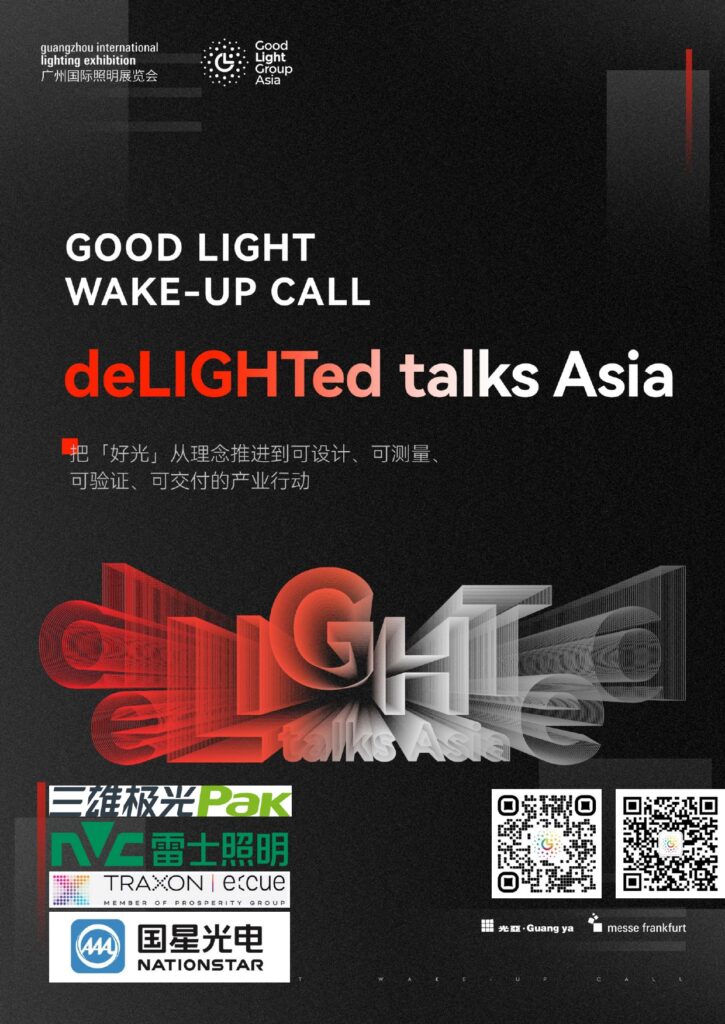
This is why deLIGHTed talks Asia @ GILE 2026 not only invites scientists, but also brings together international lighting designers, design organizations, healthy building experts, and China’s healthy lighting design standards community.
Because the real implementation of healthy lighting depends on designers.
Science answers: how does light affect humans?
Design must answer: how do we translate that science into a real human spatial experience?
1 | Designers Are Not Parameter Executors, but Translators Between Science and Human Experience
Today’s discussion on healthy light easily falls into two common misunderstandings.
The first misunderstanding is reducing healthy lighting to product parameters.
For example: tunable color temperature, fuller spectral distribution, higher melanopic metrics, circadian support, sleep enhancement, compliance with certain standards, or compatibility with control systems. These are all important, but still not sufficient.
The second misunderstanding is turning healthy lighting into emotional branding.
For example: more healing, more comfortable, more natural, more premium, more human-centered. These expressions are meaningful, but without scientific grounding, design rigor, and validation, they can easily become marketing language.
True healthy light must simultaneously answer three questions: First, is there a scientific basis? Second, is it properly designed within the space? Third, can it be measured and verified on site?
Lighting designers sit at the intersection of these three dimensions. They are not simply people who place luminaires in a space. Nor are they only responsible for making spaces look good. And they are certainly not just executors of product specifications. A good lighting designer is a translator between science, technology, architecture, behavior, visual perception, user experience, operations, and owner value.
In the era of healthy lighting, the importance of designers will only continue to grow.
2 | Why must healthy lighting be realized through design in order to be valid?
Because people do not live inside product specifications—they live inside spaces.
No matter how good a luminaire’s spectral data may be, if the installation position is wrong, if glare is excessive, if reflections are uncontrolled, if contrast is poorly managed, or if the scene control strategy is unclear, the result may still not be good light.
A space may achieve an impressive m-EDI target on paper, but if occupants do not actually receive appropriate eye-level light exposure in real use, it still cannot truly support circadian regulation.
An office environment that only aims for “brighter daytime lighting,” while ignoring glare, screen reflections, visual tasks, spatial layering, and personal control, may still lead to fatigue.
A hotel room that only designs a “sleep mode,” without a morning wake-up sequence, evening transition, low-disturbance nighttime environment, and user comprehension, will struggle to deliver genuine sleep-support value.
A school that focuses only on desk illuminance, while neglecting eye-level conditions, blackboard/screen visibility, daytime circadian support, evening study lighting, flicker, glare, and spatial uniformity, will find it difficult to move from “eye protection” toward a truly healthy learning environment.
Therefore, healthy lighting cannot rely solely on product specifications. It must be designed—embedded into specific spaces, specific times, specific behaviors, specific user groups, and real-world project constraints.
This is precisely where the value of designers lies.
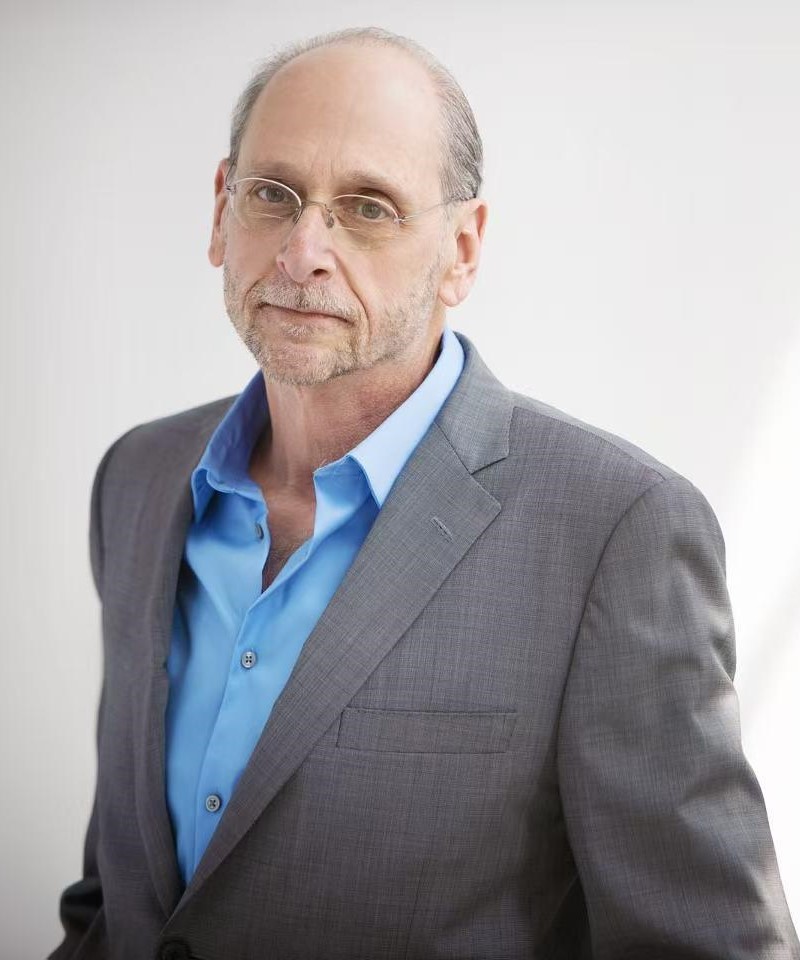
Jeff Miller
3 | Beyond Aesthetics: How Designers Translate Science into Human Experience
Jeff Miller is a International Association of Lighting Designers Fellow (FIALD), CLD, President of Jeff Miller Lighting Design, and past President of IALD. He will be speaking at the deLIGHTed talks Asia main forum on:
“Beyond Aesthetics: How Designers Translate Science into Human Experience”
This topic is critical because lighting design has long been misunderstood as the creation of “visual effects.” Dramatic light and shadow, premium atmospheres, layered spatial compositions, improved visual comfort, and memorable scenes—these are all important outcomes.
However, in the era of healthy lighting, designers are no longer working only with aesthetics; they are working with human states. Are people alert or fatigued? Comfortable or overstimulated? Supported by light during the day or lacking stimulation? Able to gradually wind down at night? Do they feel safe, stable, and cared for within a space? Can clients understand the value behind these design decisions? Can projects be delivered, operated, and verified in real conditions?
Jeff Miller’s theme reminds us that healthy lighting does not diminish design—it actually increases its importance. Because science does not automatically become experience, and metrics do not automatically become spatial value. Someone must translate them into lived reality. That role belongs to the lighting designer.
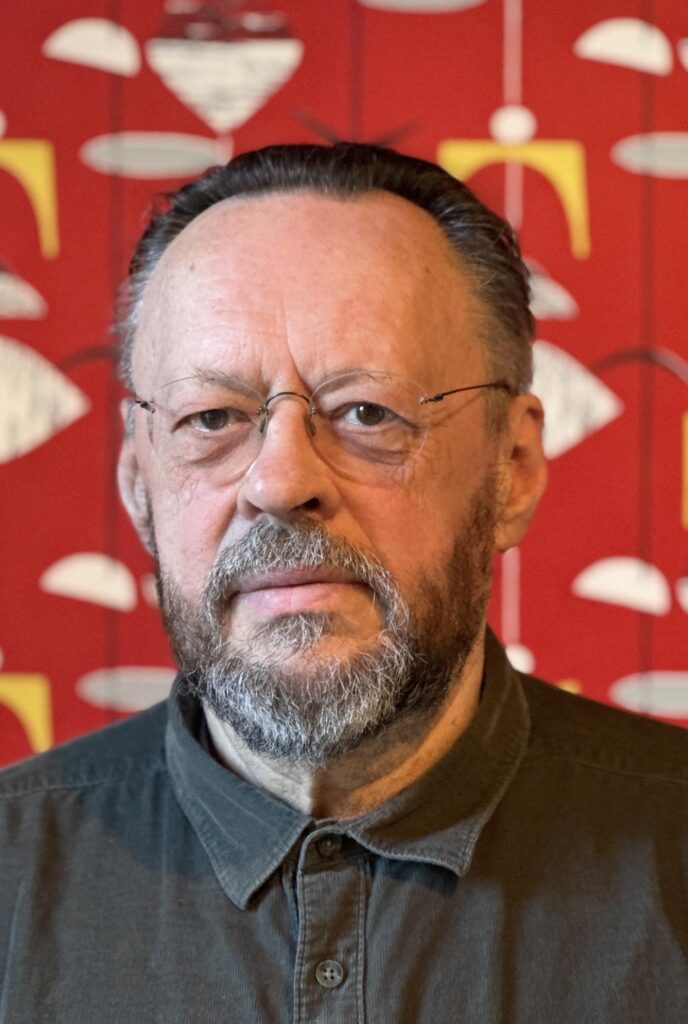
Kevan Shaw
4 | Integrated Lighting Is Not a Slogan, but an Execution Capability
Kevan Shaw is an independent lighting consultant, International Association of Lighting Designers Fellow, CLD, and Chartered Engineer (C.Eng.). He has extensive international experience across stage, television, film, and architectural lighting design.
He will be speaking at the main forum on:
“Practical Aspects for Implementing Integrative Lighting”
This topic is equally critical, because the real challenge in healthy lighting is not whether the concept is accepted—but how it is implemented.
How do designers translate scientific recommendations into actionable design solutions? How are luminaires selected? How are control strategies defined? How is on-site commissioning conducted? How do end users understand and operate the system? How is performance maintained during the operational phase?
And how do we balance budgets, engineering constraints, standards, client expectations, and the real limitations of physical space? When scientific targets conflict with visual comfort, architectural intent, energy consumption, or cost constraints, how should trade-offs be made?
If healthy lighting exists only as a concept without an implementation pathway, it cannot be realized in practice.
The value of Kevan Shaw lies in bringing integrative lighting back from theory to execution. This is particularly important for the lighting industry in China, where many companies and projects are already discussing healthy lighting, but there are still relatively few solutions that can truly be designed, installed, commissioned, operated, and verified.
For healthy lighting to move from forums into real projects, it requires precisely this kind of practice-oriented design perspective.

Martin Klaasen
5 | From the International Design Community: Biocentric Lighting and Owner Value
Martin Klaasen is an international lighting designer and representative of the VLDC / VLD Community. He will speak at the main forum on trends, opportunities, and strategic directions from the VLDC Future Forum on biocentric lighting, and will also contribute to planned participation in:
- FG-05 | HCL-ready IES Profile
- FG-06 | Good Light Wake-up Call Full Value-chain Action Consensus
His participation is particularly significant because healthy lighting is no longer only a scientific issue or a product-level discussion. It has become a new shared challenge for the international design community: how lighting design evolves from “illuminating space” to “supporting life.”
This raises fundamental questions. How do designers interpret circadian rhythm, visual comfort, emotional response, behavior, and long-term human experience? How can healthy lighting be understood by clients as asset value rather than additional cost? How can design tools, product data, control systems, and field verification genuinely support the design process? And will future HCL-ready data be fully integrated into design workflows?
This is why FG-05 is particularly important. The HCL-ready IES Profile is not merely a technical document. It determines whether designers can access healthy lighting data directly within design software; whether eye-level exposure can be simulated; whether different luminaires, spectra, and dimming states can be compared in terms of human impact; and whether healthy lighting can be translated from parameters, products, and control systems into a design language.
If data cannot enter design, healthy lighting cannot become part of the space. If design cannot enter client communication, healthy lighting cannot become project value. If project value cannot be verified, healthy lighting cannot become an industry action.
Martin Klaasen plays a bridging role between the international design community, owner value, and the next generation of demonstrator projects.
Amardeep Dugar
6 | Public Buildings, Public Health, and Wellbeing in Lighting Design
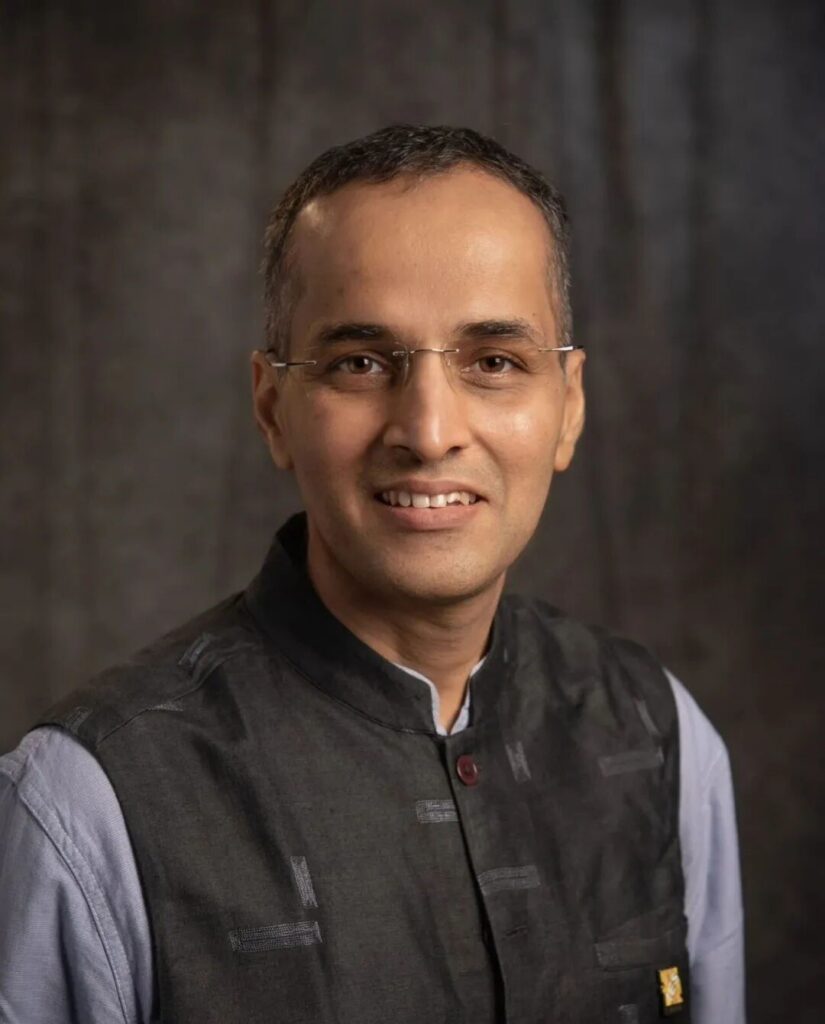
Amardeep Dugar is a co-founder of VLDC and Chair of the Global Development Committee at the Illuminating Engineering Society. His participation expands the healthy lighting discourse into public buildings, public health, public policy, and the broader wellbeing dimension of lighting design.
This perspective is important because healthy lighting cannot remain limited to a small number of premium or high-profile projects. If Good Light is to become a true industry movement, it must extend into a much wider range of public contexts: schools, hospitals, libraries, office buildings, eldercare facilities, public service infrastructure, transportation environments, community spaces, and the urban night-time environment.
In public buildings, lighting does not affect a single user—it affects groups of people simultaneously. In public health contexts, lighting is not only a matter of comfort, but a matter of collective wellbeing and social impact.
Amardeep Dugar’s perspective helps reframe a key assumption: healthy lighting is not a luxury. It should not be restricted to high-end commercial spaces or showcase projects. Instead, it should gradually become a core consideration in public architecture, public health strategy, and social infrastructure.
This is also why deLIGHTed talks Asia brings scientists, designers, industry organizations, and companies into the same conversation. If healthy lighting is to create real impact, it must evolve from project-level language into public value.
Shi Hengzhao
7 | Chinese Design Leadership: From International Concepts to Local Standards and Project Practice
Healthy lighting cannot remain only within the presentations of international experts. Ultimately, it must enter the Chinese market, Chinese projects, Chinese designers, Chinese building owners, and the context of Chinese standards. This is why this event places special emphasis on the participation of China’s design and standards communities.
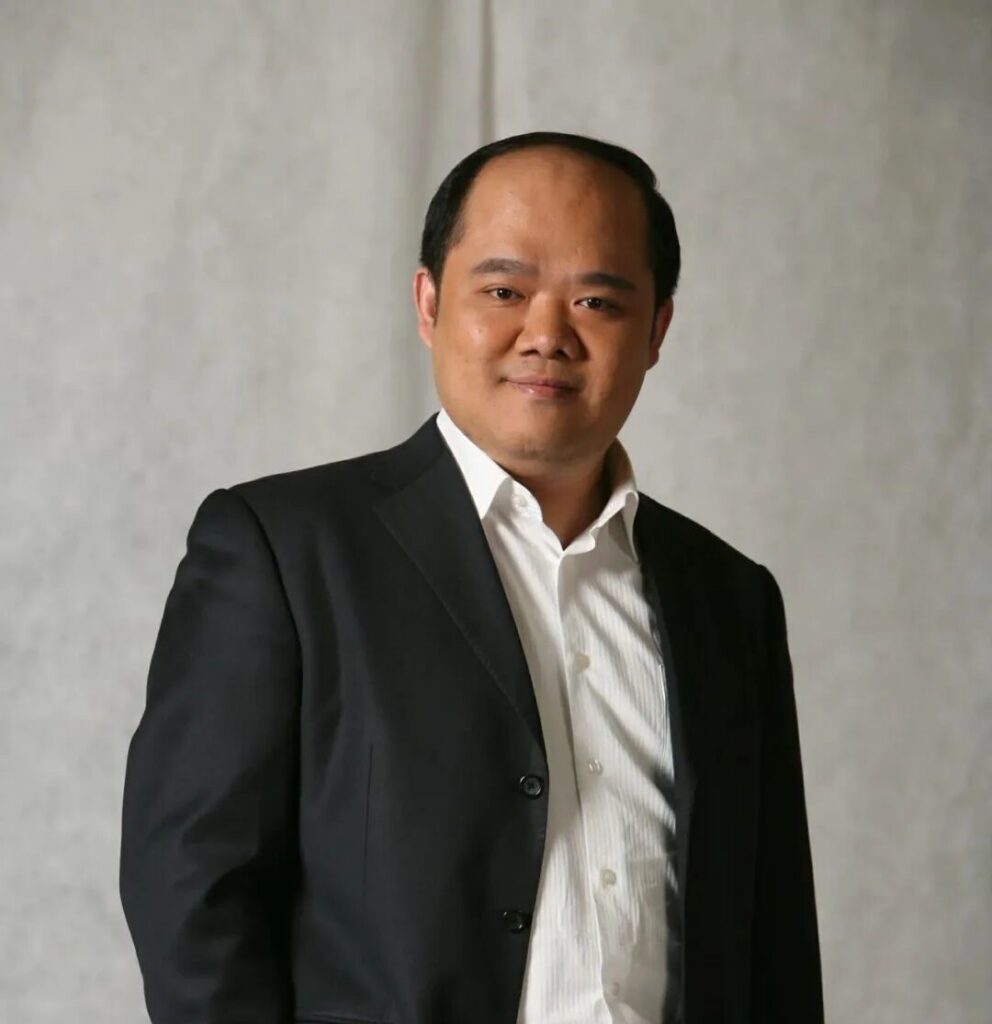
Mr. Shi Hengzhao: Healthy Lighting Design Standards and Local Adaptation
Mr. Shi Hengzhao is both a designer and one of the chief editors of the Indoor Space Healthy Lighting Design Standard published by the Architectural Electrical Branch of the China Building Decoration Association. His participation is especially important because for healthy lighting to move from international science to practical application in China, it must be translated through local design language and standards frameworks.
China’s offices, educational facilities, residential developments, hotels, healthcare environments, commercial spaces, and public projects all have their own project logic, design processes, engineering practices, owner requirements, and market conditions. International science cannot simply be copied and pasted, and international standards cannot remain as references alone. They must be translated into design methodologies that Chinese designers can understand, companies can implement, owners can accept, and projects can successfully deliver.
Mr. Shi’s role is to help healthy lighting move from concepts into design standards, design education, and local practice. Healthy lighting cannot ultimately remain only within the language of science and products. It must become a design methodology that designers can understand, owners can embrace, projects can deliver, and on-site performance can verify.
8 | Why Designers Must Participate in Focus Groups & Action Day
The main forum is a place to understand trends.
But what designers should truly participate in is focus groups and action day, because many of the critical questions in healthy lighting cannot be solved simply by listening to presentations.
For example: How will designers use EDI / DER in future workflows? Will HCL-ready IES Profiles actually be integrated into design software? How should product data be structured to genuinely support design decisions? How can design intent be closed-looped with on-site measurement and verification? How can healthy building frameworks, WELL, Delos systems, and owner value be meaningfully translated into design language? How can designers avoid being constrained by product-driven narratives? How can they balance visual aesthetics, circadian support, energy performance, control logic, cost, and real operational constraints? And how can demonstration projects be established so that healthy lighting moves from drawings into real built environments?
These questions require designers to sit at the working table. Not as passive listeners, but as active participants in defining what comes next.
9 | Recommended Priority Focus Groups for Designers
In this edition of deLIGHTed talks Asia, designers are especially encouraged to engage with the following key circles:
FG-02 | Healthy Buildings and Owner Value
Time: June 10, 10:00–11:00
Who should attend: Lighting designers, architects, interior designers, WELL APs, developers, owners, healthy building consultants.
Core questions:
- How can healthy lighting move from a wellness narrative to measurable owner value?
- How does it connect with WELL, Delos, ESG frameworks, employee wellbeing, and asset value?
- How do owners evaluate whether healthy lighting is worth the investment?
- How can designers translate scientific language into project language that owners can understand?
FG-04 | Office, Education, and Good Homes
Time: June 10, 16:00–17:00
Who should attend: Office, education, residential, hospitality, smart home sectors, designers, owners, and product companies.
Core questions:
- How can office environments move from static lighting to 24-hour healthy lighting systems?
- How can classroom lighting go beyond desk illuminance and “eye protection” narratives?
- How can residential and “good home” design establish full-day lighting strategies from morning to night?
- How can hotels translate healthy lighting into guest experience and sleep value?
FG-05 | HCL-ready IES Profile
Time: June 11, 10:00–12:00
This is a must-attend session for designers, because it is not only about data—it is about the future of design workflows.
Core questions:
- What should healthy lighting product data include?
- Do current IES files need to be expanded?
- How should spectral data, EDI / DER, dimming states, and eye-level exposure be structured?
- How can design software read and interpret healthy lighting data?
- How can designers convert this data into spatial design decisions?
FG-06 | Good Light Wake-up Call: Full Value Chain Action Consensus
Time: June 11, 14:00–17:00
This session brings the full industry chain into alignment. It is suitable for designers, corporate leaders, industry organizations, standards bodies, healthy building consultants, owners, and potential demonstration project partners.
Core questions:
- What comes after the Good Light Wake-up Call initiative?
- Which scenarios are suitable as first-wave demonstration projects?
- How can designers actively participate in working groups?
- How can companies support design and validation processes?
- How can forum outcomes be translated into real, executable projects?
10 | In the Era of Healthy Lighting, Designers Must Reclaim the Ability to Define Spatial Value
For a long time, the lighting industry has been trapped in competition driven by products, price, and specifications. Luminaire costs have decreased, technology has become increasingly complex, and market narratives have multiplied. Yet in many spaces, lighting has not truly become better.
The emergence of healthy lighting presents designers with an opportunity to redefine value. Designers are no longer required to be led solely by product specifications, to focus only on atmospheric rendering, to merely meet illuminance standards, or to simply select, place, and adjust luminaires on behalf of clients.
Instead, designers can return to the center of spatial value creation: using science to understand people, using design to organize light, using technology to deliver scenarios, using measurement to verify outcomes, using experience to communicate value to clients, and using projects to drive industry evolution.
This is also the key message deLIGHTed talks Asia seeks to convey: the future of healthy lighting will not be defined by scientists alone, nor by companies alone, nor by standards documents alone. It must be co-defined by scientists, designers, industry players, control systems, measurement tools, healthy building experts, and owners. Within this ecosystem, designers remain one of the most critical translators.
Special Acknowledgements
We sincerely thank PAK / 三雄极光, NVC Lighting / 雷士照明, Traxon e:cue / 卓生照明, and Nationstar / 国星光电 for their generous sponsorship and support of deLIGHTed talks Asia @ GILE 2026 / Good Light Wake-up Call.




It is precisely through the involvement of these industry partners that healthy lighting has the opportunity to move beyond science, standards, and concepts, and further into products, systems, real-world applications, and live projects.
Conclusion: If Science Is the Foundation, Design Is the Path That Makes Healthy Lighting Happen
Healthy lighting cannot stop at specification sheets. Parameters matter, metrics matter, standards matter—and scientific evidence matters even more.
But what truly changes human experience is light in space: the light that wakes us up in the morning; the light that supports children while they learn; the light that guides doctors during night rounds; the light that helps elderly people move safely at night; the light in offices that keeps people alert without fatigue; the light in hotels that gradually helps people unwind; and the light in public buildings that creates a sense of safety, comfort, and orientation. All of this requires design.
In June, Guangzhou. deLIGHTed talks Asia @ GILE 2026 will bring international science, design practice, healthy buildings, industry value chains, and China’s real-world application contexts into a shared platform.
If you are a lighting designer, architect, interior designer, design institute, consultancy, developer, owner, or someone exploring how healthy lighting can truly enter real projects, this time—do not come only to listen. Come with questions, come with projects, come with design methodologies, and come prepared to co-create the next generation of healthy lighting language.
Because the true future of healthy lighting is not written in specification tables—it is designed into human life.

 English
  Chinese (China)
  Chinese (Taiwan)