
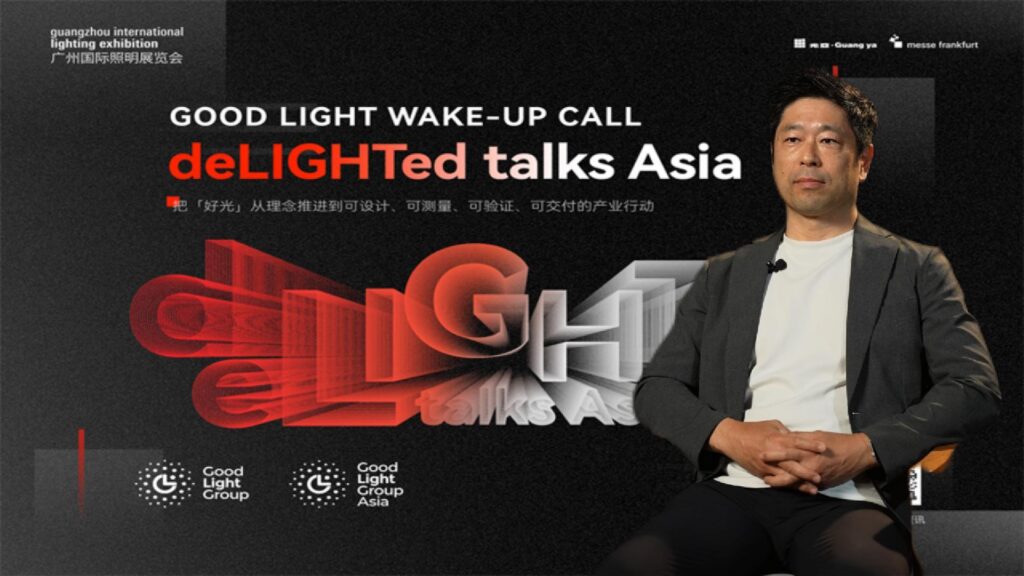
What happens when we stop thinking about lighting only in terms of lumens, illuminance, CCT and CRI?
In this interview, Kei Haraguchi explains the thinking behind Dynasolis—a simple system using two LED sources that allows both CCT and melanopic ratio to be tuned independently.
The bigger idea is even more important: as LED efficiency approaches its theoretical limits, the next opportunity for innovation may be spectrum design.
Instead of optimizing lighting only for energy efficiency, the industry can begin asking:
▪️ How can light better support human health and well-being?
▪️ How should we measure the biological impact of light?
▪️ What new metrics should complement traditional lighting measurements?
▪️ How can manufacturers, designers, governments, business and academia work together to redefine the value of light?
Kei also highlights the need to look beyond traditional metrics and consider measures such as melanopic ratio and equivalent melanopic lux when evaluating lighting.
This is an important conversation as we move toward a future where lighting is not only energy-efficient, but also human-centered and health-supportive.

 English
  Chinese (China)
  Chinese (Taiwan)