
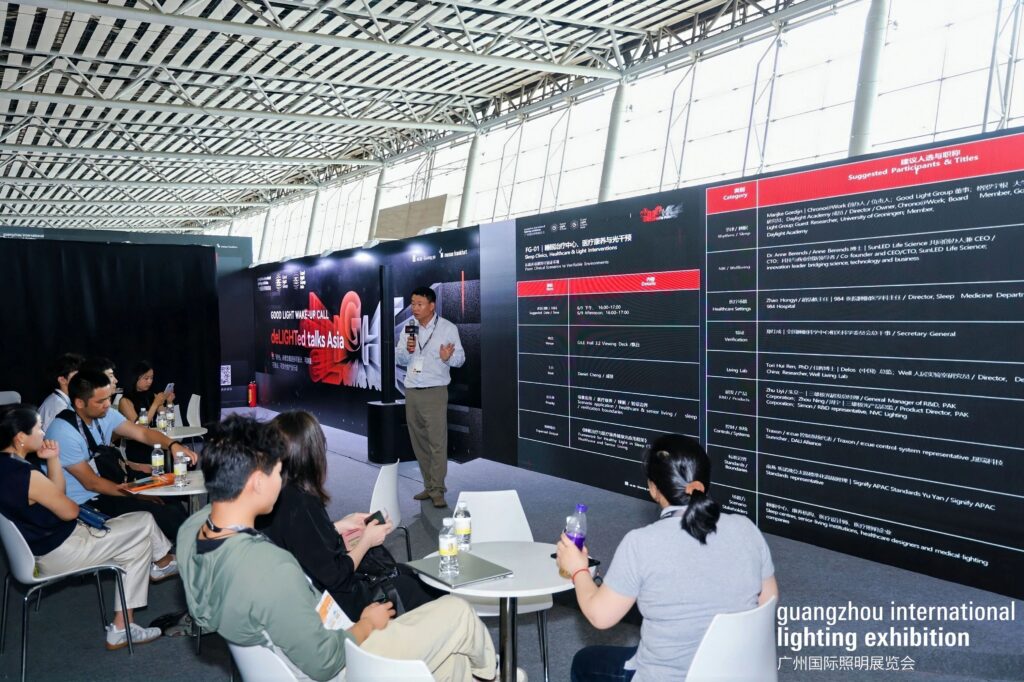
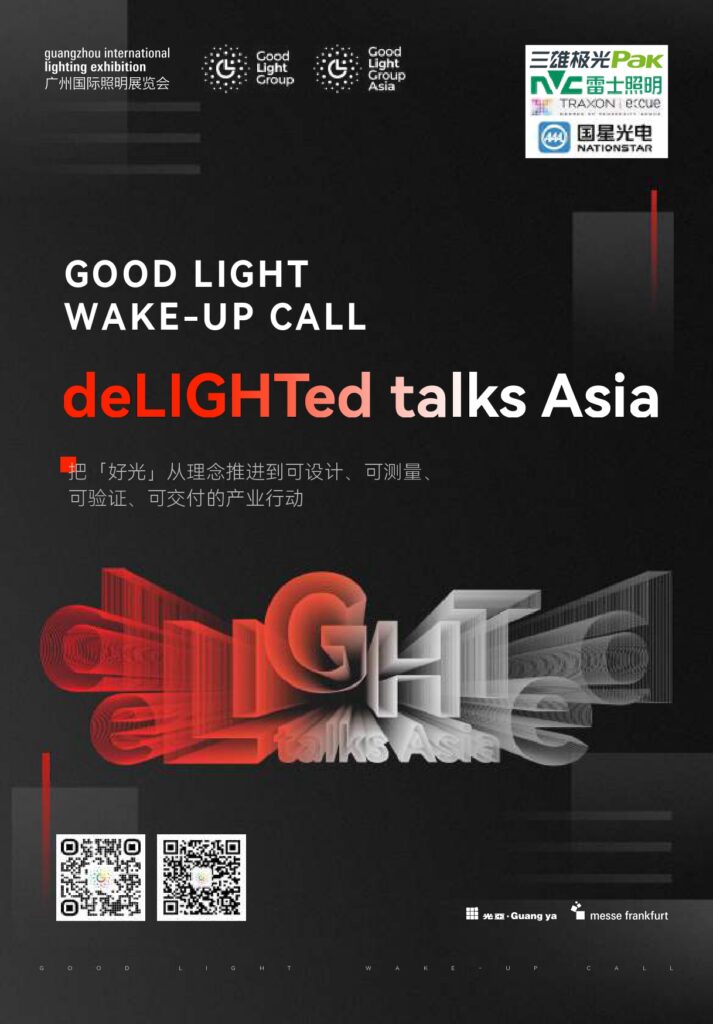
On June 9, the 2026 Guangzhou International Lighting Exhibition (GILE) officially kicked off. As a flagship event of the exhibition, the deLIGHTed Talks Asia series, organized by Good Light Group Asia (GLGA), made its impressive debut. Guided by the philosophy of “Good Light Wake-up Call,” the initiative is committed to transforming healthy lighting from an industry concept into actionable, real-world implementation—making it designable, measurable, verifiable, and deliverable.
On the same day, the first Focus Group Session was successfully held on the viewing deck of Hall A, Booth 3.2. A group of industry elites gathered to engage in in-depth discussions on the challenges of light applications in healthcare and elderly care settings. The session helped build industry consensus, clarify action plans, and inject strong momentum into the development of the healthy lighting niche sector.
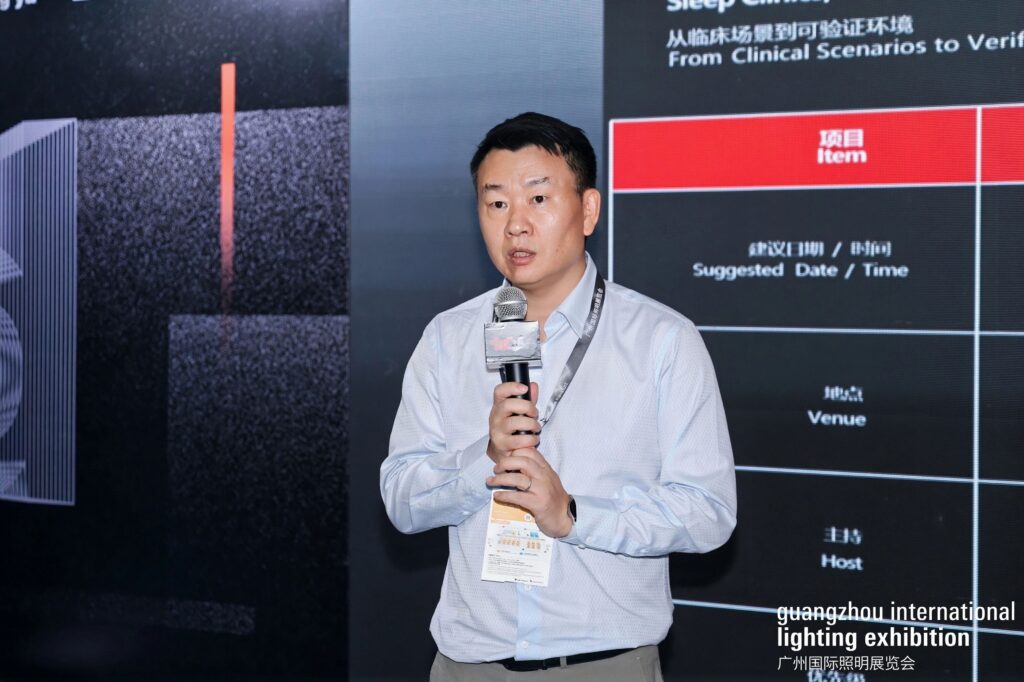
The first Focus Group Session, themed “Sleep Clinics, Healthcare & Light Intervention: From Clinical Scenarios to Verifiable Environments,” was moderated by Daniel Cheng, Secretary-General of GLGA. The session continued the working-style discussion model, moving away from one-way presentations. The discussion was anchored in five key dimensions—international perspectives, scientific theory, standards systems, scenario value, and industry development—directly addressing the pain points, bottlenecks, and obstacles currently hindering the implementation of healthy lighting in healthcare and elderly care settings.
At present, while the concept of healthy lighting has become widespread across the industry, challenges are increasingly evident in specialized medical and elderly care scenarios such as sleep clinics, hospitals, and long-term care facilities. These include inconsistent product parameters, unquantifiable light intervention effects, missing implementation standards, and a disconnect between clinical applications and lighting technology. Traditional lighting specifications only reflect basic metrics like power, luminous flux, and color temperature, which fall far short of the specialized and precise requirements of medical settings—such as spectral distribution, circadian light regulation, ocular light exposure, and melatonin-related indicators (melanopic EDI/DER). These limitations also prevent clinical outcome validation and project acceptance, making them a key barrier to the deeper adoption of healthy light in the healthcare and eldercare sectors.
During the session, guests shared practical recommendations for implementing healthy lighting products in medical and elderly care scenarios, drawing on perspectives from clinical practice, scientific research data, product development, and engineering deployment. They engaged in lively debate and careful analysis of core industry issues, including product irregularities, gaps in standards, and poor technical integration.
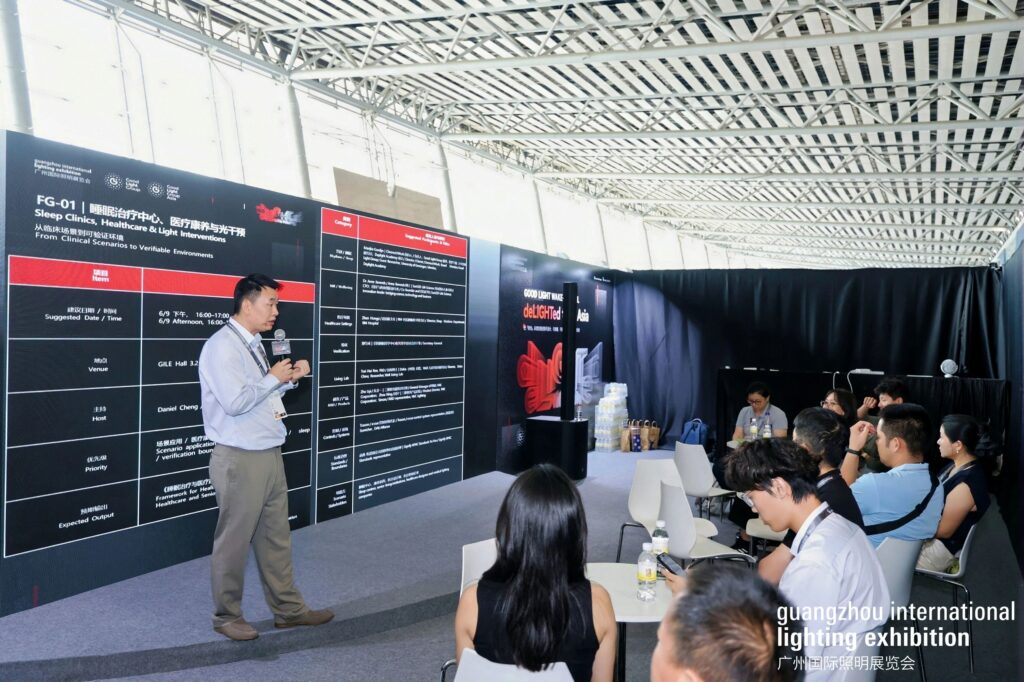
After multiple rounds of in-depth exchange and brainstorming, the participating guests reached several key industry consensus points. All parties agreed that clinical institutions, research institutes, and the lighting industry must work together to form an integrated force across production, academia, research, and application. Priority should be given to developing specialized technical guidelines for light environments in specific scenarios such as healthcare, elderly care, and sleep clinics, in order to fill the gaps in standards within these niche sectors. At the same time, the industry will launch pilot demonstration projects for light interventions, using real projects as vehicles to test the actual effectiveness of light intervention technologies, products, and solutions, and to create replicable and scalable implementation models.
Building on the outcomes of this session, GLGA has further clarified the core direction of its special task force. Moving forward, the task force will focus on two main priorities:
First, accelerating the development of a quantitative evaluation system for light intervention effects, introducing internationally recognized metrics such as EDI, DER, and CIE S 026, and establishing a complete measurement, assessment, and validation process—so that the effectiveness of light environments in medical and elderly care settings can be supported by data and verified by numbers.
Second, comprehensively promoting the integration and precise alignment of resources across the lighting industry chain—connecting data links across light sources, luminaires, intelligent controls, design software, and on-site measurement—thereby breaking down industry information barrier and laying a solid foundation for future cross-enterprise and cross-sector deep industry collaboration.
It is understood that the deLIGHTed talks Asia Focus Group Session is a series of ongoing working seminars, focusing on the development of a unified data language for healthy light. In the coming sessions, enterprises and institutions across the entire industry chain—including LED light sources, luminaires, intelligent controls, design software, measurement and testing, and building owners—will reconvene to discuss key issues such as upgrading existing IES files, standardizing healthy light data, achieving full-link data collaboration, and closing the loop on on-site measurement. The goal is to promote end-to-end standardization of healthy light—from product parameters and software design to system operation and on-site validation—so that healthy lighting can truly move beyond conceptual marketing and be fully integrated into engineering systems and daily operations.
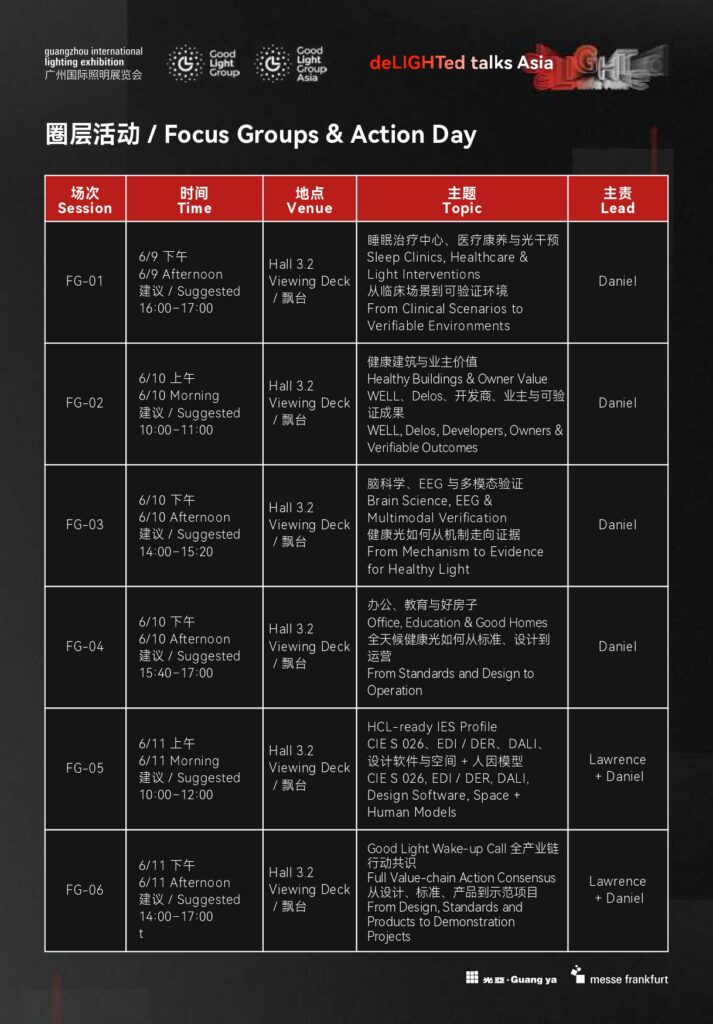
This deLIGHTed talks Asia Focus Group Session, taking niche scenarios as its entry point, was problem-oriented, consensus-driven, and action-focused. It not only clarified the development path for light interventions in the healthcare and elderly care sectors but also charted a direction for the standardization, normalization, and industrial development of the healthy lighting industry as a whole. Looking ahead, as the tasks of various working groups are implemented, demonstration projects advance, and collaboration across the entire industry chain deepens, healthy light will gradually penetrate diverse scenarios—including medical facilities, offices, education, and residential spaces—helping the lighting industry move toward a new era of human-centric light environment services.

 English
  Chinese (China)
  Chinese (Taiwan)