Day 3 | Overcast, but No Rain: Good Light Wake-up Call Enters Deep Waters — Day 3 of deLIGHTed Talks Asia @ GILE 2026
By Lawrence Lin
Guangzhou International Lighting Exhibition is rarely blessed with such good weather. Overcast, but no rain. The humidity is still high, but in all my years attending GILE, this is already an immense gift. The exhibition halls are still buzzing with activity—brands, products, technology, channels, traffic, pricing, solutions… these familiar words still form the most tangible reality of the lighting industry.
But on Day 3 of deLIGHTed Talks Asia @ GILE 2026, our discussions were not just about lamps. We discussed: How does light enter healthcare and elderly care? How does it enter residential life? How does it enter brain science? How does it enter healthy buildings? How is it measured, validated, and operated? And how does it truly become value for buildings, industry, and people—moving from a beautiful concept to reality?
If Day 1 was a Good Light Wake-up Call|好光覺醒行動—an awakening; and Day 2 was a dialogue between science, standards, design, and the industry—then Day 3 has taken us into deeper waters: moving from the concept of healthy light to verifiable real-world value.


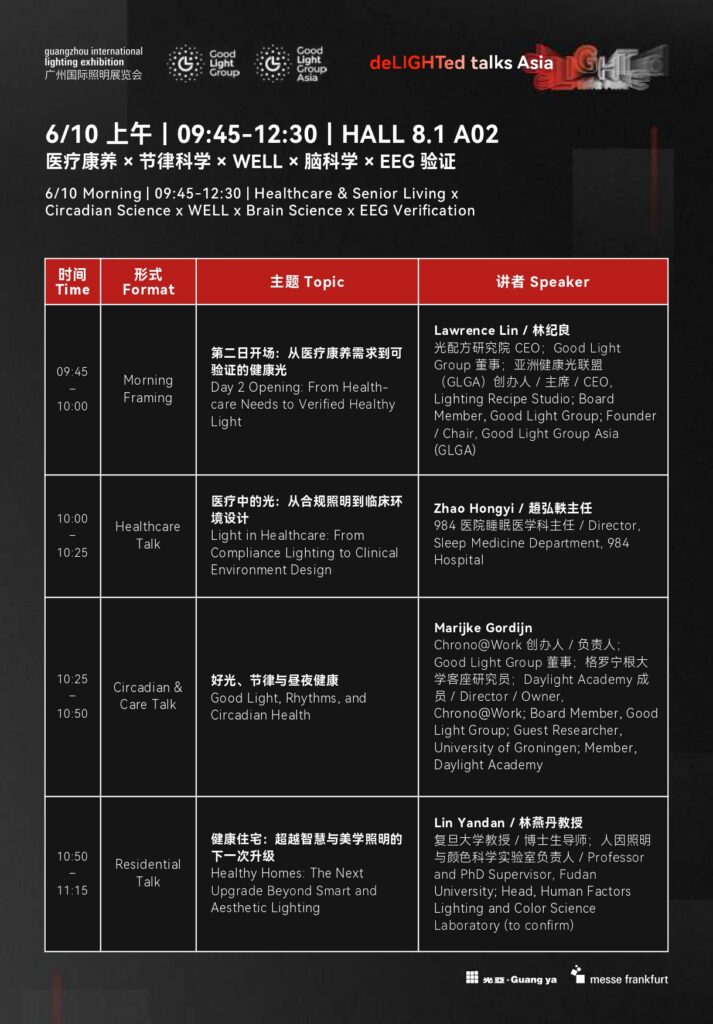
Morning: From Healthcare & Elderly Care to Verifiable Healthy Light
The theme of the morning main forum on June 10 was:
Healthcare & Senior Living × Circadian Science × WELL × Brain Science × EEG Verification
Throughout the morning, we kept returning to one fundamental bottom line:
Without verification, we should not make biological claims.
If healthy light remains only within the lighting industry, it easily becomes product rhetoric. If it remains only in scientific papers, it struggles to change real spaces. If it remains only in design concepts, it is difficult to convince healthcare professionals, building owners, end users, and facility operators to truly adopt it.
Therefore, we must push healthy light forward on three levels:
- From scientific insight to application scenarios
- From application scenarios to data validation
- From data validation to trustworthy, real-world value

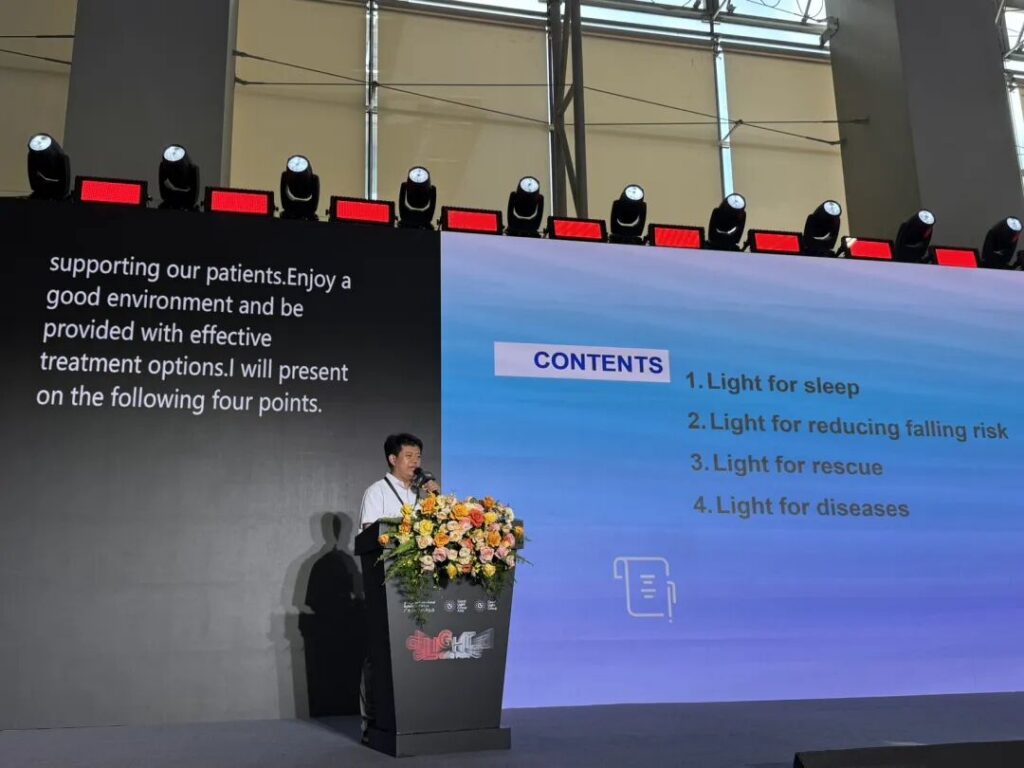
Light in Healthcare: Cannot Remain at the Level of Compliance Lighting
The first session of the morning featured Director Zhao Hongyi, who shared insights on light in medical and sleep medicine scenarios, drawing from healthcare and sleep medicine perspectives.
In a hospital setting, light is not just about lux, not just about energy efficiency, and not just about meeting codes and standards. For patients, light can affect rest, anxiety, sleep, circadian rhythms, and the overall hospital experience. For healthcare workers, light can affect nighttime alertness, visual tasks, fatigue, and safety. For hospital administrators, light also impacts spatial quality, operational efficiency, and the perception of medical services.
But we must also be cautious: general lighting is not medical treatment. Healthy light cannot be simplistically packaged as a medical claim.
What is truly worth pursuing is for light to become a supportive, preventive, and evidence-informed environmental support tool in healthcare and elderly care settings. Supportive. Preventive. Evidence-based. This is the proper posture for healthy light to enter medical scenarios.

Good Light Must Respect Human Circadian Rhythms
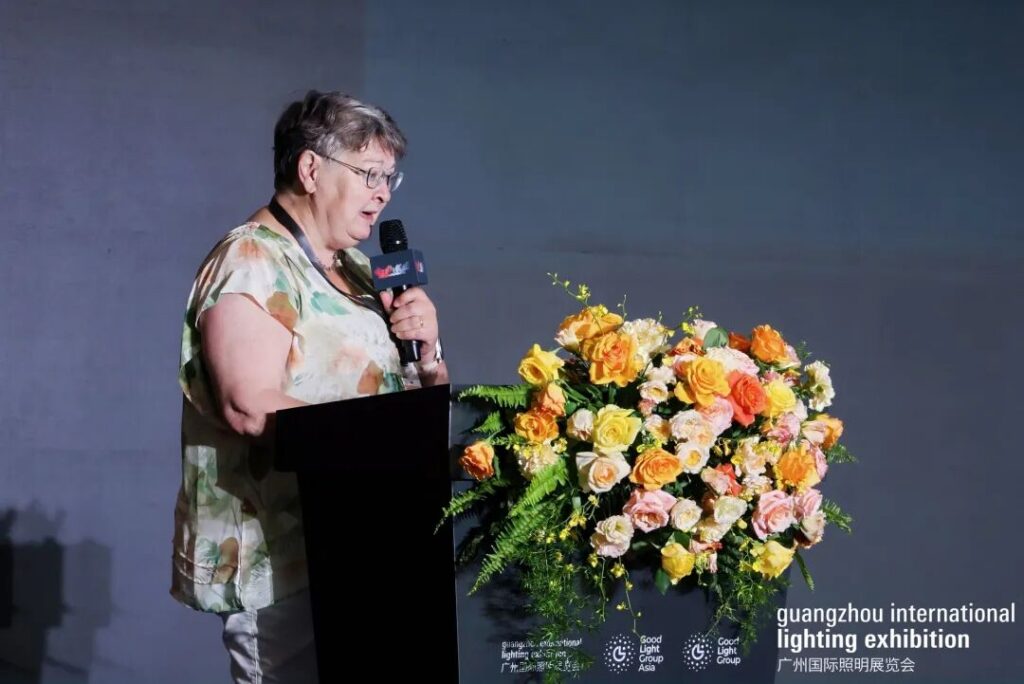
Following that, Marijke Gordijn, speaking from the perspectives of sleep, physiological rhythms, and circadian health, reminded us: human beings are not machines. We are rhythmic life forms.
Our sleep, wakefulness, body temperature, hormones, metabolism, mood, alertness, and performance are all connected to our internal biological clock. And light is one of the most important time signals that regulates the human circadian system.
Therefore, healthy light is not about making it brighter and brighter all day long. High color temperature is not automatically healthy, nor is low color temperature automatically comfortable. And healthy light cannot be defined solely by illuminance and color temperature.
Truly good light must answer an even more specific question: What light, at what time, for whom, and for what purpose?
Good light is about delivering the right light at the right time. Good light is light that respects the human circadian rhythm.

Healthy Homes: The Next Upgrade Beyond Intelligence and Aesthetics
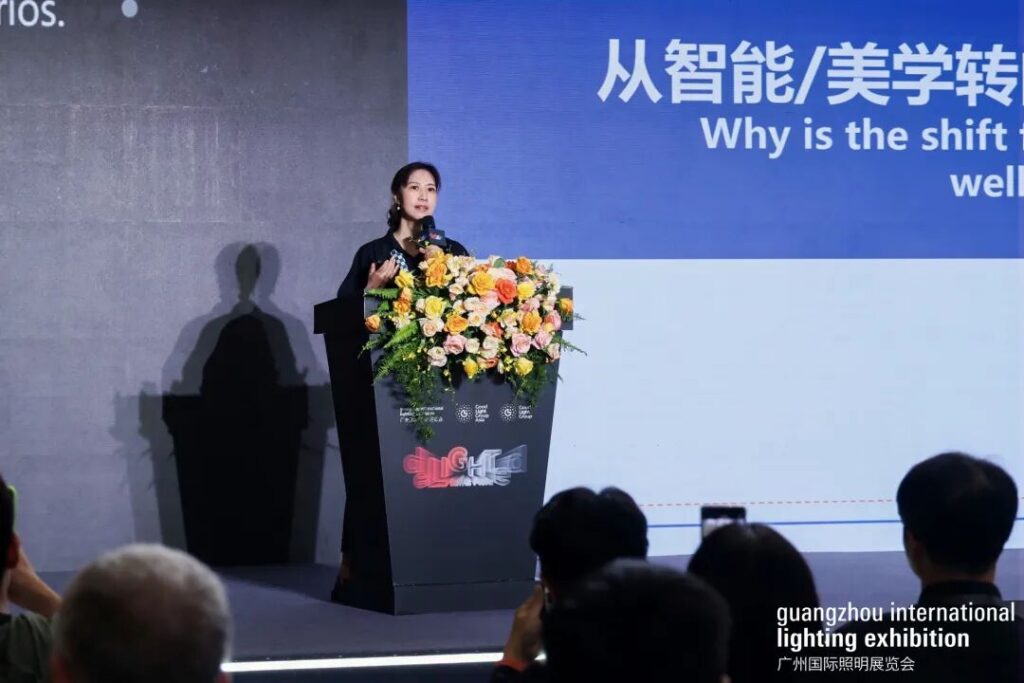
林燕丹教授 brought the conversation back to the space that accompanies us the longest every day: the home.
In the past few years, residential lighting has followed two very mainstream directions. One is the smart home—we talk about control, scenes, voice commands, apps, and IoT. The other is aesthetic lighting—we talk about atmosphere, decoration, style, materiality, and spatial expression. All of these are important.
But in the next phase, residential lighting may have to answer deeper questions: How does light in the home support a person’s daily rhythms? How does it support morning wake-up, daytime work and study, evening relaxation, and nighttime sleep? How does it accommodate the different visual and physiological needs of the elderly, children, and various family members? How does it strike a balance between aesthetics, intelligence, and health?
A home is not just a living space. A home is where our daily rhythms are shaped. Therefore, healthy residential lighting should not just be smarter or more beautiful. It should be more understanding of people, more understanding of time, and more understanding of life.

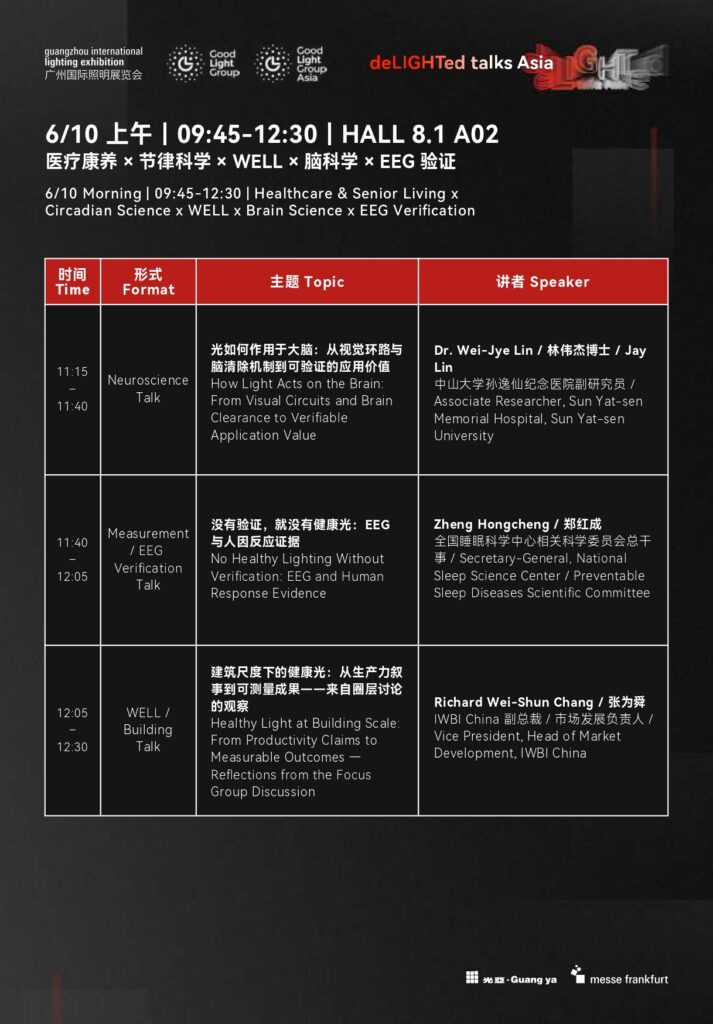
How Light Affects the Brain: The More Cutting-Edge, the More Humility Required
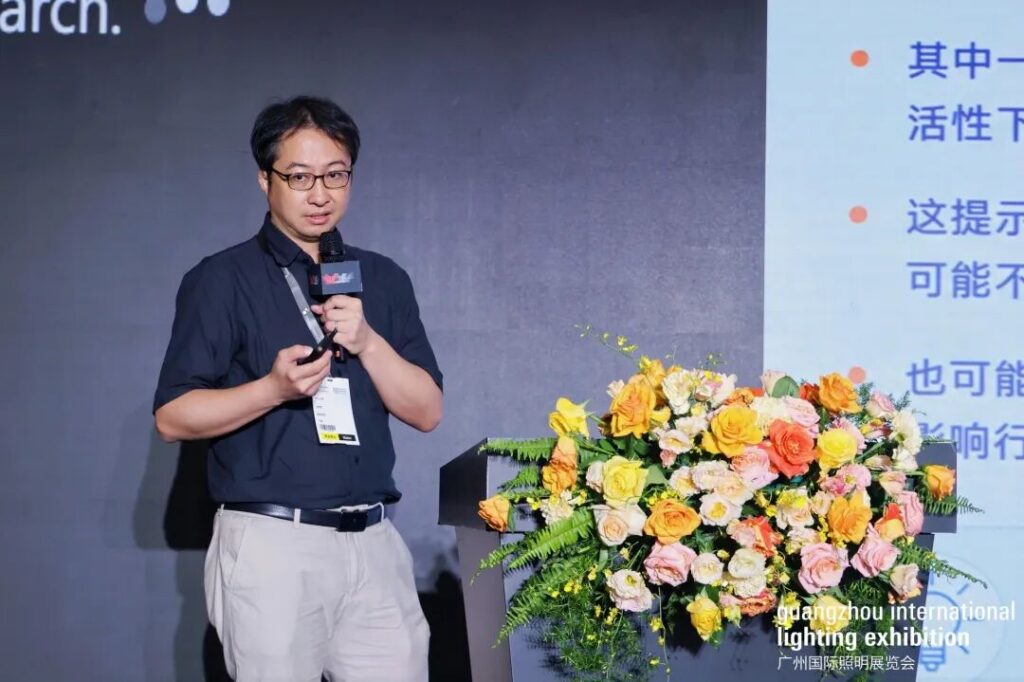
Jay Lin‘s presentation brought the discussion toward brain science, the visual circuit, and neural mechanisms.
Light enters through the eyes, but its effects may not stop at visual image formation. It may connect to the brain, the circadian system, and even more complex physiological mechanisms. This is extremely cutting-edge and very important.
But the deeper we venture into brain and biological mechanisms, the more scientific humility we need. We cannot simplify complex mechanisms into a single product claim. We cannot package preliminary research directly into commercial promises. We cannot turn scientific possibilities into marketing certainties.
The more biological the claim, the stronger the evidence should be.
Mechanisms are important, but applied value must be validated.

Without Verification, There Is No True Healthy Light
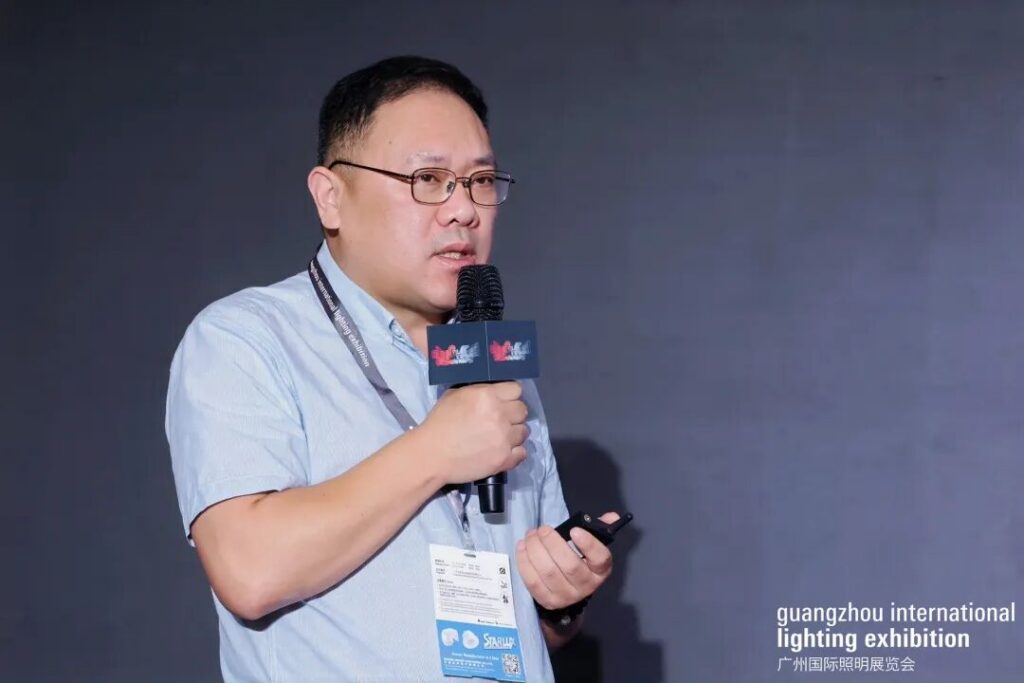
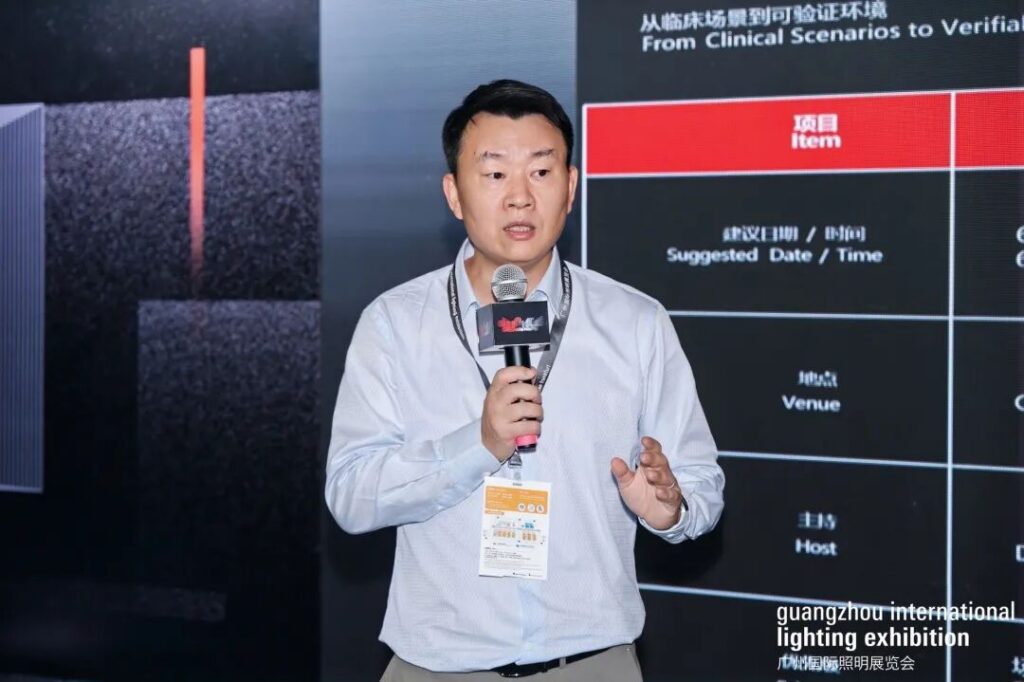
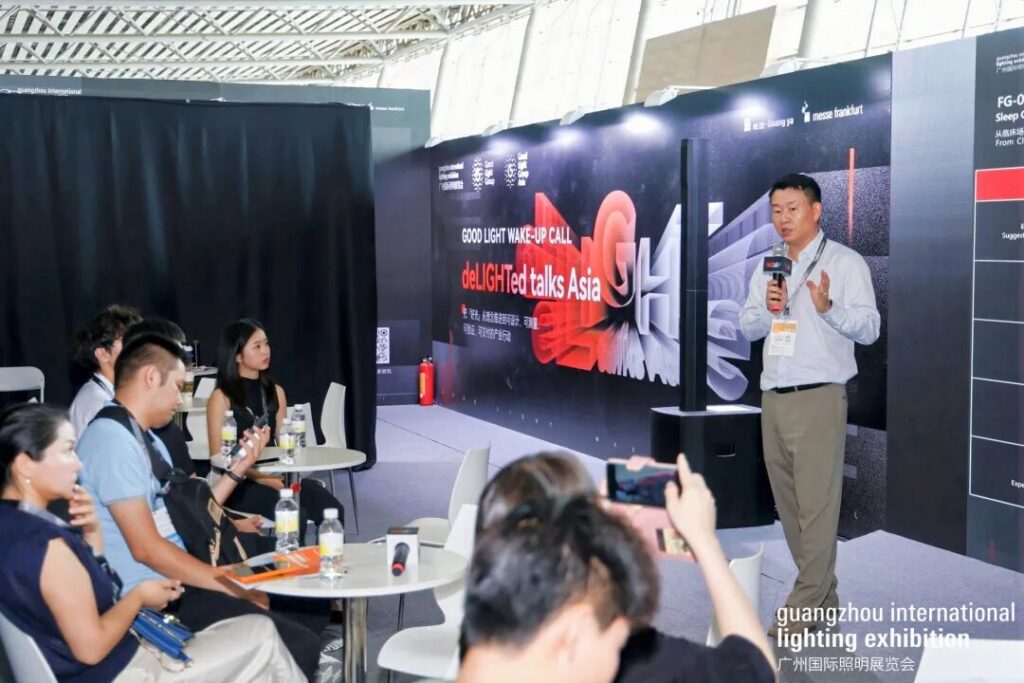
鄭紅成‘s presentation returned directly to the most fundamental bottom line of the morning:
No Healthy Lighting Without Verification
If we claim that light affects sleep, we must ask: How is it measured? If we claim that light affects mood, we must ask: How is it verified? If we claim that light affects focus, recovery, or brain response, we must ask: Where is the chain of evidence?
Lux and CCT are not enough. Looking only at illuminance and color temperature is no longer sufficient. The verification of healthy light in the future may require a more complete evidence chain:
- Light environment measurement
- Ocular light exposure
- Time-logging data
- Sleep data
- Subjective assessments
- Physiological responses
- And even EEG, HRV, or other multimodal data
Of course, this does not mean that every project needs to conduct EEG measurements. But it reminds us: if we want to talk about deeper human factors and biological effects, we must establish more rigorous verification tools and methods.
Verification is not a burden. Verification is the foundation of trust.

From Productivity Narratives to Measurable Outcomes
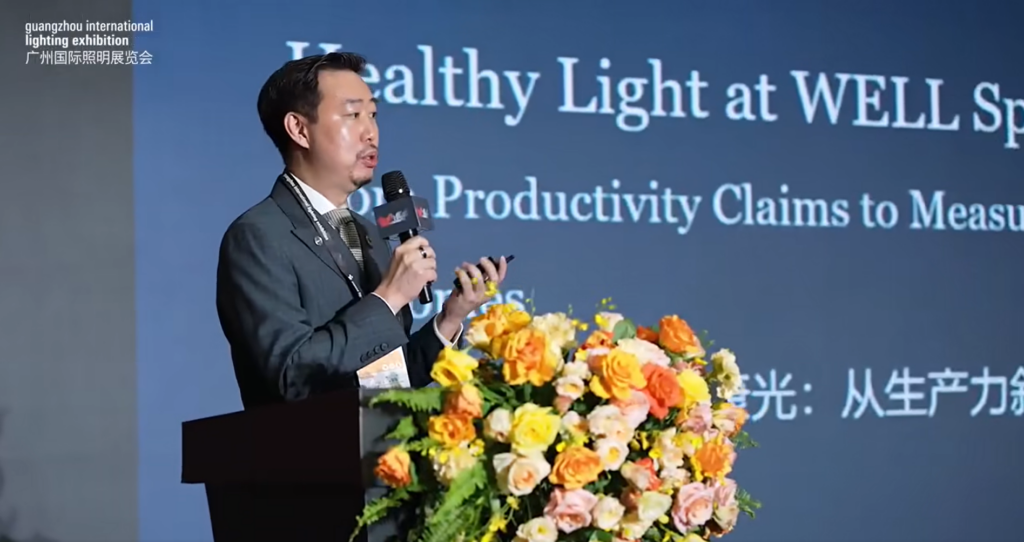
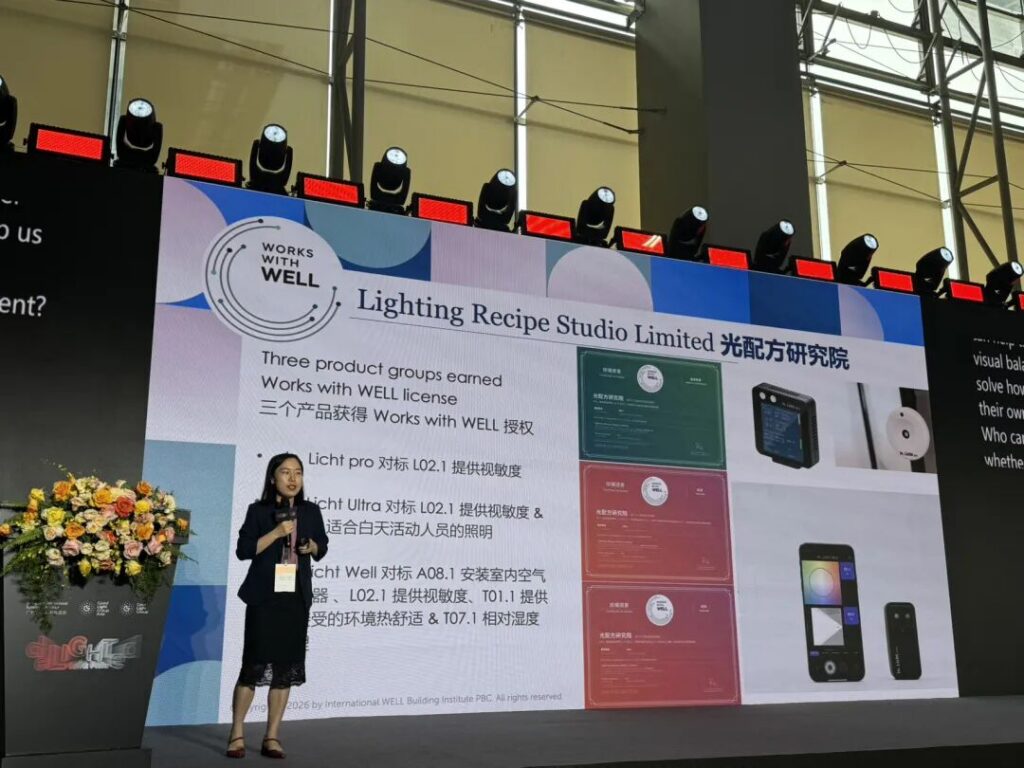
At the end of the morning session, Richard Chang, speaking from the perspectives of IWBI and WELL, brought healthy light back to the building scale.
If healthy light is to have a real impact, it cannot remain at the level of a single product, a single scenario, or a single metric. It must enter the building scale. Within a building, healthy light needs to be specified, measured, documented, verified, and also operated over the long term.
In the past, many discussions about healthy buildings often used language such as productivity, well-being, experience, and asset value. All of these are important. But without measurable outcomes, it is difficult to build trust.
Only when healthy light can be measured, documented, and operated can it truly become building value.
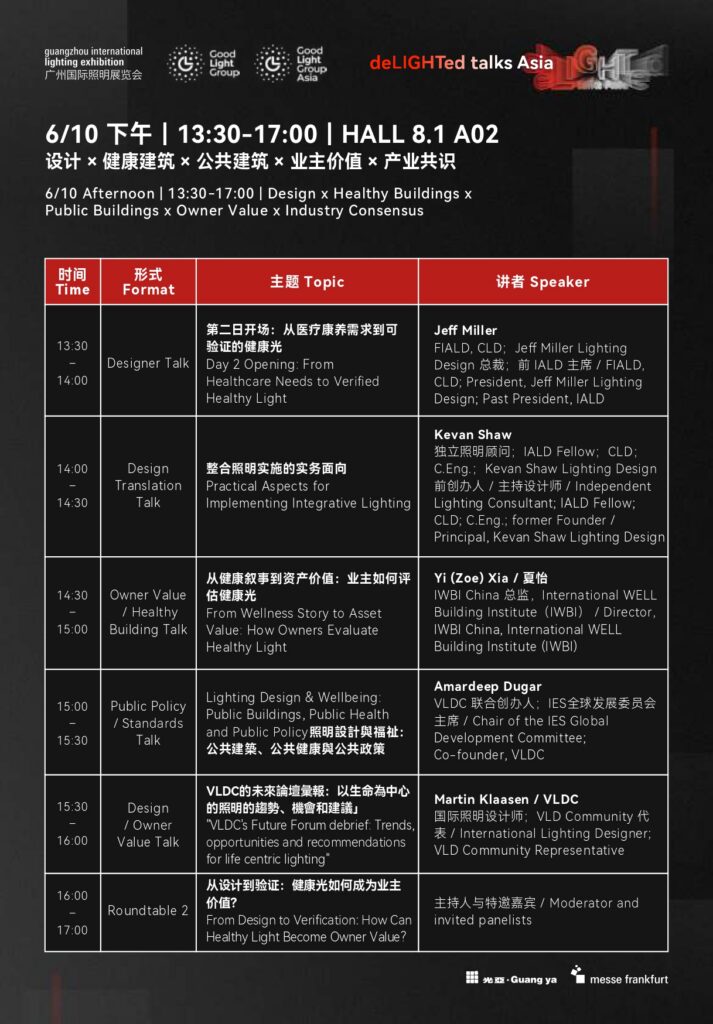
Afternoon: From Design to Verification – How Healthy Light Becomes Owner Value
The theme of the afternoon main forum pushed further forward:
Design × Healthy Buildings × Owner Value × Industry Consensus
In the morning, we discussed science, healthcare, circadian rhythms, the brain, and verification. In the afternoon, we discussed design, architecture, the language of building owners, and industry consensus.
Because the real challenge of healthy light is not just whether we know that light affects people. The real challenge is: How do we design it? How do we write it into specifications? How do we verify it? How do we operate it? How do we help owners understand that it is not just a cost, but a value?
Designers: Translating Science into Human Experience

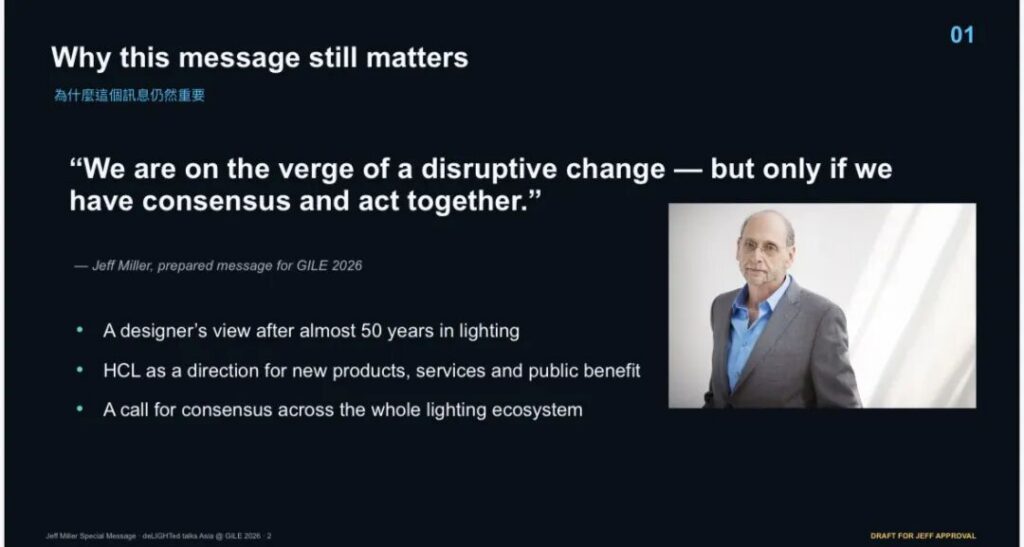
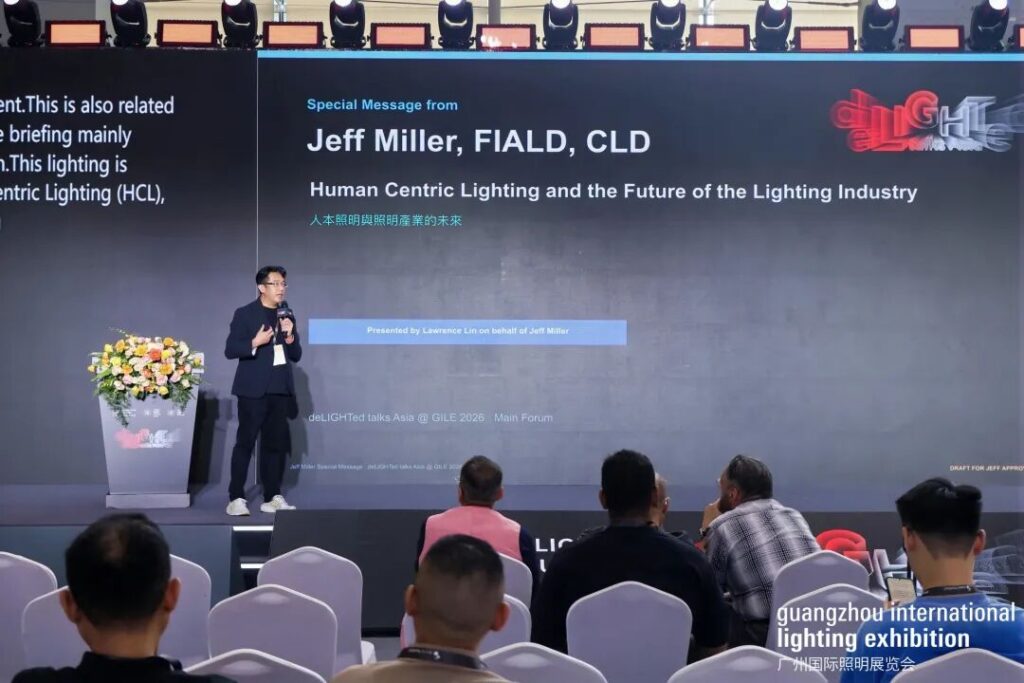
Due to health reasons, Jeff Miller was unable to attend in person, but he still supported the event through a special message.
His perspective reminded us: healthy light cannot rely solely on scientists, nor solely on products. Healthy light needs designers.
Science tells us how light affects people. Products provide the tools. Standards establish a common language. But designers are the ones who truly translate these elements into spatial experiences. Designers transform metrics into human experiences, evidence into spatial atmosphere, and technological possibilities into meaningful environments.
Healthy light must go beyond aesthetics, but it cannot abandon aesthetics. It needs science, but it also needs human experience. It needs data, but it also needs spatial quality. It needs verification, but it also needs the designer’s judgment and responsibility.


Integrative Lighting: Success or Failure Lies in Implementation
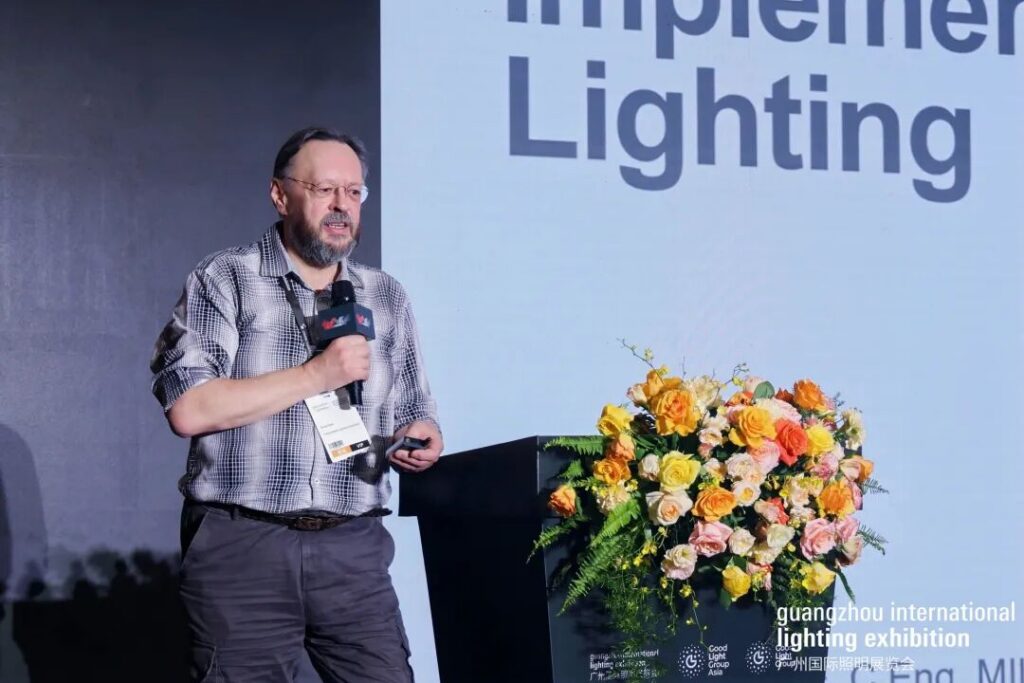
Kevan Shaw‘s presentation was highly pragmatic.
We often talk about integrative lighting, healthy lighting, and human-centric lighting. But the truly difficult question is: How do we implement it? How do we move from concept to design? How do we move from design to specifications? How do we move from specifications to the field? How do we move from the field to commissioning and verification? How do we achieve healthy lighting goals without sacrificing visual quality, comfort, architecture, and user experience?
The success or failure of healthy lighting lies in implementation. If there are only concepts and no processes, healthy lighting is difficult to deliver. If there are only products and no design integration, healthy lighting is difficult to realize. If there are only design intentions and no commissioning and operation, healthy lighting is difficult to sustain.
Good Light must be practical. It must be scientifically meaningful, technically feasible, architecturally integrated, visually comfortable, and operationally sustainable.

From Health Narratives to Asset Value
Zoe Xia, speaking from the perspectives of IWBI and WELL, discussed how building owners can evaluate healthy light.
This is also a very practical question. If healthy light is only a wellness story, owners may think it is nice, but they may not necessarily invest in it. If healthy light is only a design ideal, owners may support it, but they may not know how it translates into project value.
Therefore, we must enter the language of building owners: How does healthy light relate to asset value? How does it relate to leasing, branding, ESG, employee experience, and public service quality? How can healthy light be more easily understood, communicated, and managed through WELL or other healthy building frameworks?
Wellness needs a story, but asset value needs evidence.
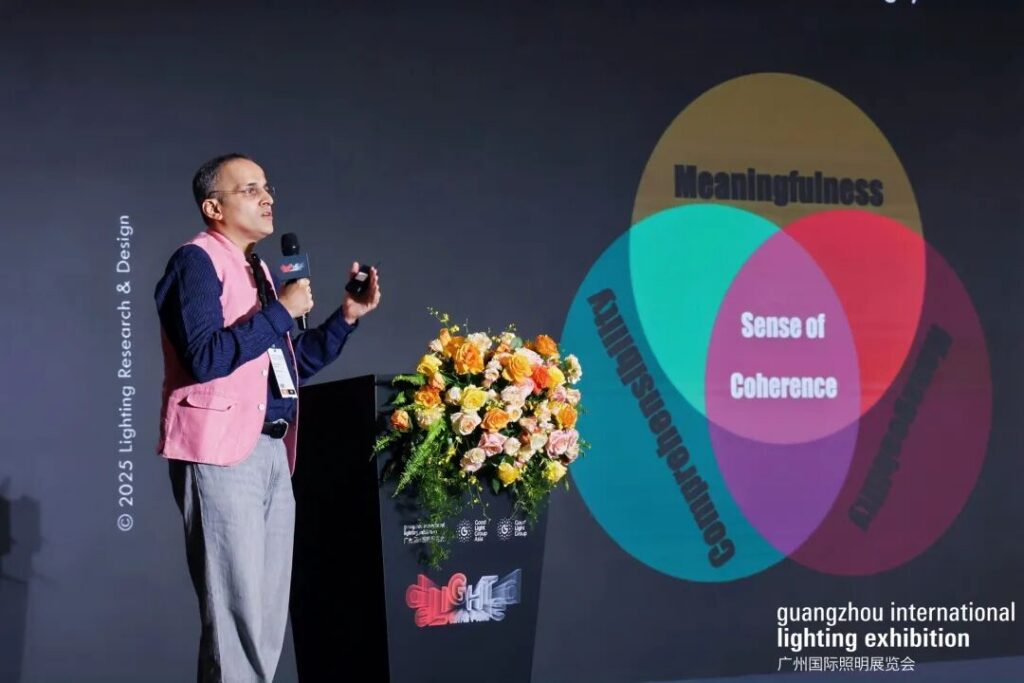
Amardeep: Lighting Design & Well-being – More Than Just Comfortable Light
Amardeep Dugar’s presentation offered a very important reminder to the afternoon forum.
When we talk about lighting design for wellness, we cannot simply understand it as “more comfortable light” or “healthier products.” It is actually a much more complete framework.
His presentation began with wellness, reminding us: Wellness is not merely the opposite of illness. It is not only the absence of illness. It is the active pursuit of holistic health.
Next, he introduced the concept of salutogenesis – the shift from “disease treatment” to “health generation.” This concept is extremely important because it does not ask: Why do people get sick? Instead, it asks: How do people still maintain health, resilience, and a sense of meaning in the midst of stress and complex environments?
From pathogenesis to salutogenesis. From a disease-oriented approach to health generation.
For lighting design, this is a very enlightening shift. Because light is not just for visibility. Light is not only for visibility. Light also affects people’s biological response, behavioral response, emotional and social response, perceptual response and spatial orientation, as well as intellectual and occupational wellness.
Therefore, good lighting design is not just about “meeting standards” or “looking good.” It should help people better understand space, manage their environment, and find meaning within it.
This also echoes the Sense of Coherence that Amardeep mentioned:
- Comprehensibility – making the world understandable
- Manageability – making the environment controllable
- Meaningfulness – making space and life meaningful
If we translate these three elements back into lighting design, we can say: Good lighting should make spaces understandable. Good lighting should make environments manageable. Good lighting should also make places meaningful.
I also strongly agree with his reminder about terminology.
“Human-Centric Lighting” is sometimes easily overused by the market and can even become a hollow phrase – an empty label. Without a design methodology, without scientific boundaries, and without verification, it easily becomes a marketing claim.
In contrast, Integrative Lighting reminds us that lighting should integrate visual, biological, and behavioral responses.
This is completely consistent with the Good Light Wake-up Call|好光覺醒行動 that we have been discussing throughout these days. Healthy light is not a single product, not a color temperature, not an illuminance level, nor an unverified health claim. Healthy light should be a design framework, an interdisciplinary methodology, and a practice that returns to people, to space, to evidence, and to operation.
So, let me summarize the takeaways from Amardeep’s presentation in three sentences:
First, Wellness is holistic. Well-being is integral – it includes not just physical health, but also emotional, social, environmental, occupational, and meaningful dimensions.
Second, Lighting design is a salutogenic intervention. Lighting design can be an architectural intervention that promotes health generation.
Third, Good Light must be meaningful, manageable, and verifiable. Good light must have meaning, be accessible to users, and be responsibly designed and validated.
This also reminds us once again: The future of lighting design cannot only ask: How bright? How efficient? How beautiful?
還要問: How does this light help people live better? How does it support well-being without overclaiming? How can it be designed, experienced, and verified?
This is precisely the direction that deLIGHTed Talks Asia hopes to advance: moving light from illuminating spaces to supporting people’s lives, health, and value.

Life-centric Lighting: From Human Experience to Life, City, and Environment
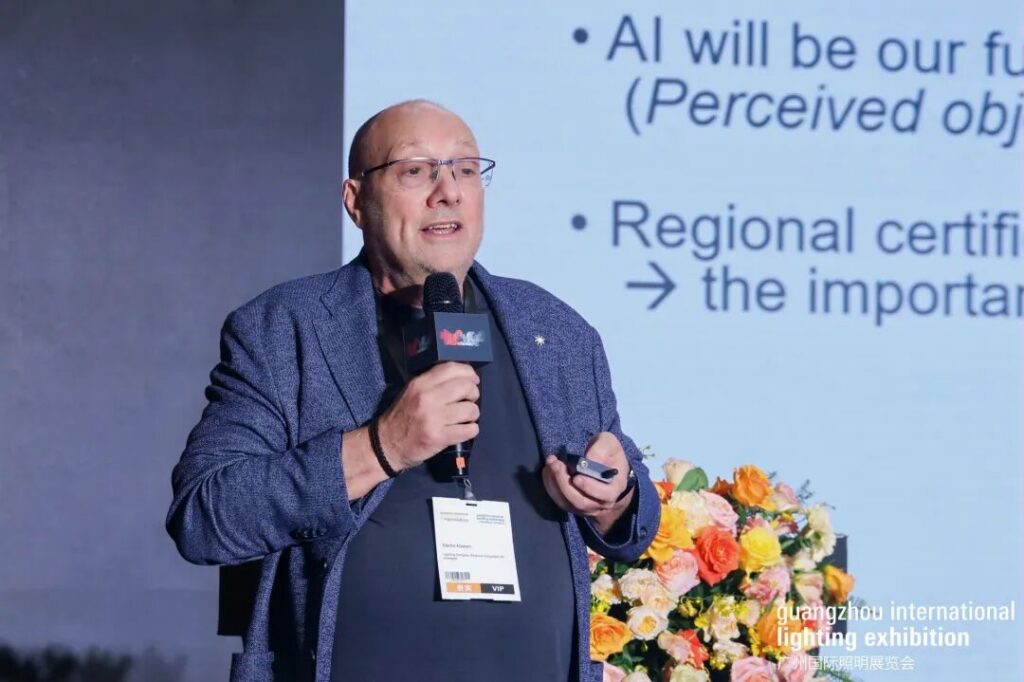
Martin Klaasen‘s presentation on behalf of VLDC served as a perfect closing for the afternoon forum.
The topic he addressed was not an isolated healthy lighting issue, but rather the holistic future direction of lighting design. Life-centric lighting reminds us that lighting serves not only vision, nor only a single building. It serves people’s lives, communities, cities, the environment, and long-term sustainability. The future of lighting design is not merely technical – it is also human-centric, social, and environmental.
The panel discussion originally scheduled for the afternoon was later moved to the sixth focus group session on June 11. This turned out to make Martin’s presentation an excellent bridge: Today, we summarize the forum – but we do not end the conversation.
Tomorrow, at Focus Group 06, we will continue moving from shared understanding to a shared roadmap, and from the Good Light Wake-up Call to industry action.

Focus Group Sessions: Consensus Begins to Form, Task Forces Begin to Emerge
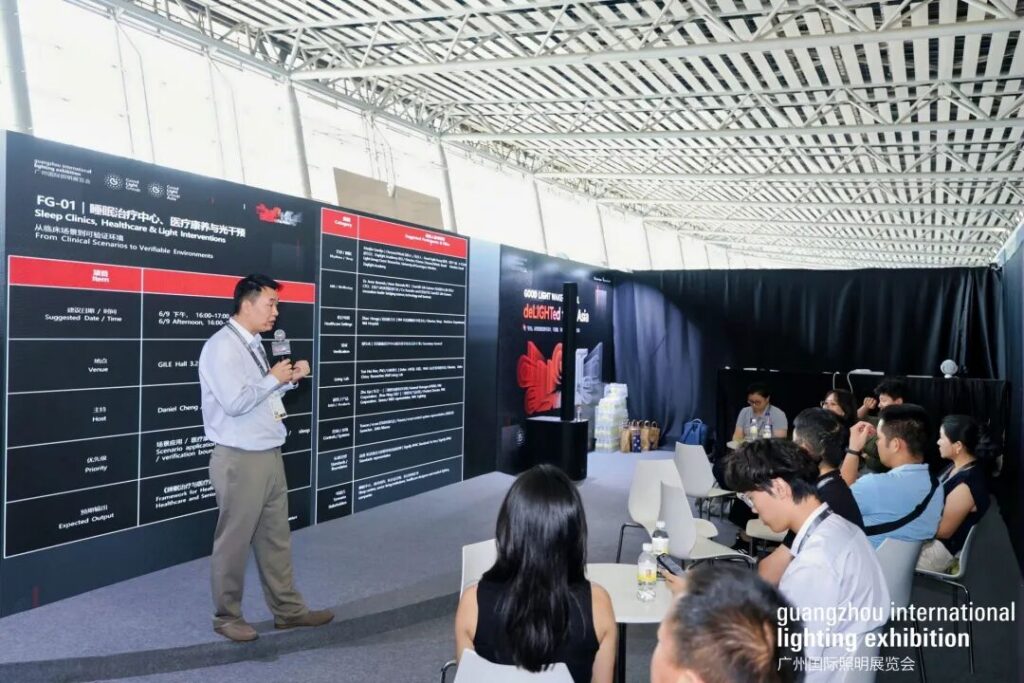
In addition to the main forum, multiple focus group sessions also took place on June 10. These Focus Groups were not merely simple breakout discussions; they were more like the place where deLIGHTed Talks Asia truly entered into “co-creation.”
In the discussion on healthy buildings and owner value, the collaboration roadmap between GLGA, IWBI, and Delos was further developed. Participants discussed WELL Certification, healthy homes, the concept of light quality, and the future direction of lighting standards within healthy building frameworks.
In the discussion on brain science, EEG, and multimodal validation, experts from hospitals, rehabilitation institutions, and the field of neuroscience engaged in deep exchanges on topics including light and physiology, neural mechanisms, clinical methods, Healing Capsules, brain science research, and product translation.
In the discussion on office, education, and healthy homes, corporate representatives, international experts, and GLGA members jointly explored product development, real-world projects, European research trends, intelligent control systems, applied validation, and market pathways.

A very clear signal is taking shape: what the industry needs is not just concepts; what companies need is not just slogans; what designers need is not just inspiration; what building owners need is not just stories; what the research community needs is not just papers.
What everyone truly needs is:
- Scientifically defensible
- Engineering feasible
- Design-quality driven
- Market-communicable
- Verifiable in application
- Sustainable in long-term operation
This is also the important foundation for the task forces that GLGA will advance moving forward.

Preview: June 11 – Focus Group Sessions Enter a Critical Co-creation Moment
If the focus group sessions on June 10 further expanded discussions on healthy buildings, brain science validation, office and education, and healthy homes, then the focus group sessions on June 11 will enter an even more critical phase of co-creation.
On this day, we will further consolidate the scientific consensus, industry pain points, design challenges, and verification needs accumulated over the previous two days of main forums and focus group discussions into more concrete directions for action.

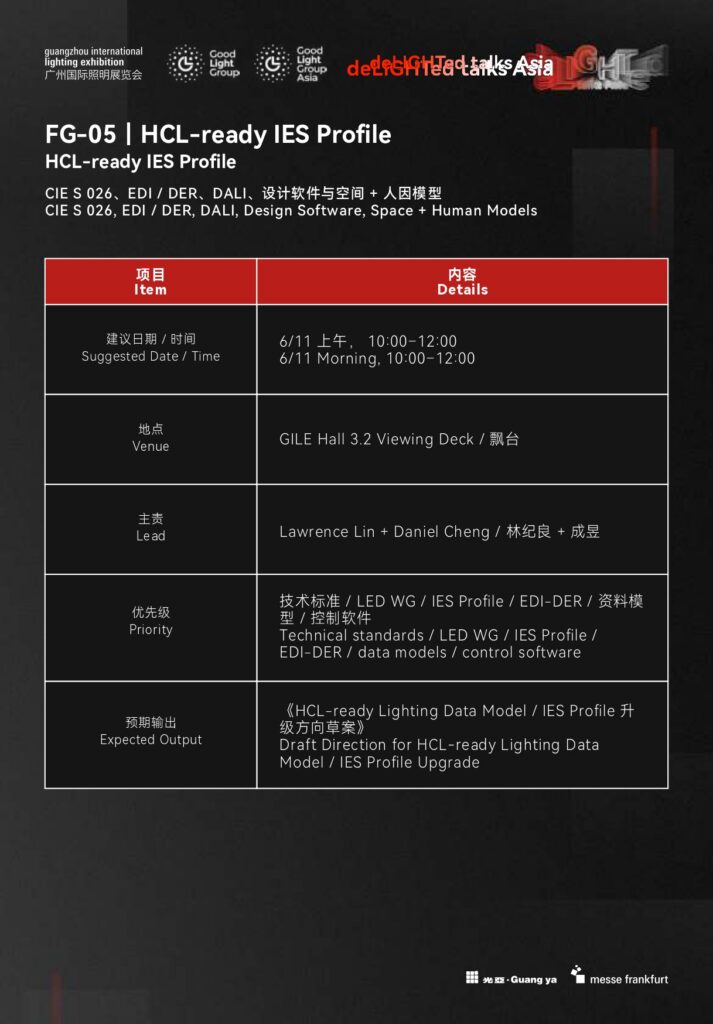
Morning: We will focus on a key discussion: how to establish an HCL-ready IES Profile for healthy lighting – spanning LED, luminaires, control systems, sensors, and design software.
This is not merely a technical documentation issue. It relates to whether healthy lighting can be designed, simulated, specified, and verified in the future. It also relates to whether the data language of lighting products can truly enter design software, building standards, control systems, and project delivery workflows.
In the past, IES files primarily served traditional photometry and visual lighting design. But if the future of lighting is to address circadian effects, melanopic EDI, DER, spectral quality, flicker risk, spatial exposure, human-centric scenarios, and long-term operation and maintenance, then we need to rethink:
- Is future luminaire data still only sufficient to describe light distribution?
- Do future healthy lighting projects require a more complete data foundation?
- Should future design software support more human-centric and health-related light environment parameters?
- Can future manufacturers provide more trustworthy, consistent, and verifiable product data?
This is precisely the core issue that Focus Group 05 on June 11 aims to advance.
It involves not only LEDs, spectra, drivers, thermal management, optics, electronics, and controls – but also how reliability thinking, similar to LM-80, can extend to the consistency and credibility of healthy lighting data. And it involves how the upstream and downstream of the industry chain can work together to establish a data framework that is implementable, iterative, and capable of international dialogue.

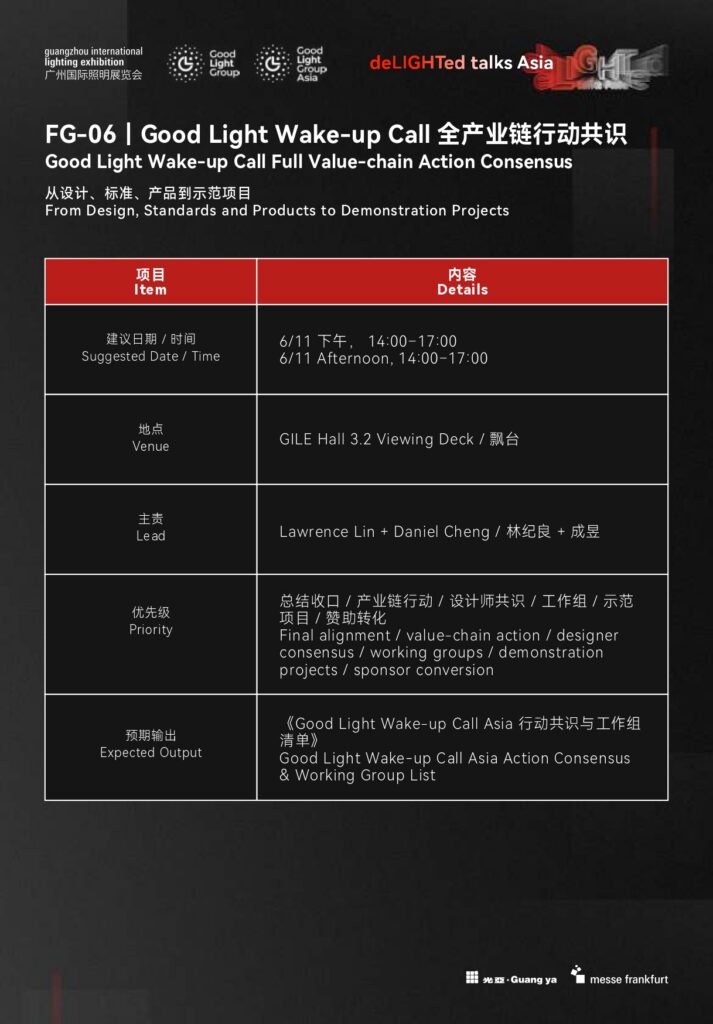
Afternoon: Focus Group 06 will further serve as the concluding and co-creation action session of deLIGHTed Talks Asia @ GILE 2026.
The panel discussion originally scheduled for the main forum will also be integrated into this focus group session.
This may actually be for the better. Because after closed-door meetings, main forums, international guest presentations, corporate exchanges, design discussions, healthcare and elderly care sessions, brain science validation, WELL, healthy buildings, homes, offices, education, and many other dialogues, we are no longer discussing healthy light merely from the level of concepts.
We now have more real problems and clearer industry needs. More importantly, we are beginning to see some directions that we can advance together.
On the afternoon of June 11, we hope to discuss together: How do we translate the Good Light Wake-up Call|好光覺醒行動 into industry action? How do we establish a GLGA task force mechanism? How do we build a roadmap for healthy light that spans science, standards, products, design, validation, and owner value? How do we create sustained collaboration among international experts, Chinese companies, designers, research institutions, standards organizations, and building health platforms? How do we ensure that healthy light is not just a consensus reached in forums, but a practice realized in projects, data embedded in products, and value created in buildings?
Today, we summarize the forum. Tomorrow, we continue co-creation.
Tomorrow, we move from shared understanding to shared roadmap. From wake-up call to industry action.
June 11, deLIGHTed Talks Asia @ GILE 2026 will enter its final day. But for the healthy lighting industry, this should not be an end. This should be a beginning.
Good Light Wake-up Call is not the end of a forum
Over these three days, I have felt more and more clearly: The era of healthy light is no longer a question of “whether to discuss it,” but rather “how to discuss it responsibly.” Not a question of “whether to do it,” but “how to do it scientifically, pragmatically, and verifiably.”
We can no longer allow healthy light to remain trapped in three misunderstandings:
First, reducing healthy light to a particular color temperature.
Second, packaging healthy light as unverified efficacy claims.
Third, turning healthy light into a conceptual game detached from real buildings, real people, and real operation.
Truly good light must move from the lighting industry’s self-expression to people’s real needs. It must enter healthcare and elderly care, residential life, schools and offices, public buildings, design processes, owner decision-making, standards language, measurement and validation, and long-term operation.
This path is not easy, but that is precisely why we need the Good Light Wake-up Call|好光覺醒行動. Not because we already have all the answers, but because we have finally begun to ask the right questions.
What is good light? Who defines good light? How do we measure good light? How do we verify good light? How do we design good light? How do we deliver good light? How do we make good light a value for buildings, for industry, and for people?
Overcast, but no rain. Guangzhou’s sky gave us a small respite. And inside the exhibition halls, the discussion on good light continues to heat up.
Today, we summarize the forum. Tomorrow, we continue co-creation.
From wake-up call to shared roadmap. From shared understanding to industry action. From illuminating spaces to supporting life.
This may well be the most important significance of deLIGHTed Talks Asia @ GILE 2026.
Good light is waking up. And this time, we want it not just to be seen – but also to be understood, measured, verified, and truly enter people’s lives.