
Integrative lighting is not about making lighting more complicated — it is about understanding what truly matters.
One of the biggest risks in advancing integrative lighting is trying to oversimplify a topic that requires thoughtful consideration.
As Kevan Shaw highlights, we need to clearly define our goals:
- What outcomes are we trying to achieve?
- What information do designers and manufacturers need?
- How can lighting better support circadian health and the wider non-visual effects of light?
Many of our existing lighting tools and standards were developed for a different era. Traditional photometric formats such as IES and LDT/Illumdat files were created when computing capabilities were limited and before we fully understood the biological impact of light.
The future requires richer information — including spectral data — and better ways to evaluate how light interacts with people.
We also need to rethink how we measure lighting performance. Horizontal illuminance alone cannot tell the full story when considering melanopic responses and circadian impact. Understanding the light reaching the eye, including through metrics such as cylindrical illuminance, will become increasingly important.
The next step for our industry is collaboration:
- Educating designers, manufacturers, and clients
- Developing better data standards
- Creating more meaningful lighting metrics
- Designing environments that support human wellbeing throughout their lifecycle
Manufacturers provide the tools. Designers create the experience.
Integrative lighting is not just about technology — it is about using light to create healthier, more responsive environments for people.
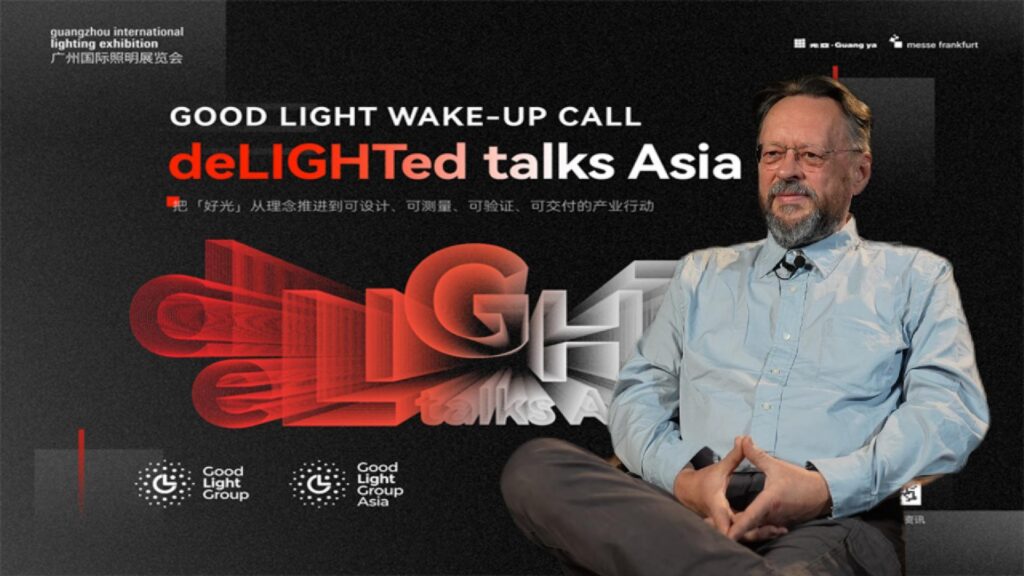
A valuable perspective from Kevan Shaw on where our industry needs to go next.

 English
  Chinese (China)
  Chinese (Taiwan)