
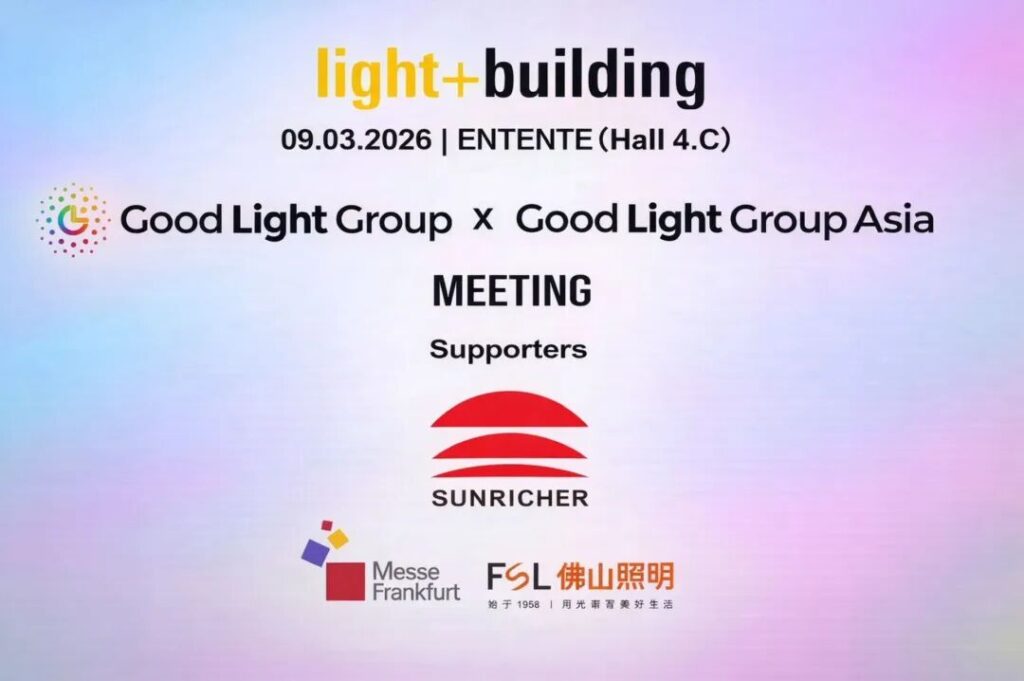
March 8, 2026 | Frankfurt, Germany
Light + Building 2026 officially opened.
Day one of the exhibition is not just about “walking the exhibition”—more importantly, it is about preparing for the truly critical work in the days ahead.
01 | Setting the Stage for GLG / GLGA Activities
On March 8, we finalized preparations for GLG / GLGA meeting spaces. From March 9, a series of key exchanges and closed-door sessions took place in Frankfurt, including:
- Good Light Wake-up CALL
- Scientific foundations of light and health
- Industry standards and industrial translation
- Public education and awareness
- Cross-regional collaboration and ecosystem dialogue
These topics span science, standards, products, and markets, but ultimately point to a single shift: The lighting industry is moving from “selling products” to “delivering outcomes.”
In other words, it is transitioning from traditional lighting to verifiable, operable, and continuously optimized healthy lighting and intelligent space systems.
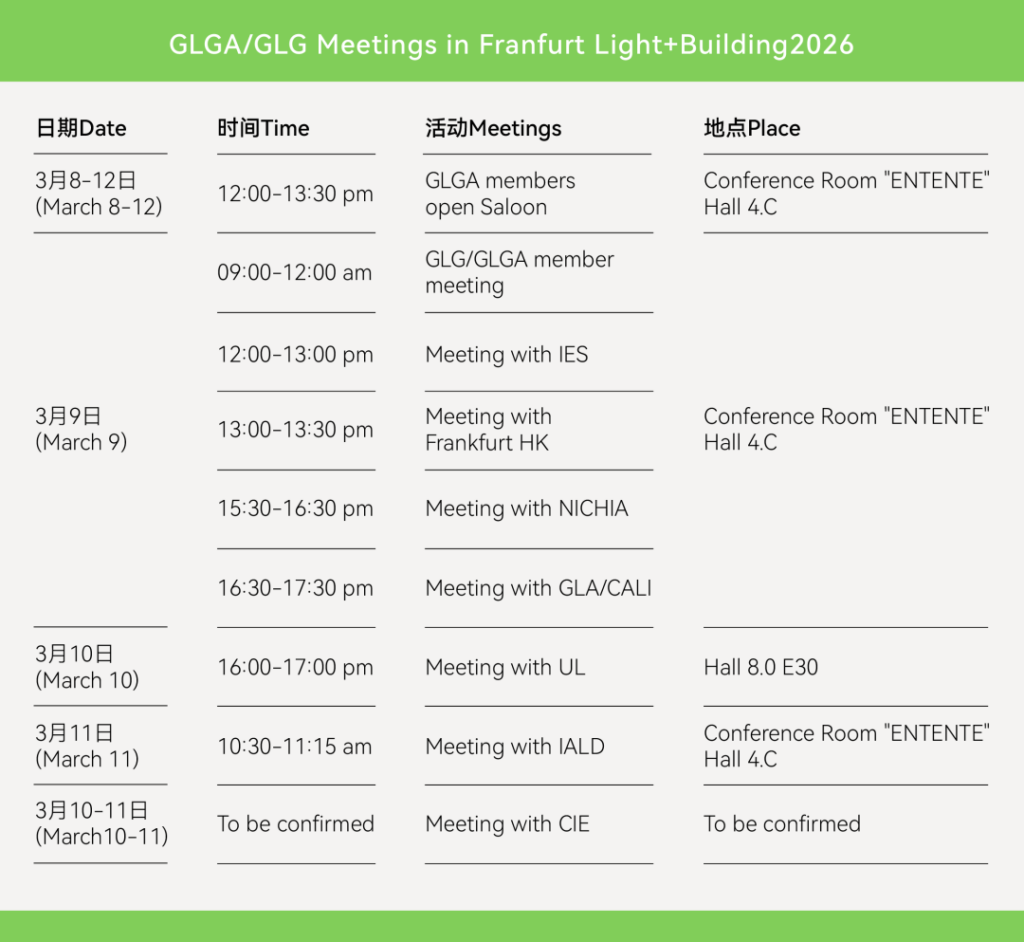
02 | Exhibition Walkthrough: GLGA Members and Global Industry Insights
Even on the first day, it was already clear: Light + Building this year is no longer just a product exhibition.
Companies are increasingly moving toward system and platform capabilities, scenario-based applications, and future spatial solutions.
03 | A Key Observation: The Changing Role of Chinese Companies
On Day 1 of Light + Building 2026, one impression stood out clearly: The role of Chinese companies in the global lighting industry is undergoing a significant transformation.
Previously, they were primarily associated with manufacturing capability, cost advantage, and supply chain efficiency. Today, the focus is increasingly shifting toward system capabilities, platform development, software integration, sensing technologies, scenario-based solutions, and global brand building.
This transition is set to accelerate in the years ahead.
Day 1: Just the Beginning
After a full day of preparation, exhibition visits, and discussions, one conclusion is clear: The lighting industry is entering a new phase.
The future of lighting is no longer defined simply by being brighter, more energy-efficient, or more intelligent.
It must evolve into lighting that understands people, systems that understand space, and an industry that delivers real outcomes.
March 9, 2026 | Frankfurt, Germany
At 9:00 AM on March 9, in the Hall 4.C Entente meeting room, GLGA (Good Light Group Asia) welcomed members, scientists, and key industry partners.
As attendees gathered, the room quickly filled with participants from science, industry, design, and medicine.
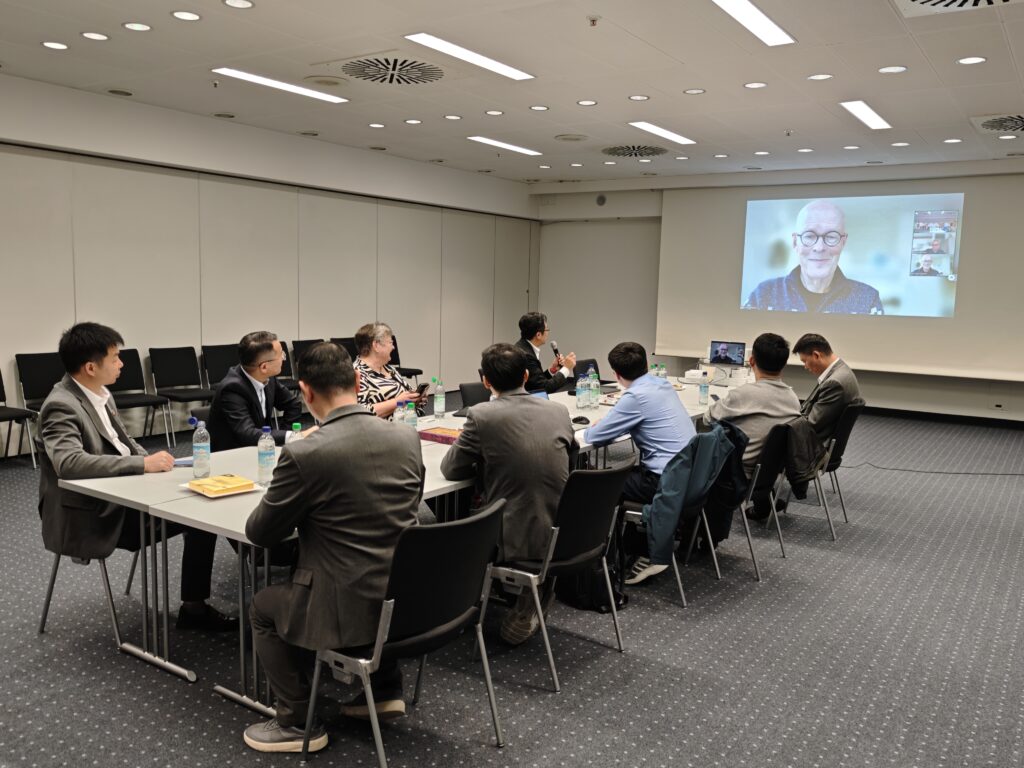
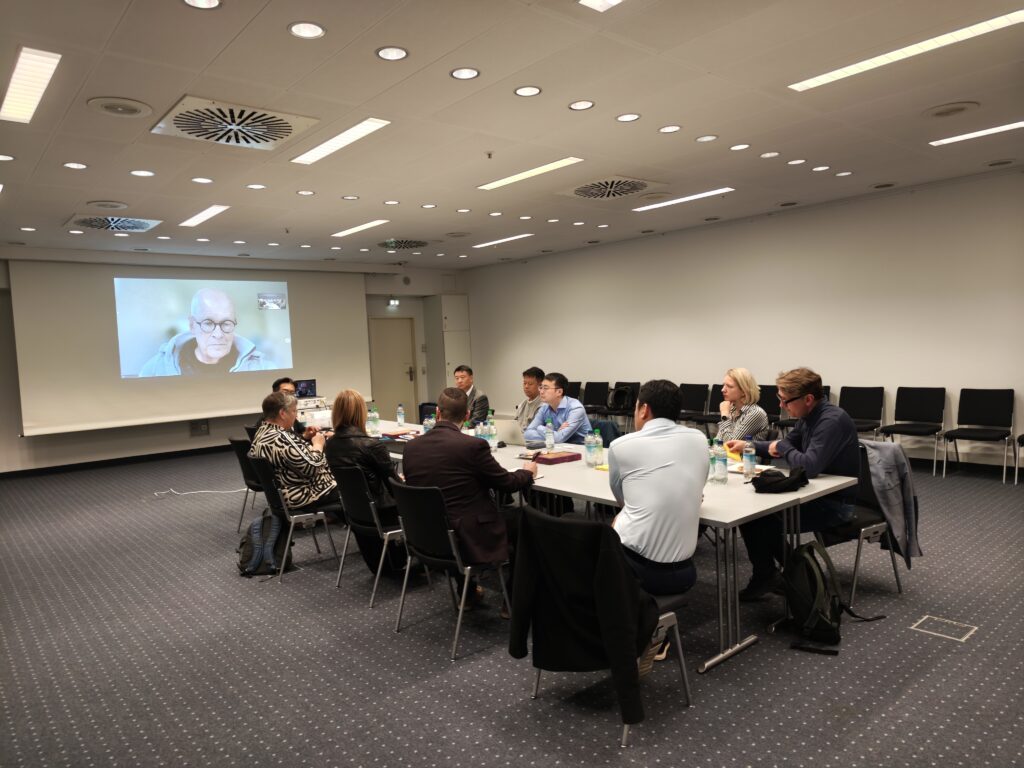
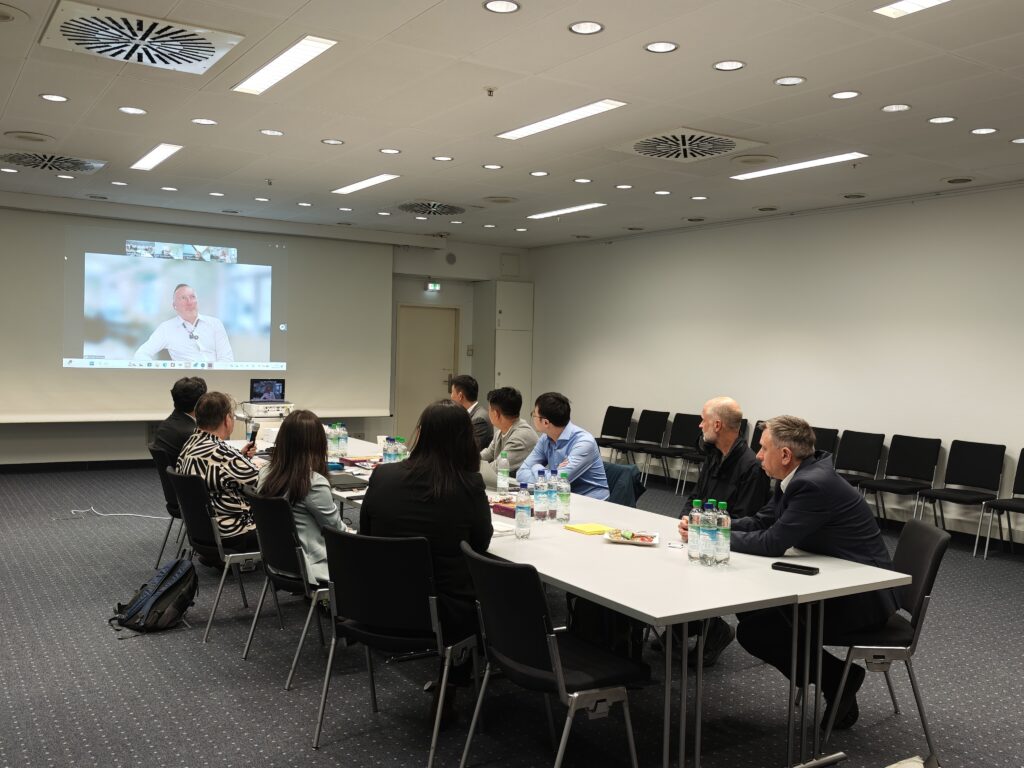
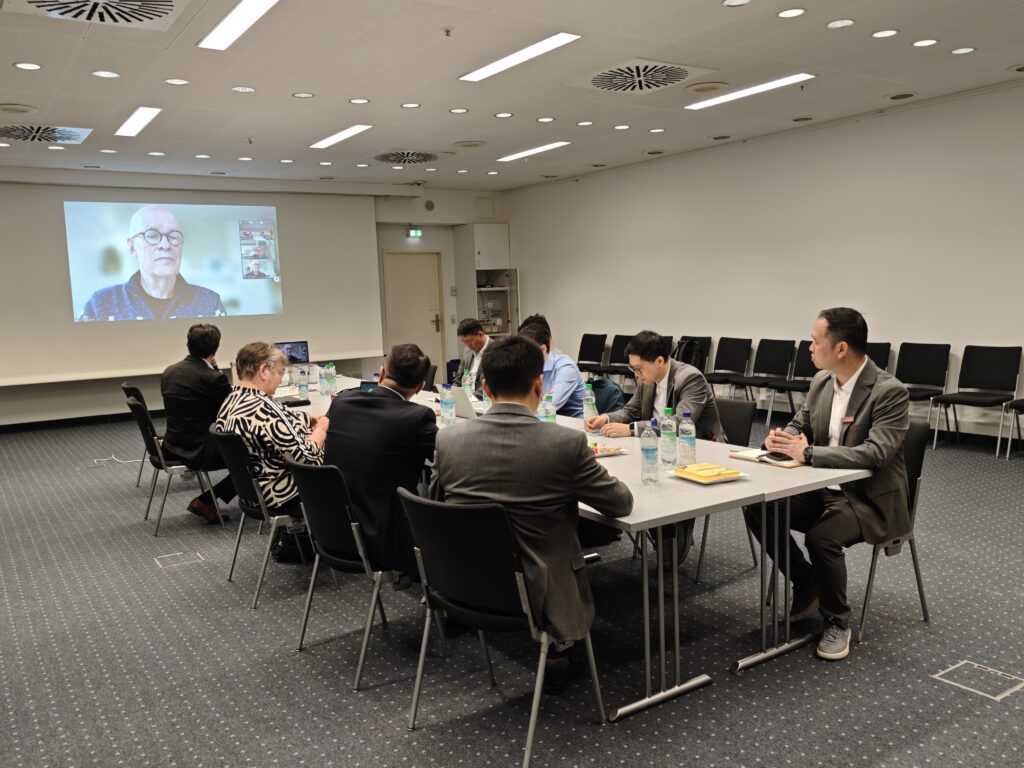
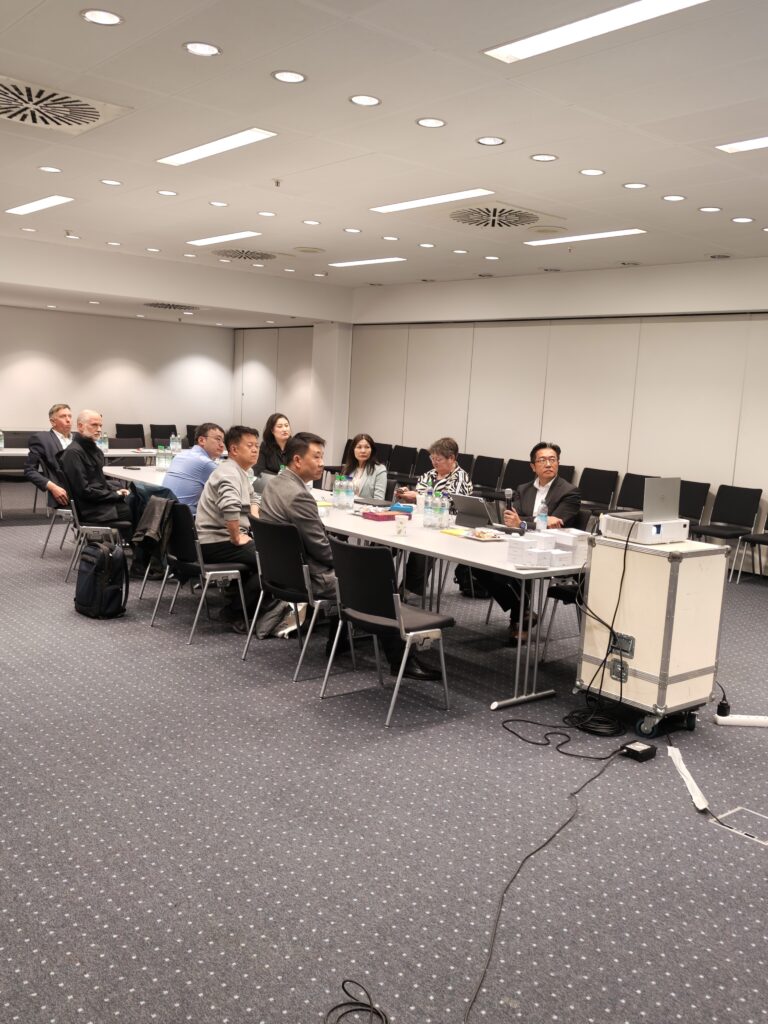
Participants included Mr. Zou from Sunricher Technology, Mr. Zhang (General Manager) and his team from Foshan Lighting, Mr. Han from Yuji Lighting, Mr. Zhuang from Traxon, Director Zhao from the 984 Hospital, GLG scientists Marijke Gordijn and Dr. Oliver Stefani, as well as designers, Lard Vanobbergen, and SunLED CEO Dr. Anne Berends.
Online participants included GLG Chairman Jan Denneman, Board member Bruno Smets, and Ulysse Dormoy.
This was not just a working meeting—it was a true launch moment.
From this day forward, the Good Light Wake-Up Call began to be publicly discussed on the international stage, connected across stakeholders, and systematically advanced.
01 | Why “Wake-Up Call”?
Because the industry truly needs to wake up.
For years, light has largely been treated as a consumable resource—primarily in terms of energy, cost, budget constraints, and “good enough” utility.
But the white paper behind the initiative emphasizes a critical point: Light is not merely a system that consumes resources—it is a fundamental source of life-supporting energy.
Sunlight sustains life on Earth. Similarly, humans depend on light to regulate circadian rhythms, physical and mental health, mood, and long-term wellbeing.
The issue is that modern indoor environments may meet visual requirements, but often fail to support biological rhythms, alertness, sleep quality, and long-term health outcomes.
02 | The Four Systemic Gaps Identified
These gaps help explain why “good light” remains difficult to deliver at scale:
1. Metrics Gap
Visual and non-visual metrics coexist without a unified framework, making it difficult to specify, compare, and verify performance.
2. Modeling Gap
Projects still rely heavily on luminaire specifications and horizontal illuminance, while real human impact depends on vertical eye-level exposure, viewing direction, duration, and timing.
3. Delivery Gap
Even when projects meet acceptance criteria, performance often drifts over time due to control changes, sensor shifts, space modifications, and behavioral changes. This highlights the need for continuous monitoring, periodic commissioning, and a digital lighting logbook.
4. Stakeholder Gap
The industry still struggles to articulate non-visual benefits, organizational performance value, and socioeconomic impact. As a result, lighting remains largely positioned at the “3” level in the 3-30-300 framework, while higher-value health and productivity outcomes remain underexploited.
03 | Not a Replacement—A Collaborative Backbone
A key message repeatedly emphasized in Frankfurt: The Good Light Wake-Up Call is not a competing standard.
Rather, it is a collaborative framework and a shared backbone for alignment.
Its purpose is to connect measurement, modeling, verification, operations, and market adoption—so that human-relevant light becomes designable, deliverable, verifiable, and sustainable.
04 | The Four Core Modules
Module A: Metrics
A unified dashboard integrating visual quality, non-visual metrics, and time-based exposure, with a particular emphasis on melanopic metrics at eye level.
Module B: Space Model
A shift from luminaires to spatial context, focusing on eye-level exposure and time distribution.
Module C: Human Model
Practical population models that respect privacy boundaries, address both general and sensitive groups, and allow optional personalization.
Module D: Verification + Operations
Acceptance is only the beginning, requiring continuous monitoring, drift control, periodic revalidation, and the implementation of a Lighting Logbook.
05 | From Concepts to Execution
This was not a day of slogans. It was about roadmaps, interfaces, and executable frameworks.
Key directions were aligned during the meeting, including advancing international collaboration across metrics, modeling, verification, and operations; expanding DeLighTED Talk Asia to bridge science, design, medicine, and public communication; and building frameworks for public education, bilateral research, and industry innovation.
The white paper also emphasizes large-scale pilot projects that connect measured lighting performance → credible socioeconomic evidence → investment and adoption.
06 | A Critical Signal: Key Players at the Same Table
Engagements included IES (Illuminating Engineering Society) CEO Colleen Harper, GLA (Global Lighting Association) President Maurice, CALI Secretary General Wang Zhuo, and Nichia representative Mr. Kaneguchi.
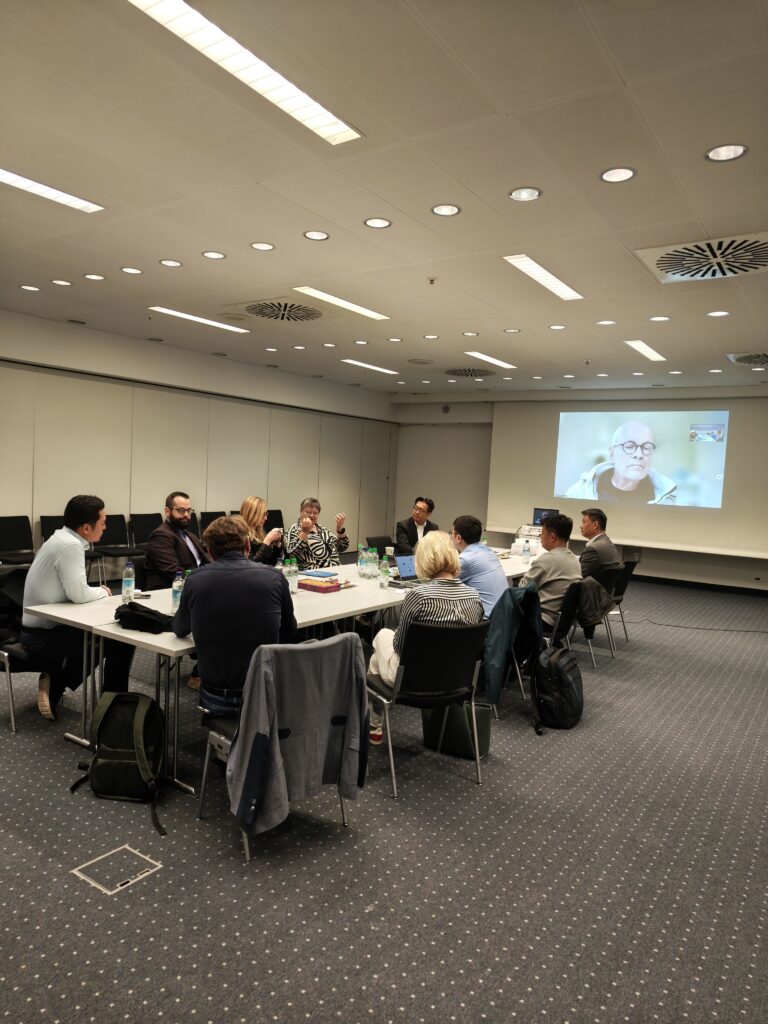
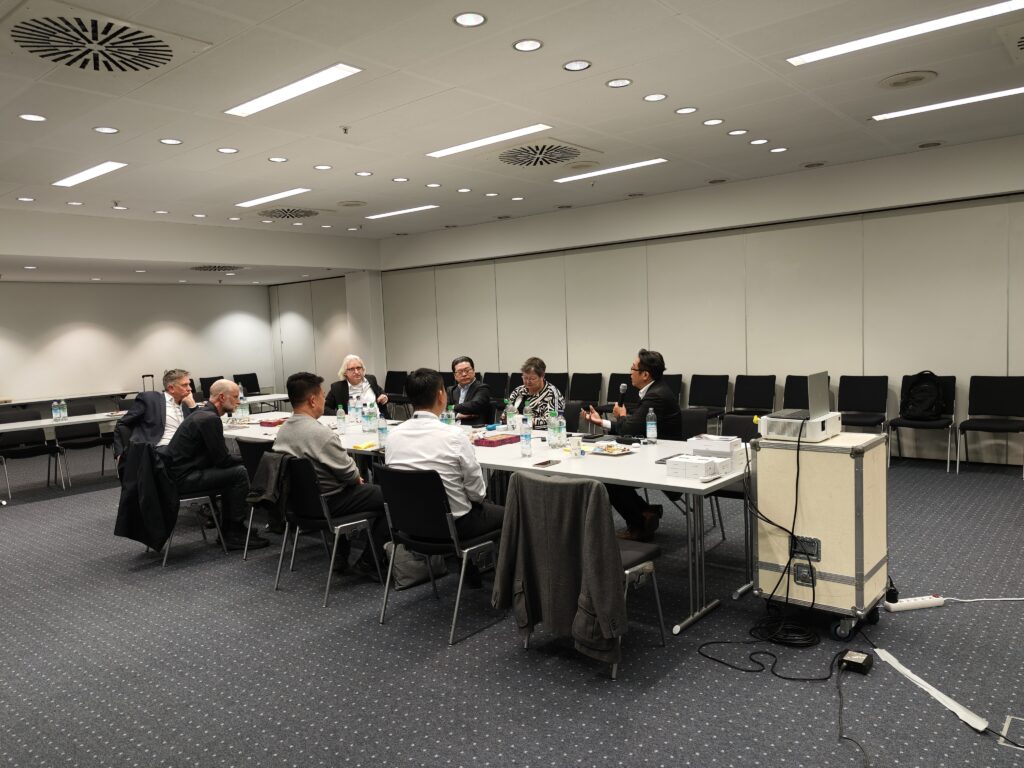
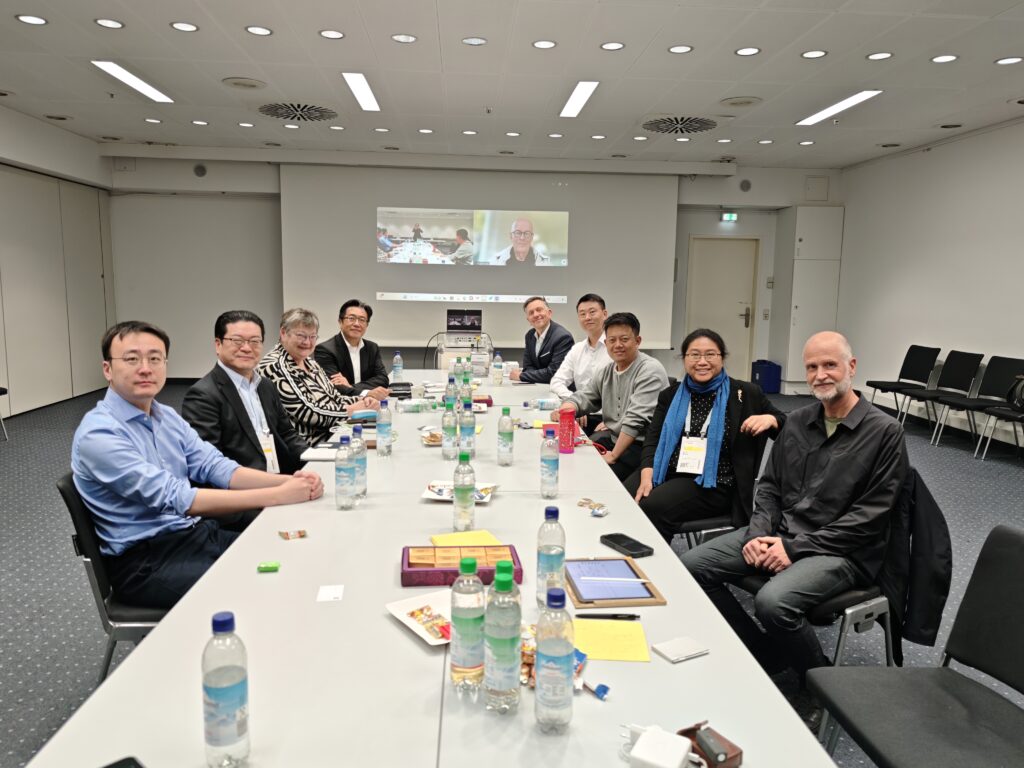
Discussions moved beyond “healthy lighting” as a concept into practical specifics, including the alignment of melanopic and alpha-opic terminology, the integration of eye-level exposure and time-dose into engineering language, clearer definitions for measurement, verification, and operation, and improved alignment between product data, spectral reporting, and control interoperability.
The white paper explicitly positions organizations such as CIE, IES, IWBI, IALD, and GLA as collaborative interfaces rather than competitors.
This is critical, as it signals that the Good Light Wake-Up Call is becoming a shared international agenda.
07 | From Meeting Room to Exhibition Floor
In the afternoon, discussions continued at the booths of Zumtobel, Thorn, and Tridonic, alongside teams from Foshan Lighting and Sunricher.
Key takeaway: Real industry transformation must happen across three parallel tracks—science, engineering, and market.
Without alignment, science cannot scale, engineering cannot sustain, and products cannot create value.
But in Frankfurt that day, these three tracks began to converge.
08 | A Major Shift: From Concept to Tiered Implementation
One of the most practical elements of the white paper is its four-level implementation framework:
Level 1 – Awareness
Basic dashboard plus one-time acceptance
Level 2 – Verified
Adds spatial modeling and eye-level sampling
Level 3 – Sustained
Includes periodic revalidation and operational tracking
Level 4 – Sensitive
Enhanced requirements for children, the elderly, healthcare environments, neurodiverse users, and shift workers.
This framework makes one thing clear: Good light is not a luxury—it can be implemented progressively across different project scales.
Final Reflection: Day 2 in Frankfurt
This is not a story of people sitting in a room discussing ideals. It is a moment in which an entire industry is re-evaluating itself.
For too long, the focus has been on power, efficiency, cost, control systems, and product specifications.
But if the lighting industry is to unlock greater value, it must confront a more fundamental question:
How does light truly affect people?
And how can that impact be translated into design, verification, and operation—so that “good light” becomes measurable, sustainable, and trustworthy?
March 10, 2026 | Frankfurt, Germany
01 | At the UL Solutions Booth: Advancing the Conversation
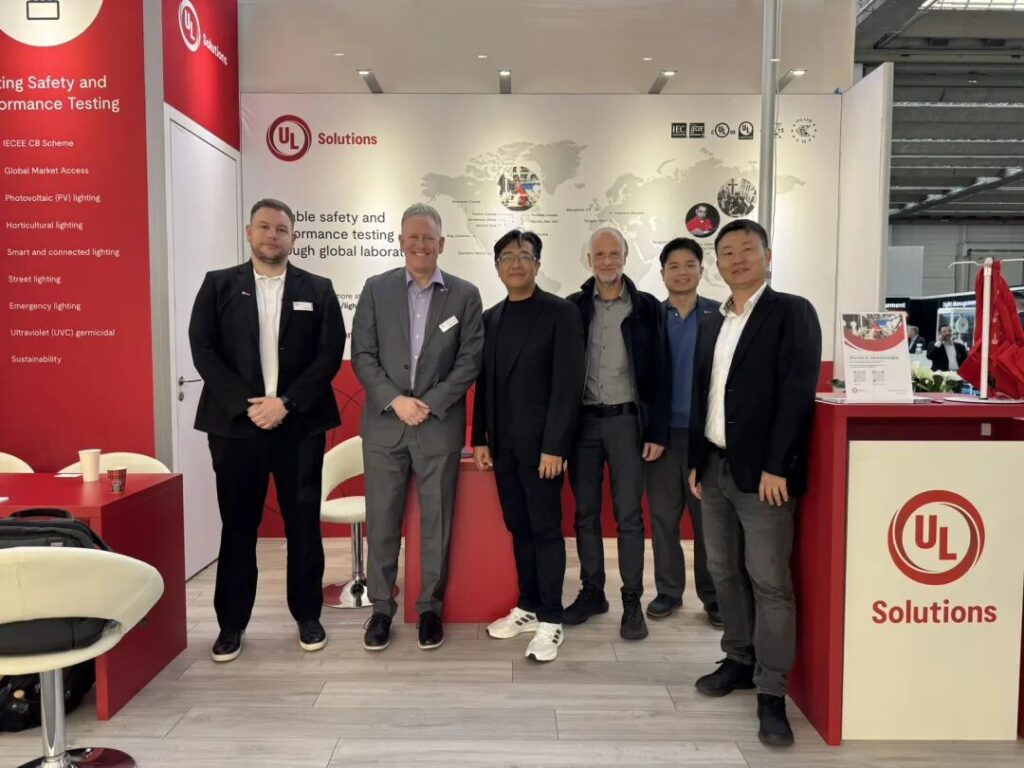
Later, together with GLGA Secretary General Daniel Cheng and Dr. Oliver Stefani, we visited the UL Solutions booth.
There, we held in-depth discussions with Todd, Tim, and Peter, centered on the Good Light Wake-Up Call.
The exchange focused on the evolution of light and health science, the gap between research and industry practice, and how “good light” can be translated into real market solutions.
UL expressed clear support and recognition for the initiative.
When science, standards, and industry begin to align, real change often follows.
02 | Meaningful Industry Dialogues
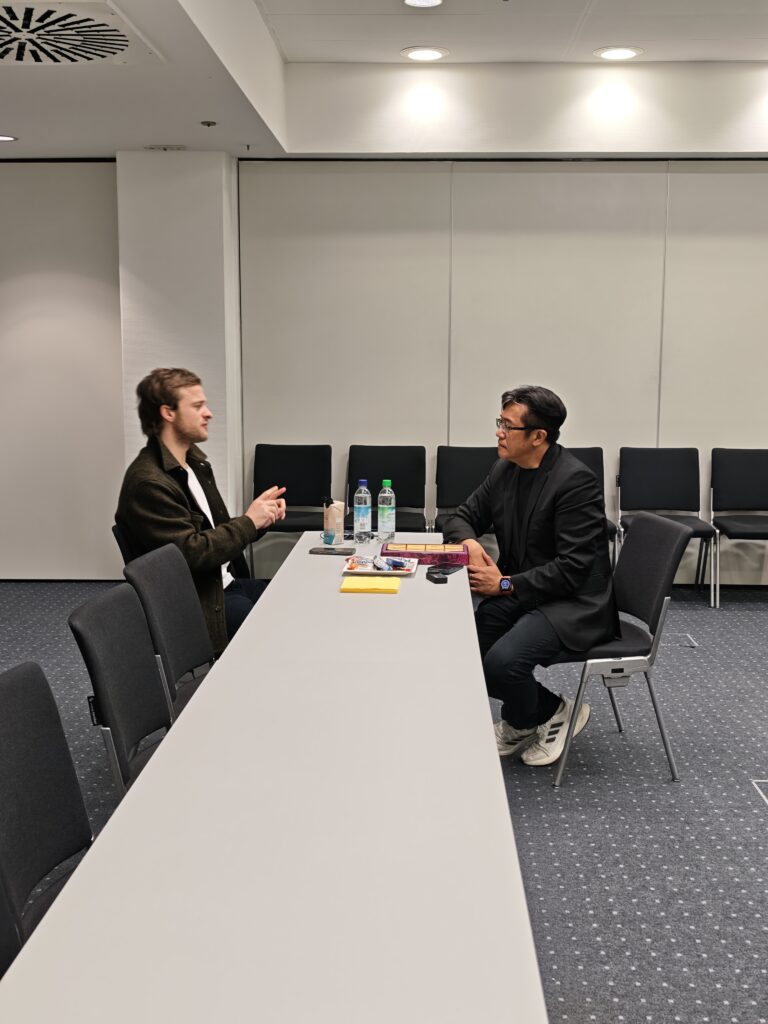
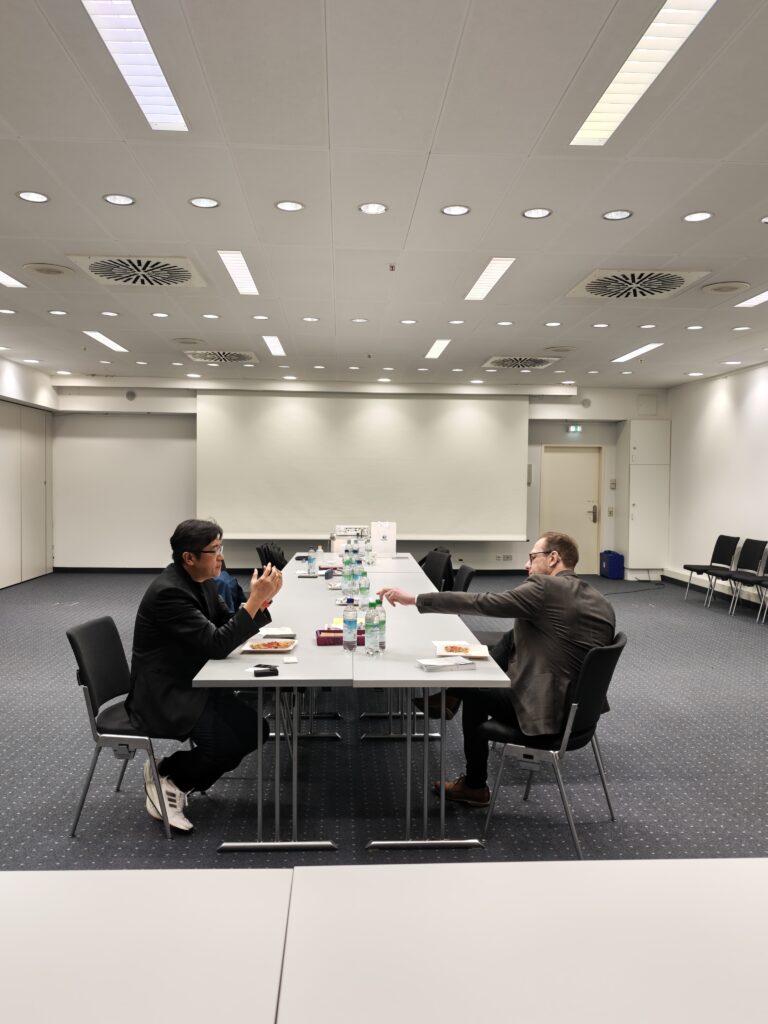
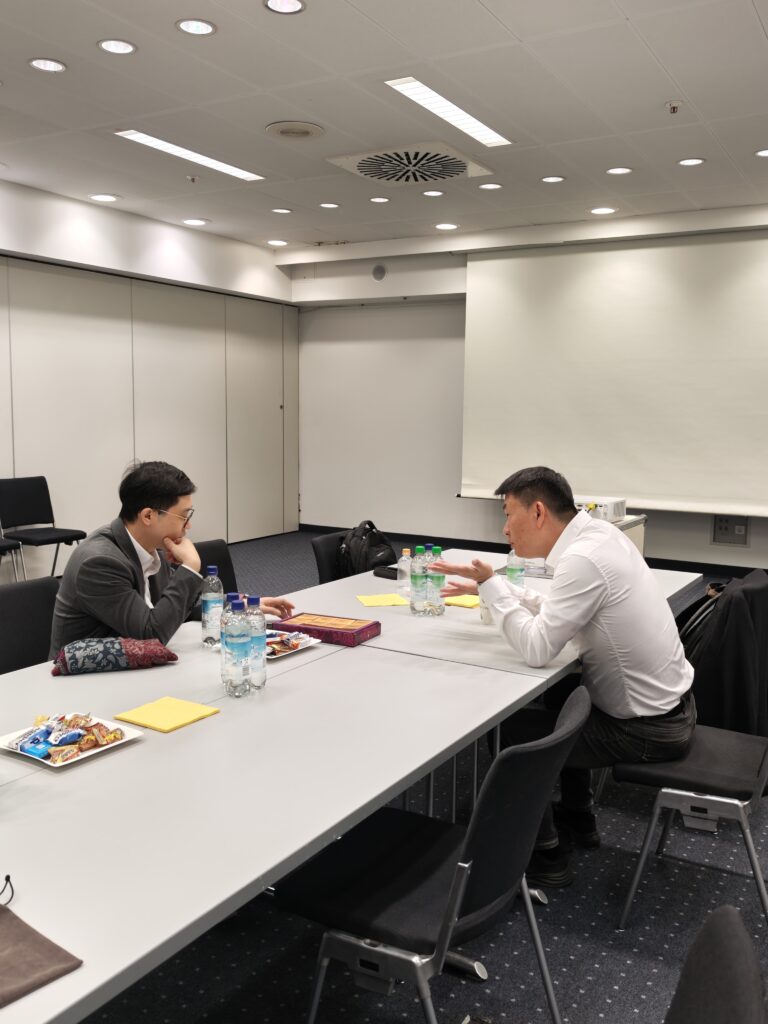
That day’s GLG / GLGA sessions also included Mandar Bankhele (Lighting designer, Chicago), Jørgen Hedrick (Dansk Center for Lys, Denmark), Xander Cadisch (PHOS, UK), and Sunny Huang (Foshan Lighting).
These smaller discussions often go deeper, because many important ideas do not emerge on stage—they emerge in focused conversations like these.
03 | The Next Question: What Comes After “Light and Health”?
The discussion centered on a simple but difficult question: What comes next for light and health?
How do we advance scientific research? How do we help designers understand it? How do we embed it into real spatial design? And how do we communicate its value to the public?
There are no easy answers. But at least, we are now asking the right questions together.
04 | Meeting with CIE
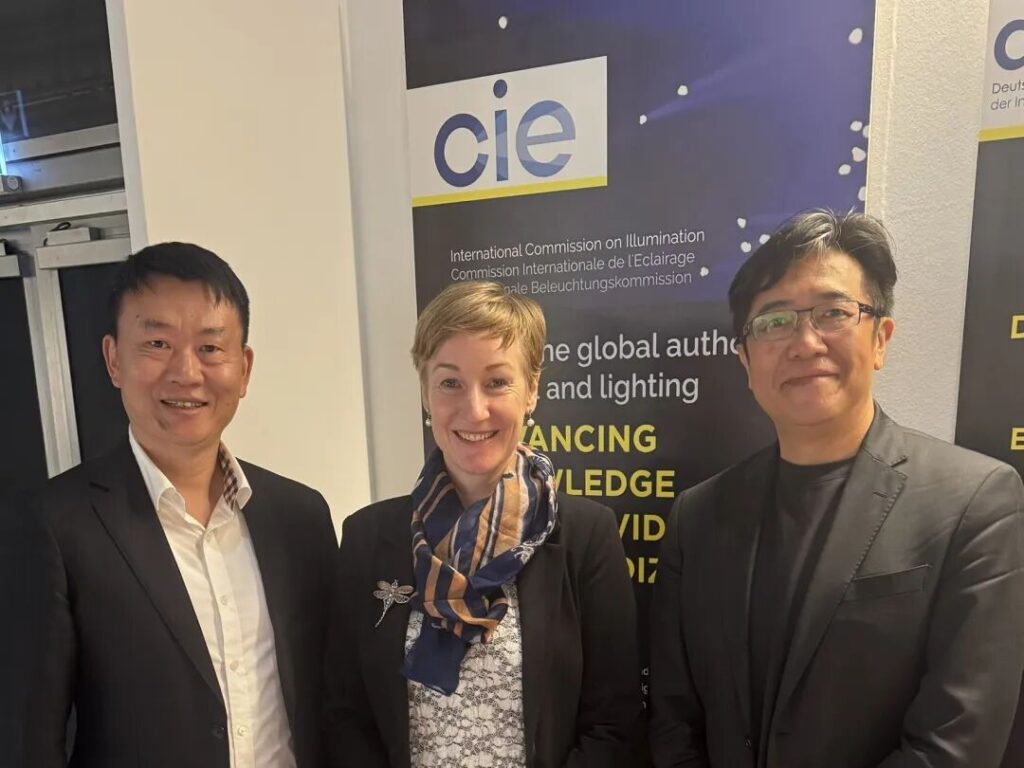
In the afternoon, we visited the International Commission on Illumination (CIE) and met with Secretary General Diana Wernisch.
We introduced the Good Light Wake-Up Call, along with Good Light Group (GLG) and Good Light Group Asia (GLGA).
At its core, the message is simple: Light is not just illumination—it is health, science, and social infrastructure.
The response was positive, and discussions included potential collaboration in scientific research, international standards, and industry engagement.
March 11, 2026 | Frankfurt, Germany
On Day 4 of Light + Building, we continued moving between halls, meeting rooms, and exhibition booths, engaging with industry partners around a shared fundamental question:
What is good light, and how can it be understood, verified, and applied?
01 | First Stop: Megaman / Yankon Lighting
Early in the morning, together with GLGA Secretary General Daniel Cheng, we visited the Megaman booth of Yankon Lighting in Hall 4.
We introduced GLGA (Global Lighting Group Asia) and the Good Light Wake-Up Call initiative.
This initiative is gradually gaining traction worldwide, with a simple goal: To bring light back from product parameters to people.
That means focusing on light and health, circadian rhythm, emotion, and spatial experience.
If the lighting industry only discusses efficiency and cost while ignoring people, it leaves a critical gap.
02 | Second Stop: IALD — The Power of Designers
We then met with Christopher, CEO of the International Association of Lighting Designers (IALD).
In the broader ecosystem, scientists build theories and standards organizations define rules. Designers, in turn, are the ones who bring light into real spaces.
This led to a key discussion: How can the Good Light Wake-Up Call grow within the global design community?
This is not simply about spreading ideas, but about equipping designers with the tools to truly understand light.
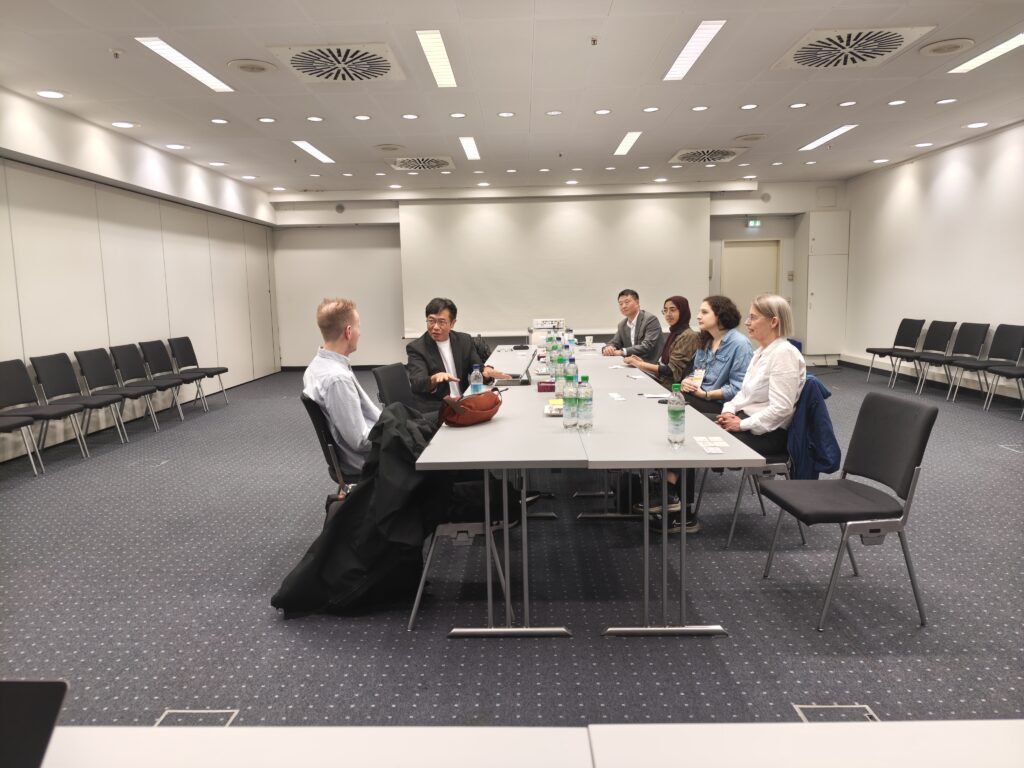
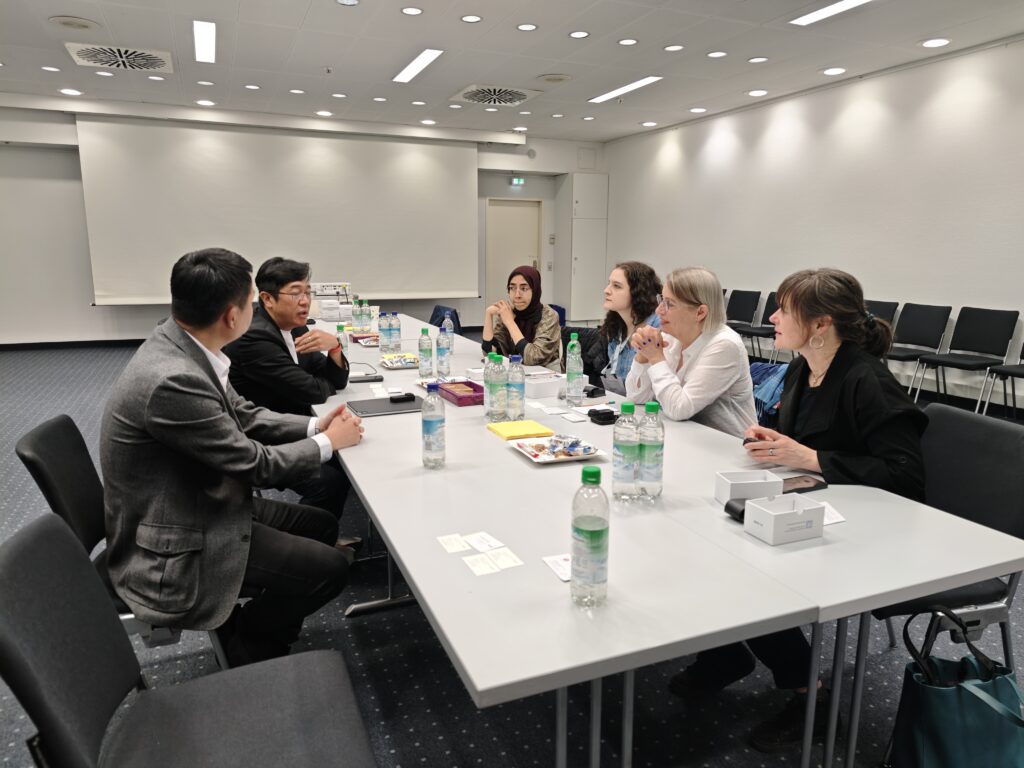
03 | Third Stop: A Meaningful Exchange with Designers
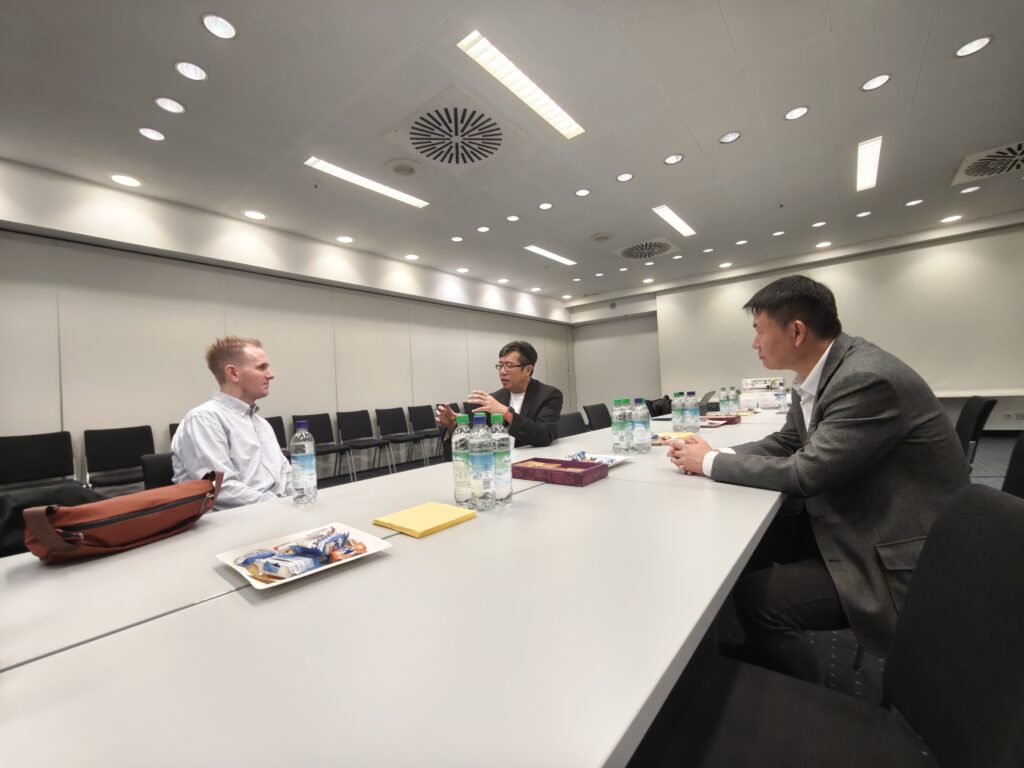
Through an introduction by former IALD President Jeff Miller, renowned German lighting designer Ulrike Brandi visited with her team—Vanessa, Nusaiba, and Eva.
Their questions were direct: what is Good Light, and how can light be understood through data?
04 | Midday: A Conversation from the UK
At noon, we met Dave Hollingsbee, former GLG board member and an active contributor to policy discussions within the UK’s Lighting Industry Association (LIA).
We discussed the development of healthy lighting policies in the UK, the challenges in advancing industry standards, and how companies can engage in practical implementation.
Often, industry transformation is not limited by technology, but by awareness.
05 | Fourth Stop: Luminus Devices
In the afternoon, we visited Luminus Devices, a company increasingly focused on Human Centric Lighting (HCL), particularly its Salud LED series.
We measured spectral data on-site and spoke with CEO Mark Pugh, Stephen, and Michel.
The central question was simple: If healthy lighting is like a building, what is its foundation?
Our answer: The Good Light Base—comprising scientific grounding, verifiable data, and actionable standards. All three are indispensable.
Final Meeting of the Day
The final meeting of the day took place at the Forum with the Tridonic team.
We focused on a critical question: How can key data of healthy lighting be perceived, verified, and operated?
Because true good light is never just about fixtures—it is a system of Light × Human × Space × Time × Activity.
Only when these dimensions are understood together can the lighting industry move into its next phase.
March 12, 2026 | Frankfurt, Germany
On this day, Lawrence Lin stepped onto the stage at the VLDC Design Plaza (Future Forum).
The message delivered to the industry was direct and deliberate: “If you can’t verify it on site, you can’t claim it.”
This is not provocation—it is reality. The next phase of competition in the lighting industry is shifting from parameters to credibility.
01 | Why This Stage Matters
Because all the “authority roles” were present. The VLDC Future Forum brought together a full-day program focused on the future of the industry.
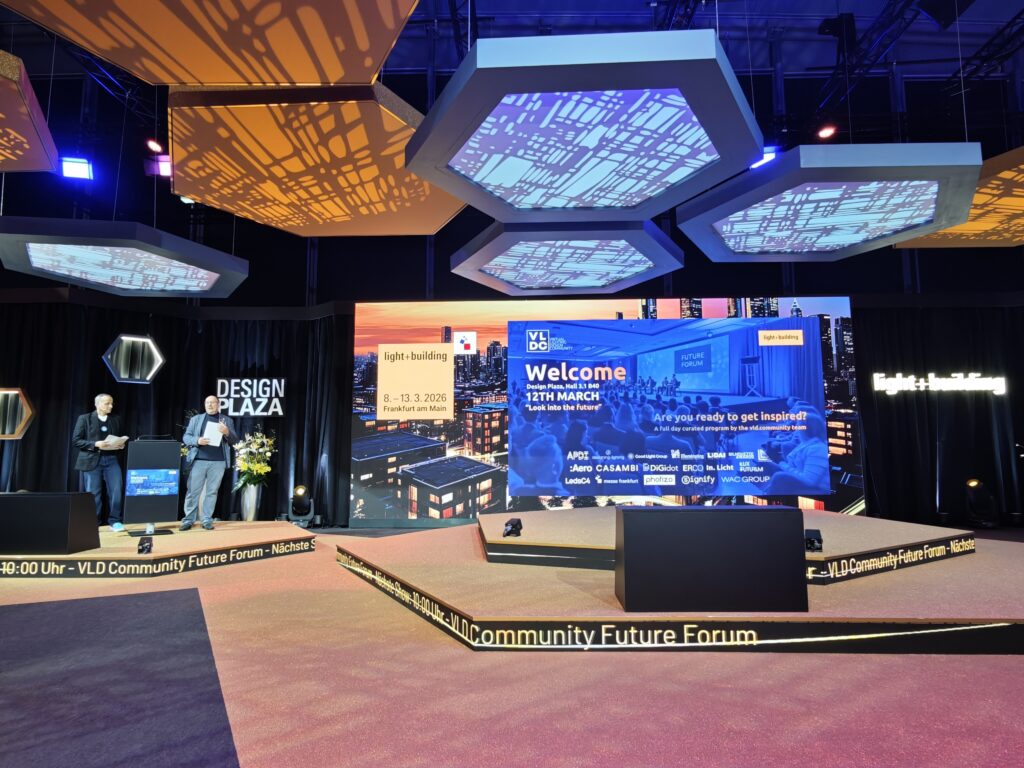
The following session featured Colleen Harper (IES), Jan Denneman (GLG), and Randy Reid (EdisonReport / Designing Lighting), alongside representatives from multiple international organizations.
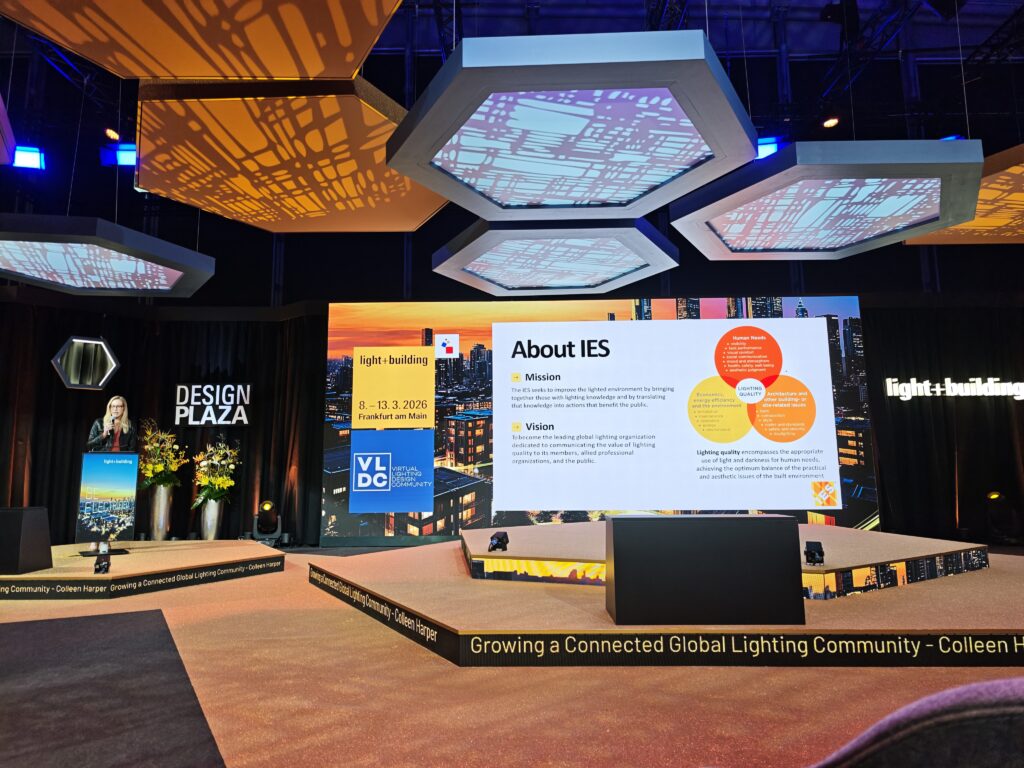
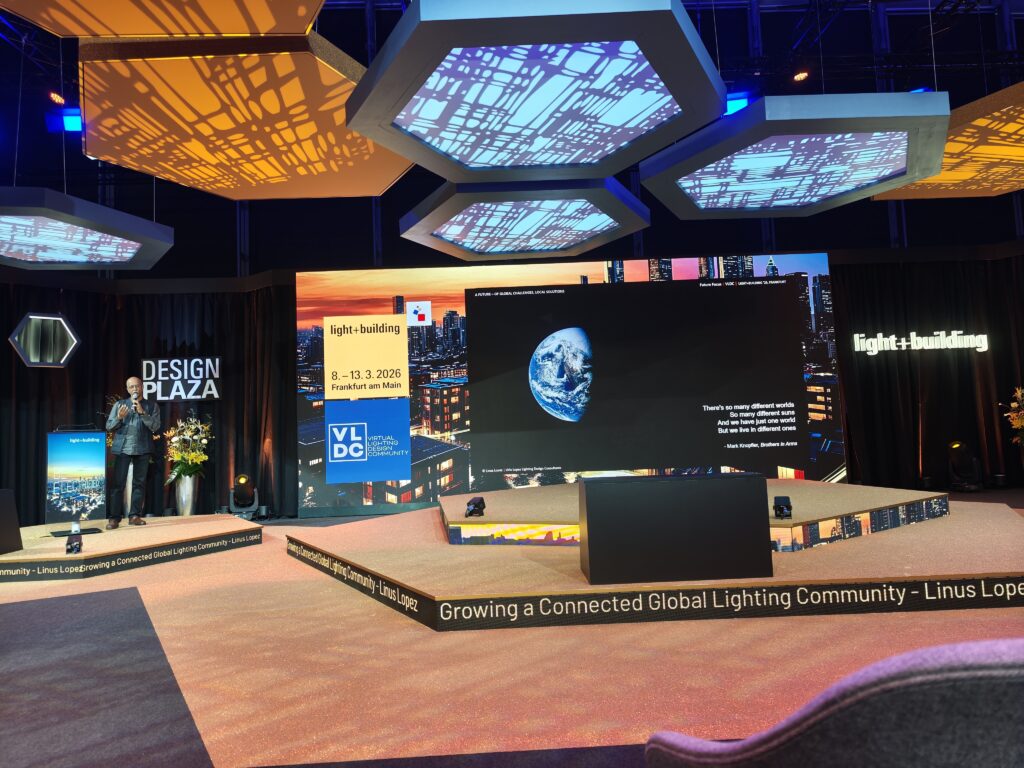
When standards bodies (IES), industry organizations (GLG), and core media platforms (EdisonReport / DL) share the same stage, it signals one thing:
A new consensus is forming—lighting must not only be sold, but reliably delivered.
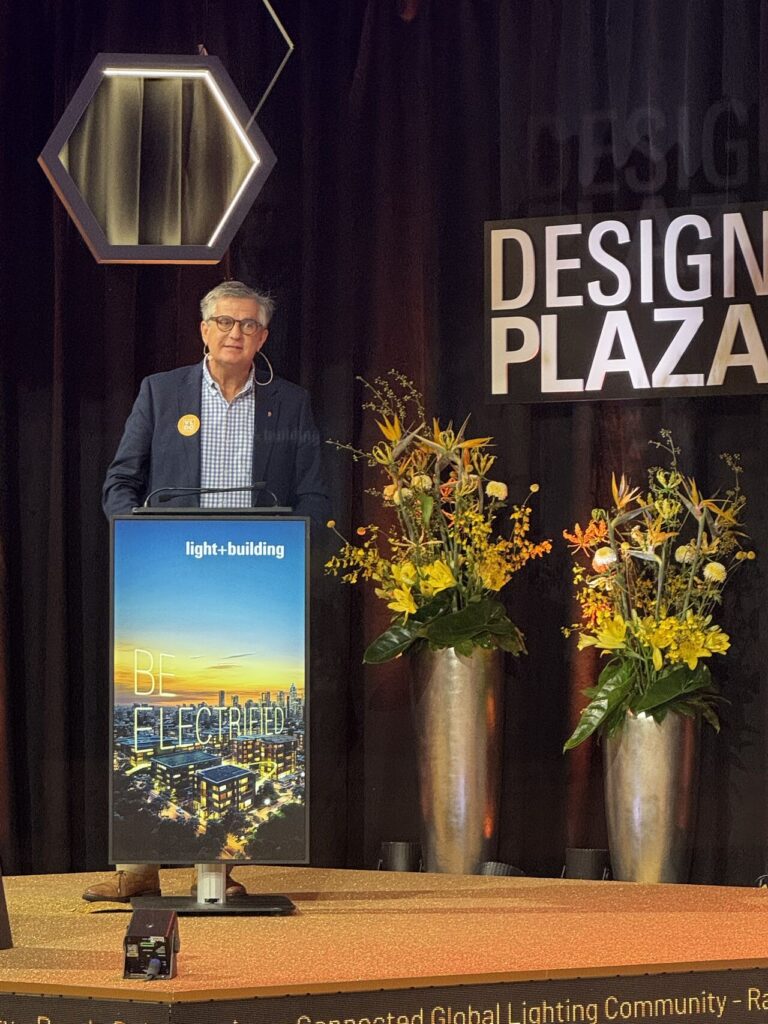
02 | Ten Minutes: Not a Concept, but a Logic of Verification
We are too accustomed to explaining spatial experience through product specifications. But real environments never operate according to datasheets.
So the message was reduced to three essential conclusions:
① We Measure Products, but People Live in Spaces
People do not live in specifications—they live in spaces.
And space reshapes light: reflectance, geometry, obstructions, daylight, and control scenarios all influence actual human exposure.
② Space Rewrites Light: Move Beyond Single-Point Pass/Fail
Passing a single measurement point is easy.
But human experience depends on spatial distribution: where glare sources are located, where facial illumination is lacking, and whether contrast supports perception or creates discomfort.
③ Time Rewrites Dose: Healthy Light Is a Curve, Not a Number
Circadian impact is not defined by a single moment, but by exposure over time: Intensity × Spectrum × Duration
Real intervention comes from daylight variation, control strategies, and human behavior.
一句话总结: If healthy lighting cannot be verified, it remains marketing—not delivery.
03 | A Framework: From Slogan to Deliverable System
To ground the discussion, a simple but powerful model was proposed: Light × People × Space × Time × Activity(光 × 人 × 空间 × 时间 × 活动)
And a core definition: Delivered stimulus, at eye level, in context.
Verification was then structured into three aligned evidence layers:
① Visual Integrity
Task vs. eye-level conditions, luminance balance, glare risk, and color quality (e.g., TM-30)
② Melanopic Dose
Vertical m-EDI, m-DER / SPD, time-based exposure profiles, and target differentiation across user groups
③ Experience Coherence
Transitions, Δuv / CCT dynamics, atmosphere, and structured feedback
04 | The Key Delivery Language: From Claims to Contracts
What Lawrence wanted the industry to take away was not a new term, but an executable verification logic:
MVD (Minimum Verifiable Delivery)
It defines: Where to measure (position, posture, task), when to measure (scene, schedule, time), and what to report (metrics + uncertainty + raw data → evidence package).
This transforms “healthy lighting” into something contractual, auditable, and traceable.
05 | After the Talk: Extending the Conversation
Following the session, Lawrence was interviewed by Randy Reid from EdisonReport / Designing Lighting.
They discussed GLG, GLGA, and the Good Light Wake-Up Call initiative.
What we are building is not a trend, but a pathway: Standards alignment → unified delivery language → evidence packages → operational loop → industry roadmap
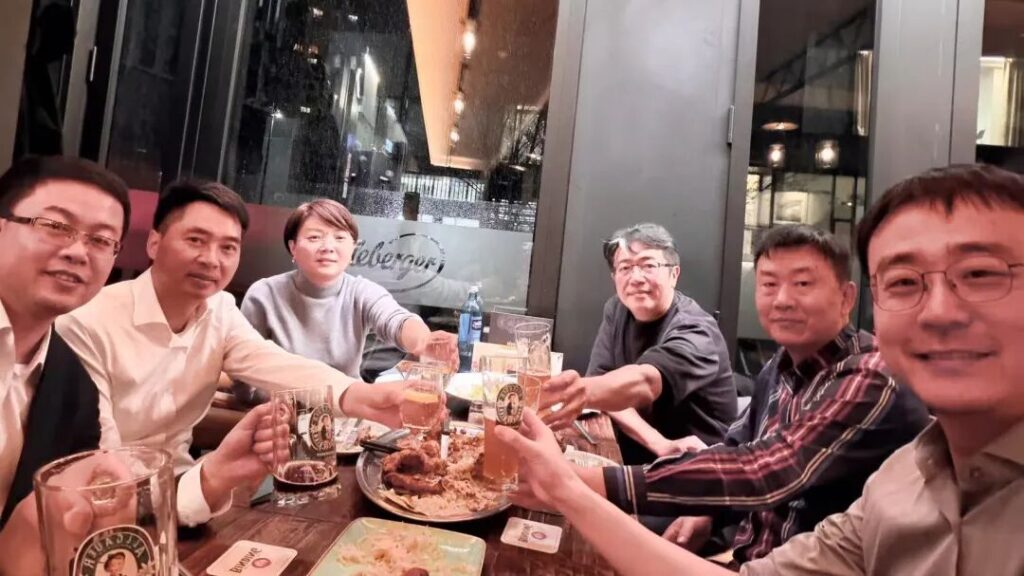
06 | Observations: The Industry Is Diverging
Later in the day, we reconnected with Dr. Oliver Vogler.
After a week of engaging with European companies, one thing is clear: The industry is diverging.
Some continue to compete on parameters and price, while others are integrating smart building approaches and elevating lighting into systems that deliver health, sustainability, productivity, and emotional value.
Conclusion | Straightening the Starting Line
The next phase of growth in the lighting industry will not be driven by higher specifications alone, but by stronger delivery capability: From claims to evidence, from products to spaces, and from one-time delivery to continuous operation.
If it can’t be verified, don’t claim it.
The real question then becomes: what is the biggest barrier to implementing healthy lighting—verification, operations, control systems, cost, or the lack of a shared language?
Good Light is not a slogan. It is a verifiable responsibility.
Good Light Wake-Up Call — the journey continues.

 English
  Chinese (China)
  Chinese (Taiwan)